


In the cutthroat arena of EigenLayer restaking derivatives, rsETH from KelpDAO and ezETH from Renzo stand as titans battling for yield supremacy. As of February 6,2026, ezETH trades at $2,074.99, down 6.69% over the last 24 hours with a high of $2,287.62 and low of $1,887.84. Meanwhile, rsETH holds its ground in DeFi composability, but the real question lingers: which liquid restaking token (LRT) delivers superior compounded returns amid EigenLayer’s $25B TVL milestone? This rsETH vs ezETH showdown dissects yields, risks, and 2026 projections for savvy yield chasers.

Dissecting rsETH: KelpDAO’s DeFi Powerhouse
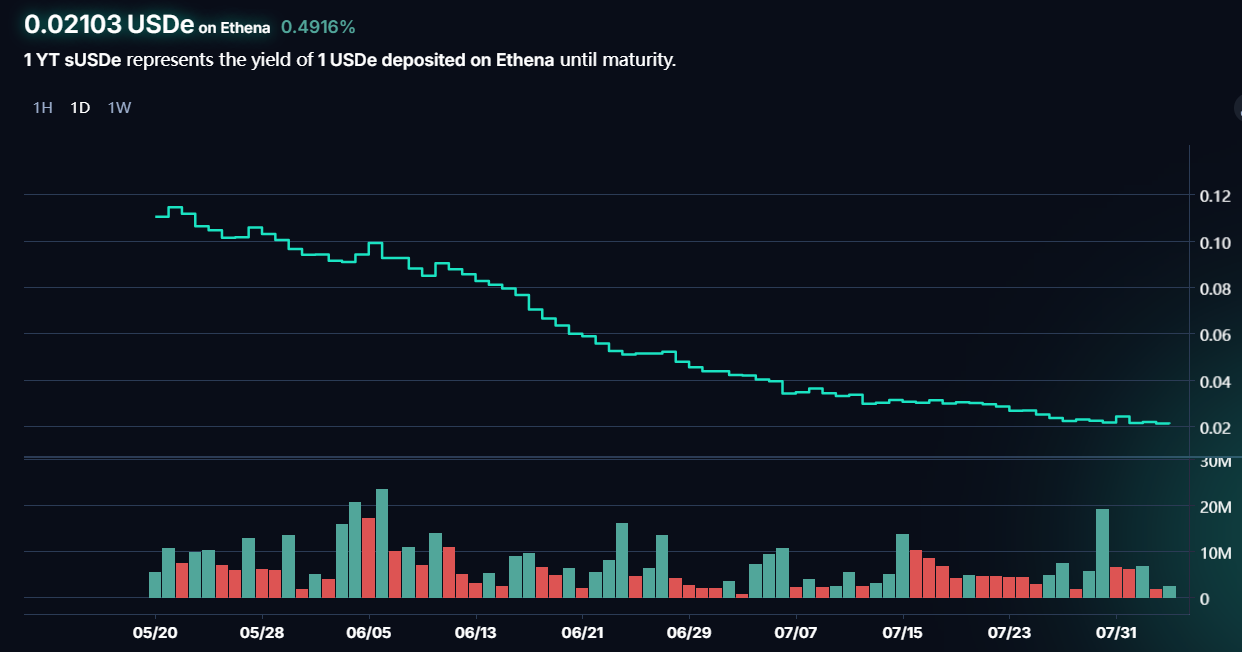
KelpDAO’s rsETH isn’t just another LRT; it’s a gateway to EigenLayer deposits backed by ETH, ETHx, and stETH, all while unlocking yield farming across DeFi. Picture this: deposit LSTs, get rsETH, and redeploy into Pendle or Aave without sacrificing restaking rewards. Dune Analytics highlights YT-rsETH multipliers fluctuating wildly, promising up to 10x full staking rewards and EigenLayer points. In a world where liquid restaking tokens created $5B in leverage by late 2025, rsETH’s edge shines in composability. No locked positions, just seamless liquidity for lending or trading. But yields? They dance to AVS demand, with KelpDAO emphasizing DeFi-native strategies over raw points farming.
Charts reveal rsETH’s resilience; its TVL growth mirrors EigenLayer’s explosion, yet operator concentration risks loom large. A few whales dominating restaked ETH could spell trouble, as noted in restaking revolution analyses. Still, for momentum traders, rsETH’s DeFi hooks make it a witty pick: why settle for staking when you can stack yields like pancakes?
ezETH Unpacked: Renzo’s Points and APY Machine
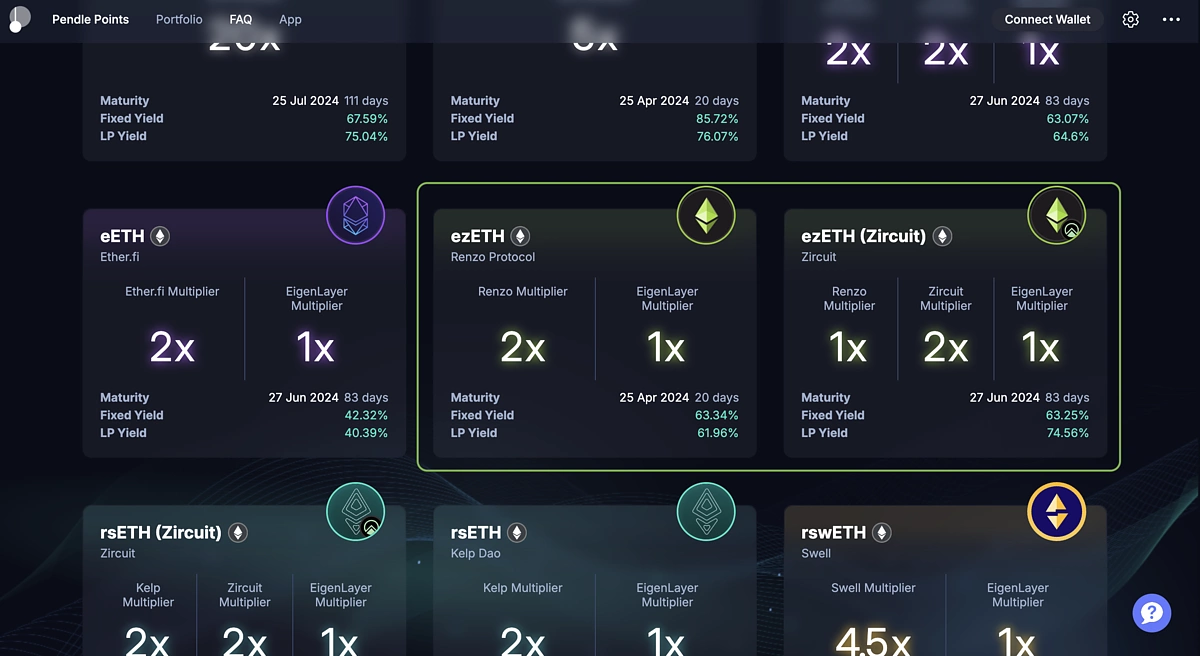
Renzo’s ezETH flips the script with aggressive points accrual and Pendle PT/YT plays. December 2024 alone saw 407.80 ETH in restaking rewards, and late 2025 Pendle integrations pushed APYs to 12.07%. Fast-forward to 2026, ezETH’s liquidity preserves options for farming or lending, even on Solana cousins like ezSOL at 3%. At $2,074.99, it’s volatile – that 24-hour dip from $2,287.62 tests holders’ mettle – but price predictions glow optimistic: AMBCrypto forecasts November 2026 highs near $4,386.69, averaging $4,099.71.

Don’t gatekeep this knowledge.
RT the thread.
Loop responsibly.
Disclaimer: This is not financial advice. Examples above are simply strategies used by some users. Yields, risks, and outcomes vary. Always do your own research and
ezETH thrives on EigenLayer’s Actively Validated Services (AVS), where restaking secures multiple chains. KuCoin ranks it among top LRTs for flexibility, but higher yields invite slashing risks and smart contract gotchas. Renzo’s model rewards patience: hold for points, trade YT for multipliers, or unwrap for native ETH. In CoinGape’s 2026 LRT roundup, ezETH edges rsETH in raw accessibility, though Kelp’s multi-LST backing adds diversification flair.
Yield Showdown: APYs, Points, and Real Returns
Raw numbers tell a tale of convergence. ezETH’s Pendle-boosted 12.07% APY dazzles, but rsETH counters with YT multipliers amplifying EigenLayer points – think 10x on select charts. BlockEden credits LRTs like these for 2025’s DeFi surge, yet 2026 brings AVS unwinding pressures, squeezing base yields below 0.3% in spots. Risk-adjusted? rsETH wins on DeFi breadth; ezETH on points velocity. Thrive. fi pegs EigenLayer as a 2026 staple alongside Pendle, but liquidity trumps all – both tokens let you farm without forking over keys.
ezETH Price Prediction 2027-2032
Forecast for Renzo’s Liquid Restaking Token (ezETH) Amid EigenLayer Growth and DeFi Yield Trends
| Year | Minimum Price | Average Price | Maximum Price | YoY Growth (Avg %) |
|---|---|---|---|---|
| 2027 | $3,200.00 | $5,200.00 | $6,800.00 | +26.8% |
| 2028 | $4,500.00 | $6,500.00 | $9,000.00 | +25.0% |
| 2029 | $5,500.00 | $8,500.00 | $12,000.00 | +30.8% |
| 2030 | $7,000.00 | $11,000.00 | $16,000.00 | +29.4% |
| 2031 | $9,000.00 | $14,000.00 | $20,000.00 | +27.3% |
| 2032 | $11,000.00 | $18,000.00 | $26,000.00 | +28.6% |
Price Prediction Summary
ezETH is expected to experience robust growth from 2027 to 2032, driven by expanding restaking adoption on EigenLayer, with average prices potentially rising from $5,200 in 2027 to $18,000 by 2032. Bullish maxima reflect high TVL inflows and yield farming opportunities, while minima account for market corrections and risks like slashing.
Key Factors Affecting ezETH Price
- EigenLayer TVL expansion beyond $25B and AVS adoption
- Competitive yields (up to 12% APY) vs. rsETH and other LRTs
- Ethereum ecosystem upgrades enhancing restaking security
- Regulatory clarity on DeFi and staking derivatives
- Market cycles: Bullish adoption post-2026 vs. bearish corrections
- Competition from protocols like KelpDAO (rsETH) and Pendle yield trading
- Risks: Smart contract vulnerabilities, operator centralization, and slashing events
Disclaimer: Cryptocurrency price predictions are speculative and based on current market analysis.
Actual prices may vary significantly due to market volatility, regulatory changes, and other factors.
Always do your own research before making investment decisions.
Consider the meta: EigenLayer’s operator risks amplify with scale, per Medium deep dives. rsETH mitigates via Kelp’s DAO governance; ezETH leans on Renzo’s execution. For 2026 yield optimizers, blend them – rsETH for composability, ezETH for explosive APYs. Charts don’t lie, but in restaking, yields pirouette on AVS adoption.
Liquid restaking protocols offer increased liquidity and flexibility, but higher yields come with higher risks. – KuCoin Learn
Operator concentration casts a shadow over both protocols, with EigenLayer’s growth risking whale dominance that could centralize security. KelpDAO’s DAO governance offers a counterbalance for rsETH holders, distributing control beyond a handful of operators. ezETH, meanwhile, bets on Renzo’s streamlined execution, but smart contract audits remain paramount as LRT TVLs balloon past billions. Slashing events – though rare – loom as the ultimate yield killer, amplified by multi-AVS exposure. Cube Exchange warns that liquid restaking’s allure masks these pitfalls, demanding vigilant risk management from yield optimizers.
Head-to-Head Metrics: rsETH vs ezETH at a Glance
rsETH vs ezETH: Yield Comparison
| Protocol | Backing Assets | Peak APY | Points Multiplier | Current Price | Key Risk |
|---|---|---|---|---|---|
| 🪸 rsETH | ETH/ETHx/stETH | DeFi composability | YT 10x | N/A | Operator concentration ⚠️ |
| ⚡ ezETH | LSTs | 12.07% Pendle 🔥 | $2,074.99 (24h High: $2,287.62) | N/A | Slashing/smart contracts ⚠️ |
Side-by-side, rsETH flexes DeFi muscle with Pendle YT plays mirroring ezETH’s 12.07% peaks, yet Kelp’s multi-LST basket hedges against single-provider failures. ezETH’s December 407.80 ETH rewards underscore raw output, but Dune charts show rsETH’s YT multipliers swinging to 10x EigenLayer points during AVS frenzies. As EigenLayer’s points system evolves – detailed in guides on maximizing Eigenda and AVSs – both LRTs capture the meta, though 2025’s AVS unwinding compressed base yields below 0.3%. For 2026, expect Pendle and Morpho integrations to tilt the scales toward composable yields over pure points grinding.
Thrive. fi spotlights EigenLayer and Pendle as DeFi cornerstones, where rsETH’s liquidity shines for Aave lending loops. ezETH counters with Solana extensions like ezSOL at 3%, blurring Ethereum-Solana yield arbitrage. Coinlaunch nods to EigenLayer’s LST restaking for multi-network security, positioning both as top staking plays. Yet, in this rsETH vs ezETH duel, the winner hinges on your playbook: DeFi degens favor KelpDAO’s hooks; points farmers chase Renzo’s velocity.
rsETH vs ezETH: Killer Pros
-

rsETH DeFi Composability: Dive into Aave and Morpho lending while restaking via EigenLayer—liquidity without the lockup drama.
-
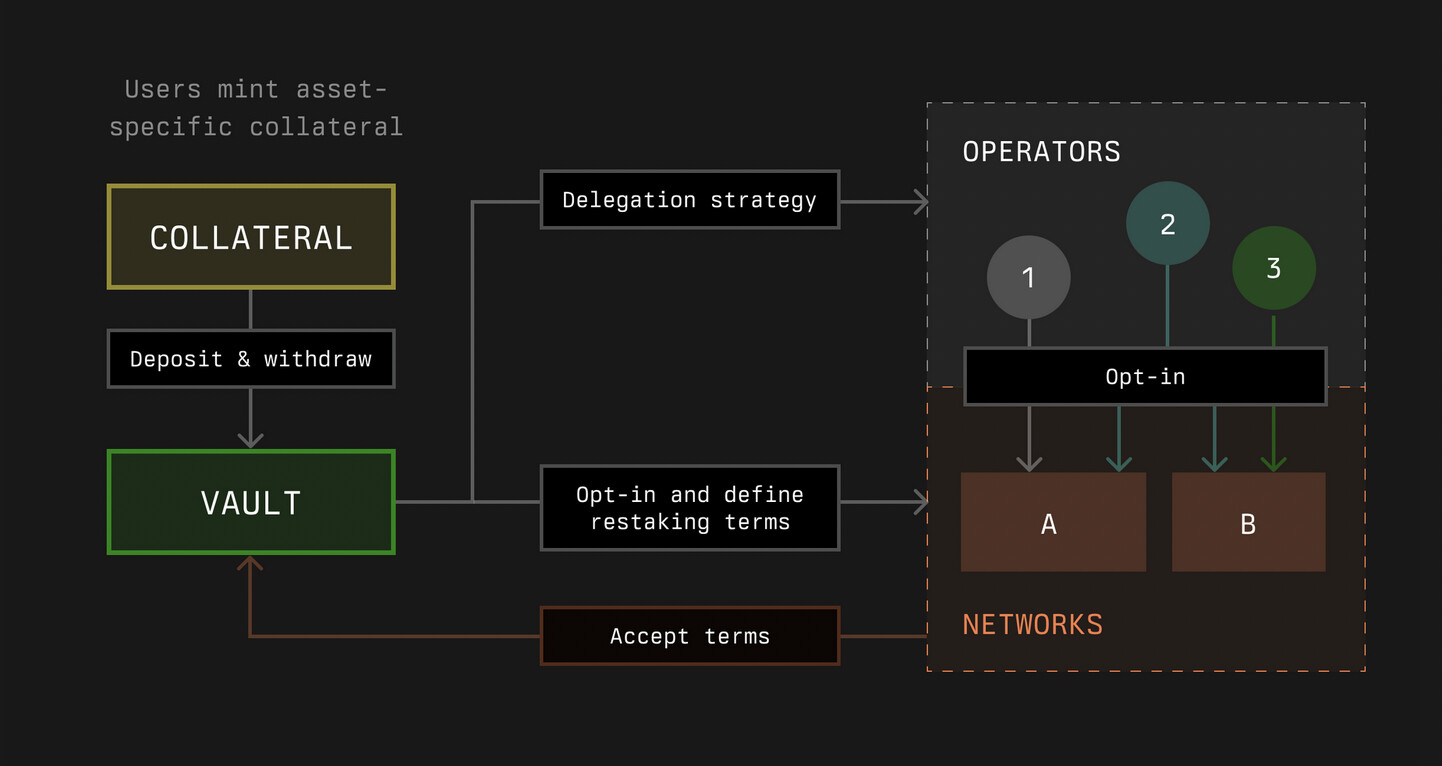
rsETH Multi-LST Diversification: Own EigenLayer deposits across ETH, ETHx, and stETH for broad exposure, slashing single-token risk.
-

rsETH YT Multipliers: Pendle’s YT-rsETH delivers 10x+ staking rewards and points—leverage that multiplier magic.
-
ezETH High APY via Pendle: Lock in up to 12.07% APY on late 2025 yields, compounding like a boss.
-

ezETH Points Accrual: Stack EigenLayer points aggressively, positioning for future airdrops in the restaking wars.
-
ezETH 2026 Price Targets: Optimistic forecasts hit $4,386 high (avg $4,099 Nov), from current $2,074.99 (-6.69% 24h).
2026 Playbook: Stacking Yields Without the Lockup
Diversify across rsETH and ezETH to capture EigenLayer restaking derivatives’ full spectrum. Deposit LSTs into Kelp for rsETH, farm Pendle YTs for amplified returns, then loop into Morpho for lending boosts. Renzo holders unwrap ezETH for native ETH or trade on Curve for stable yields. BlockEden’s $5B leverage stat proves LRTs’ potency, but KuCoin stresses risk calibration – no free lunch in DeFi. As AVS adoption surges, monitor operator dashboards; charts signal momentum shifts before yields do.
Liquid restaking derivatives like rsETH reshape Ethereum yields, blending liquidity with compounded restaking. For KelpDAO enthusiasts, governance votes shape rsETH’s trajectory; Renzo loyalists eye ezETH’s price trajectory toward $4,099.71 averages. In CoinGape’s 2026 rankings, rsETH claims ownership of EigenLayer deposits while yield farming trumps ezETH’s accessibility edge.
Beyond metrics, the restaking meta rewards adaptability. rsETH’s DeFi prowess pairs with ezETH’s APY fireworks, forging a dual-token strategy for 2026’s high-stakes arena. EigenLayer’s $25B TVL cements LRTs as yield bedrock, but savvy players hedge operator risks and AVS whims. Charts don’t lie – restaking yields do – so track Dune dashboards, Pendle curves, and that ezETH price at $2,074.99 rebounding from $1,887.84 lows. Position now; 2026’s compounded returns await the bold.
About the Author