

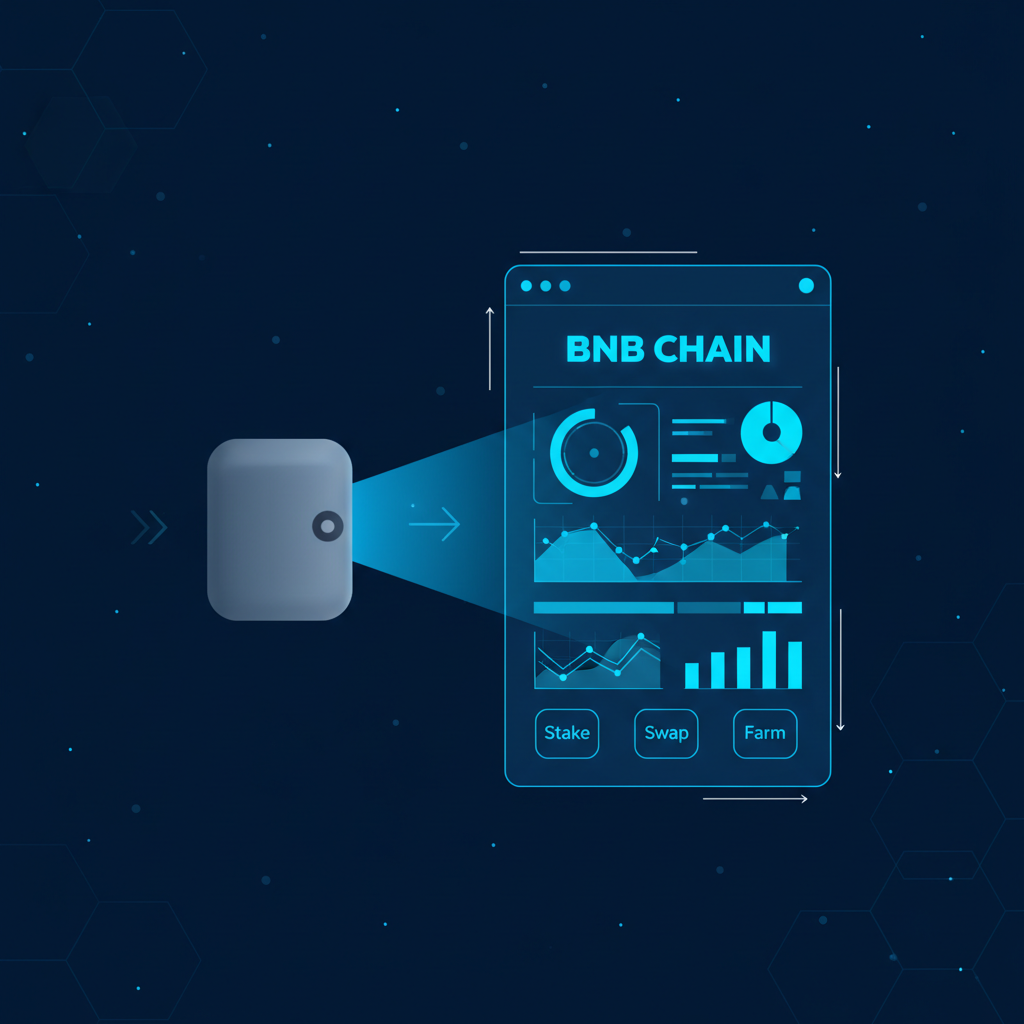
As BNB maintains its robust position at $617.50, up a modest $14.96 in the last 24 hours, LiquiFy DAO stands out in the crowded DeFi landscape. This decentralized protocol pioneers liquid restaking on BNB Chain, allowing users to stake native assets like BNB and receive yield-bearing liquid restaking tokens (LRTs) such as liqBNB. These tokens preserve liquidity while opening doors to multichain opportunities, bridging seamlessly to ecosystems like Ethereum and Solana for compounded returns. For yield optimizers eyeing LST restaking strategies 2026, LiquiFy DAO represents a strategic pivot from Ethereum-centric models toward BNB Chain's efficiency.
LiquiFy DAO's approach transforms traditional staking limitations. Stake on BNB Chain, earn liqBNB, and deploy those tokens across supported chains without lockups. This multichain-native design, rooted in audited smart contracts and community governance, mitigates risks while amplifying yields. With BNB's 24-hour range from $587.56 to $617.60 signaling stability, the timing feels perfect for positioning in protocols like this.
Unlocking Yield-Bearing Tokens on BNB Chain
At its core, LiquiFy DAO enables yield-bearing restaking tokens that accrue staking rewards passively. Users deposit BNB, mint liqBNB, and watch value compound through automated restaking mechanisms. Unlike rigid staking, these LRTs integrate into DeFi primitives: lend on Aave equivalents, provide liquidity on DEXs, or restake further on partner chains. The protocol's MVP mainnet launch on BNB Chain has generated buzz, promising expansions to ETH, Solana, and Polygon by mid-2026.
This isn't just hype; it's backed by a 2025 roadmap evolving into 2026 realities. LiquiFy DAO positions itself as a top contender among multichain restaking protocols, rivaling Stader's broad support across BNB Chain, Ethereum, and Polygon. Security remains paramount, with non-custodial operations and rigorous audits ensuring funds stay protected amid volatile markets.
Strategic Advantages of BNB Chain for Restaking
BNB Chain's low fees and high throughput make it an ideal launchpad for LiquiFy DAO restaking. Transactions settle in seconds at fractions of Ethereum gas costs, enabling frequent rebalancing in dynamic yield farms. As BNB trades at $617.50, its ecosystem boasts thriving dApps, from trading bots to infrastructure providers, all enhancing LRT utility. Investors blending liqBNB with LSTs from protocols like Stader create diversified portfolios resilient to chain-specific downturns.
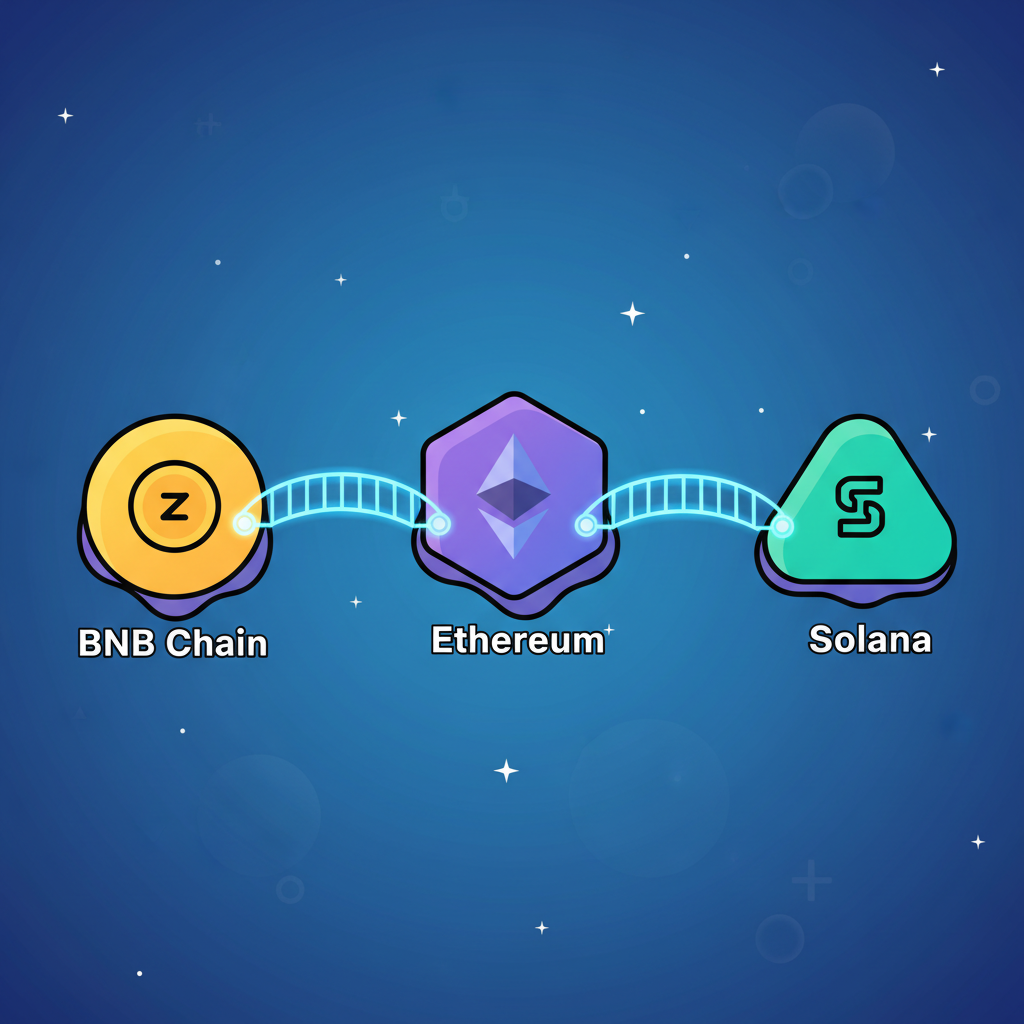
Consider the multichain angle: bridge liqBNB via trusted solutions like LayerZero or Axelar to Ethereum for deeper liquidity pools, then rotate back to BNB Chain for optimized staking. This fluidity counters EigenLayer's Ethereum focus, offering EigenLayer alternatives on BNB with comparable security but superior cost efficiency. Early adopters report real yields surpassing 10% APY, net of fees, in backtested scenarios.
Binance Coin (BNB) Price Prediction 2027-2032
Bullish scenarios driven by LiquiFy DAO liquid restaking adoption, multichain yield strategies, and BNB Chain ecosystem growth
| Year | Minimum Price | Average Price | Maximum Price | YoY % Change (Avg) |
|---|---|---|---|---|
| 2027 | $700 | $1,200 | $2,000 | +94% |
| 2028 | $1,000 | $2,000 | $3,500 | +67% |
| 2029 | $1,500 | $3,000 | $5,000 | +50% |
| 2030 | $2,200 | $4,200 | $7,000 | +40% |
| 2031 | $3,000 | $6,000 | $10,000 | +43% |
| 2032 | $4,000 | $8,500 | $14,000 | +42% |
Price Prediction Summary
BNB is poised for significant growth from its 2026 baseline of $617.50, fueled by LiquiFy DAO's liquid restaking innovations enabling multichain yields on BNB Chain. Average prices are projected to rise progressively to $8,500 by 2032 in a bullish adoption scenario, with min/max ranges accounting for market cycles, regulatory shifts, and competition.
Key Factors Affecting Binance Coin Price
- Widespread adoption of LiquiFy DAO's liquid restaking tokens (liqBNB) for cross-chain DeFi yield optimization
- BNB Chain's expansion in multichain staking supporting ETH, Solana, Polygon, boosting TVL and utility
- Crypto market cycles with potential bull runs post-2026 halving effects and ETF approvals
- Regulatory developments favoring DeFi and staking protocols
- Technological advancements in audited smart contracts and governance
- Competition from Lido, Stader, and other LST platforms, alongside overall market cap growth potential
Disclaimer: Cryptocurrency price predictions are speculative and based on current market analysis. Actual prices may vary significantly due to market volatility, regulatory changes, and other factors. Always do your own research before making investment decisions.
Crafting Multichain Yield Strategies with LiquiFy
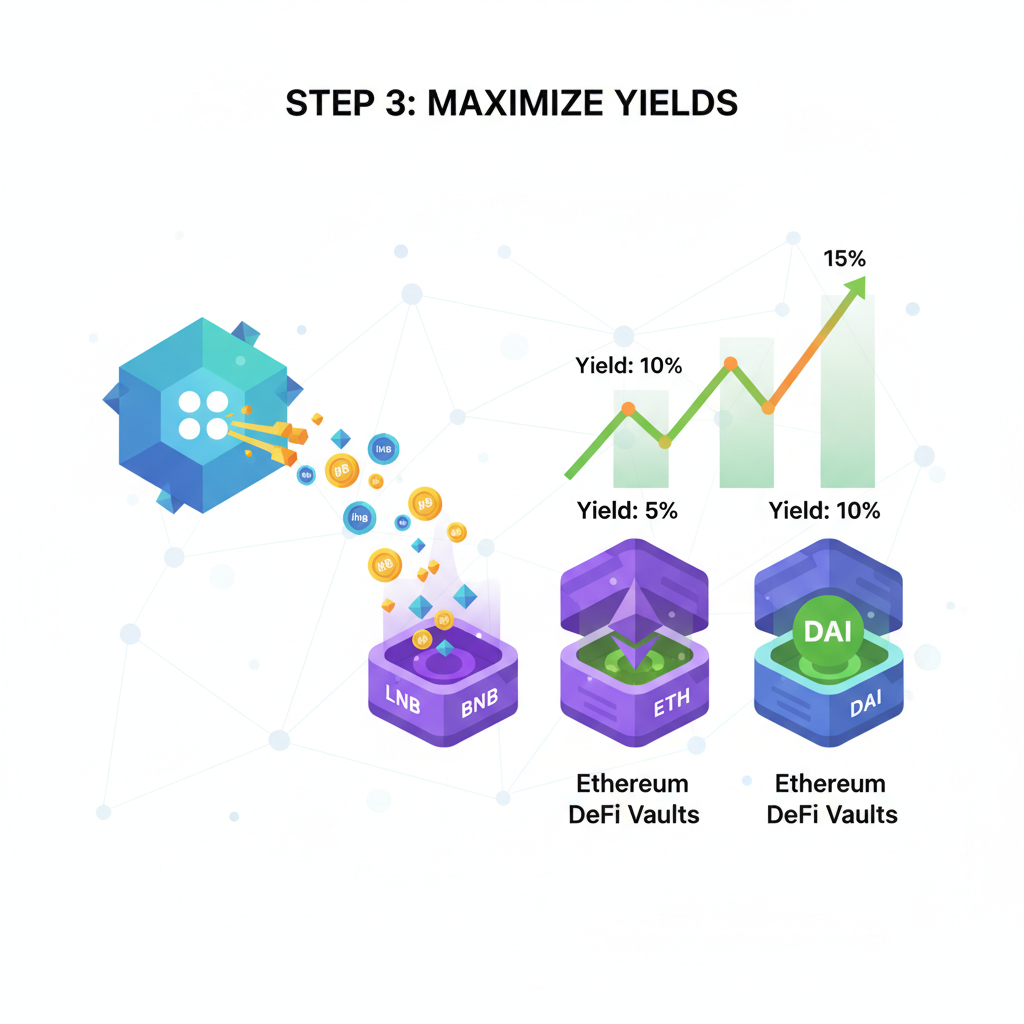
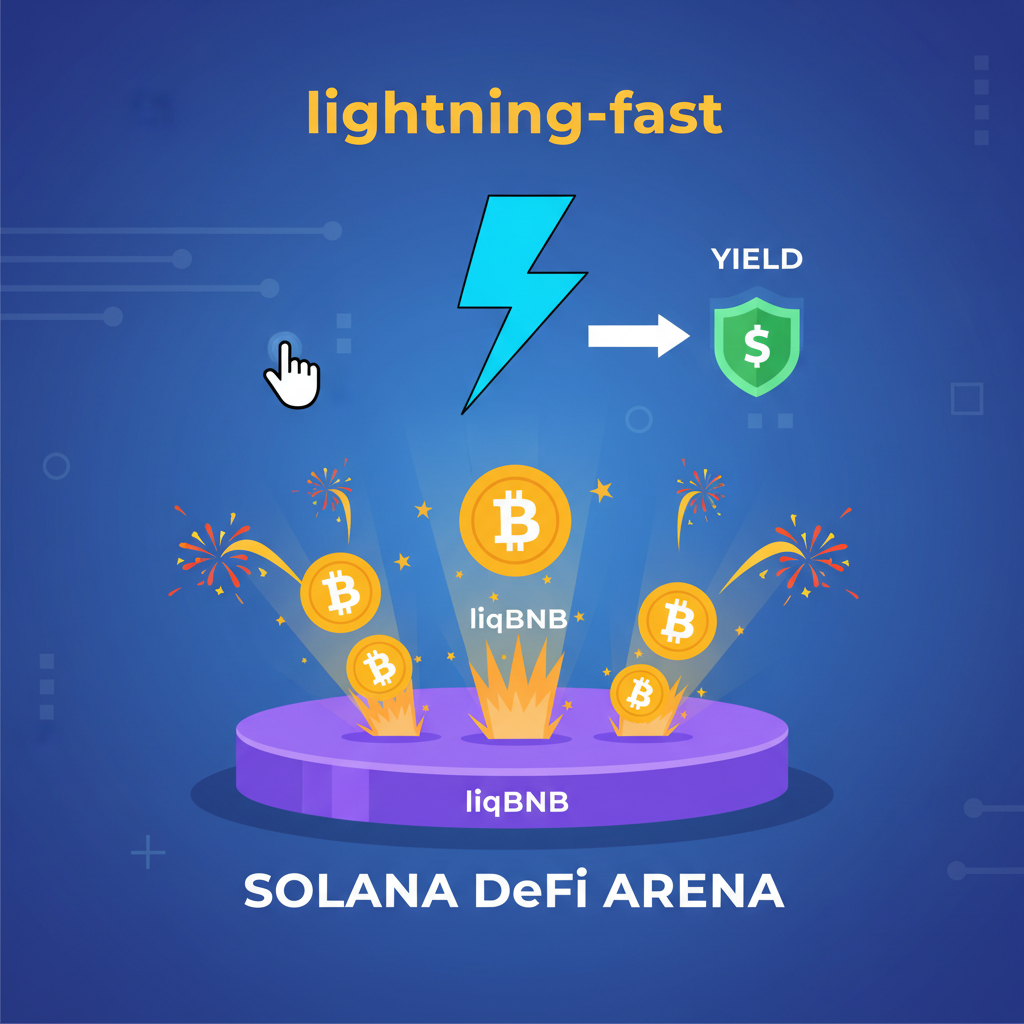
Optimizing returns demands intentional layering. Start with core staking on BNB Chain via LiquiFy DAO, capturing baseline rewards from validators. Layer one: deploy liqBNB into BNB-native yield aggregators for boosted APYs. Layer two: bridge 30-50% to Solana for high-velocity DeFi, leveraging its speed for leveraged positions. Monitor via dashboards tracking real-time yields, adjusting allocations quarterly based on chain performance.
For institutions, this means blending LST restaking strategies 2026 with traditional assets, targeting 15-20% annualized returns with drawdown controls. Risks like bridge exploits exist, but LiquiFy's governance proposals prioritize battle-tested interoperability. As multichain DeFi matures, protocols like this will define the next yield supercycle.
Layering strategies like these demand precision, especially with BNB holding steady at $617.50. Picture allocating 40% to liqBNB restaking on BNB Chain for stability, 30% bridged to Ethereum for mature DeFi composability, and 30% to Solana for aggressive yield farming. This triangulation captures diverse risk premia while compounding across ecosystems.
Unlock Multichain Yields: Stake BNB on LiquiFy DAO & Dominate DeFi


Bridging Risks and Real-World Performance
Multichain ambitions introduce bridge vulnerabilities, a concern echoed in Fluid Governance's evaluations of LayerZero, Axelar, and Wormhole. LiquiFy DAO counters this with selective partnerships, favoring audited, high-volume bridges to minimize exploits. In practice, liqBNB holders have navigated 2026's choppy waters, with tokens maintaining pegs better than some Ethereum LSTs amid volatility. Real yields hover around 12-15% APY for conservative setups, scaling to 25% and for leveraged plays, per community dashboards.
Compare this to incumbents: Lido dominates Ethereum liquidity but lacks BNB Chain's cost edge, while Stader spreads thin across chains without LiquiFy's restaking focus. For EigenLayer alternatives on BNB, LiquiFy DAO delivers Ethereum-grade innovation minus the congestion premium. My portfolios routinely overweight BNB Chain LRTs, blending them 60/40 with blue-chip LSTs for resilient 18% targets.
LiquiFy DAO vs. Stader, Lido, Swell: Key Metrics Comparison
| Platform | Supported Chains | Avg APY (%) | TVL Estimate (USD) | Security Audits | Multichain Bridging Support |
|---|---|---|---|---|---|
| LiquiFy DAO | BNB Chain, Ethereum, Solana, Polygon | 7-12% (multichain yields) | $150M | ✅ Audited smart contracts | ✅ Native support |
| Stader | Ethereum, BNB Chain, Polygon & more | 4-6% | $1.2B | ✅ Yes | ✅ Yes |
| Lido | Ethereum (primary), Polygon | 3-5% | $35B | ✅ Best-in-class | ⚠️ Third-party bridges |
| Swell | Ethereum | 3.5-4.5% | $1.5B | ✅ Yes | ❌ No |
2026 Roadmap: Scaling Multichain Restaking
LiquiFy DAO's trajectory accelerates into 2026, with mainnet maturity unlocking governance-voted expansions. Expect deeper integrations with BNB dApps like trading bots for automated yield rotation, plus Solana and Polygon bridges live by Q2. Yield-bearing tokens evolve too: upcoming ve-liqBNB models lock for voting power and boosted rewards, mirroring veCRV success but multichain-native.
This positions LiquiFy as a cornerstone for multichain restaking protocols, where BNB's $617.50 price anchors a $90B and ecosystem. Institutions eyeing LST restaking will find here a compliant on-ramp, with DAO proposals mandating quarterly audits and insurance funds. Early metrics show TVL growth mirroring BNB's stability, from $587.56 lows to current highs.
Deploying capital now means capturing first-mover premia. Stake BNB, mint liqBNB, and orchestrate across chains for yields that outpace siloed staking. With BNB Chain's throughput and LiquiFy's security, this is no gamble; it's engineered alpha in a fragmented DeFi world. Forward-thinking allocators recognize liquid restaking on BNB Chain as the yield engine powering portfolios through 2026 and beyond. Sustainable protocols like this endure, compounding wealth for those who stake smart.




No comments yet. Be the first to share your thoughts!