


Restaking redefines network security by enabling staked tokens to secure multiple protocols simultaneously, a paradigm shift from siloed staking models. This restaking consensus model leverages existing economic commitments, allowing holders to extend their collateral’s utility without liquidation risks from unstaking. Yet, as capital pools concentrate, systemic vulnerabilities emerge, demanding rigorous stress-testing before deployment.

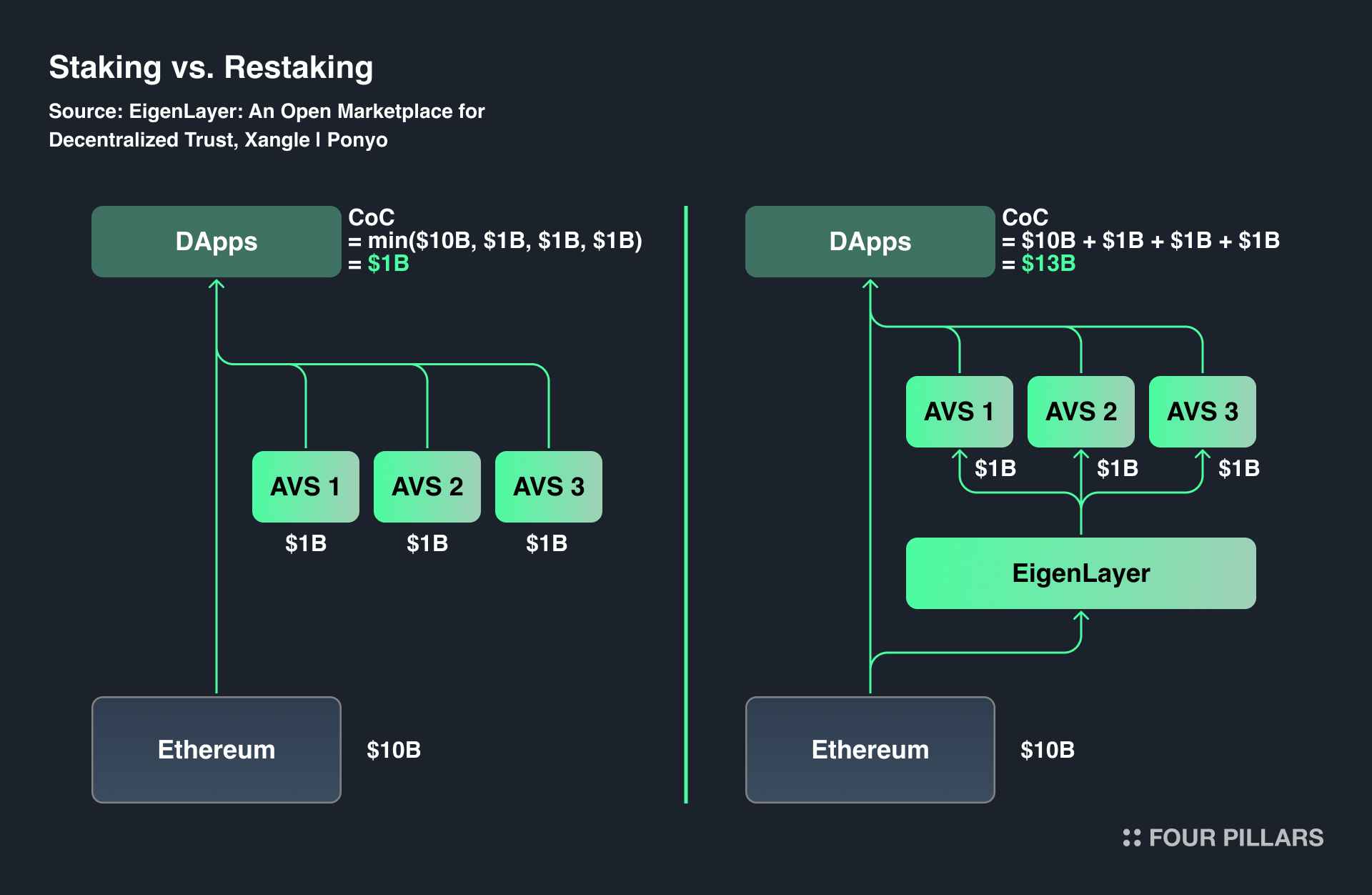
In traditional Proof-of-Stake systems, tokens lock into single chains, underutilizing idle capital. Token reuse restaking changes this by deploying staked ETH or Liquid Staking Tokens (LSTs) to Actively Validated Services (AVSs) and beyond. EigenLayer pioneered this, but recent protocols like Symbiotic introduce permissionless flexibility, supporting diverse collaterals from LsETH to future BTC derivatives.
Core Mechanics of Multi-Protocol Security
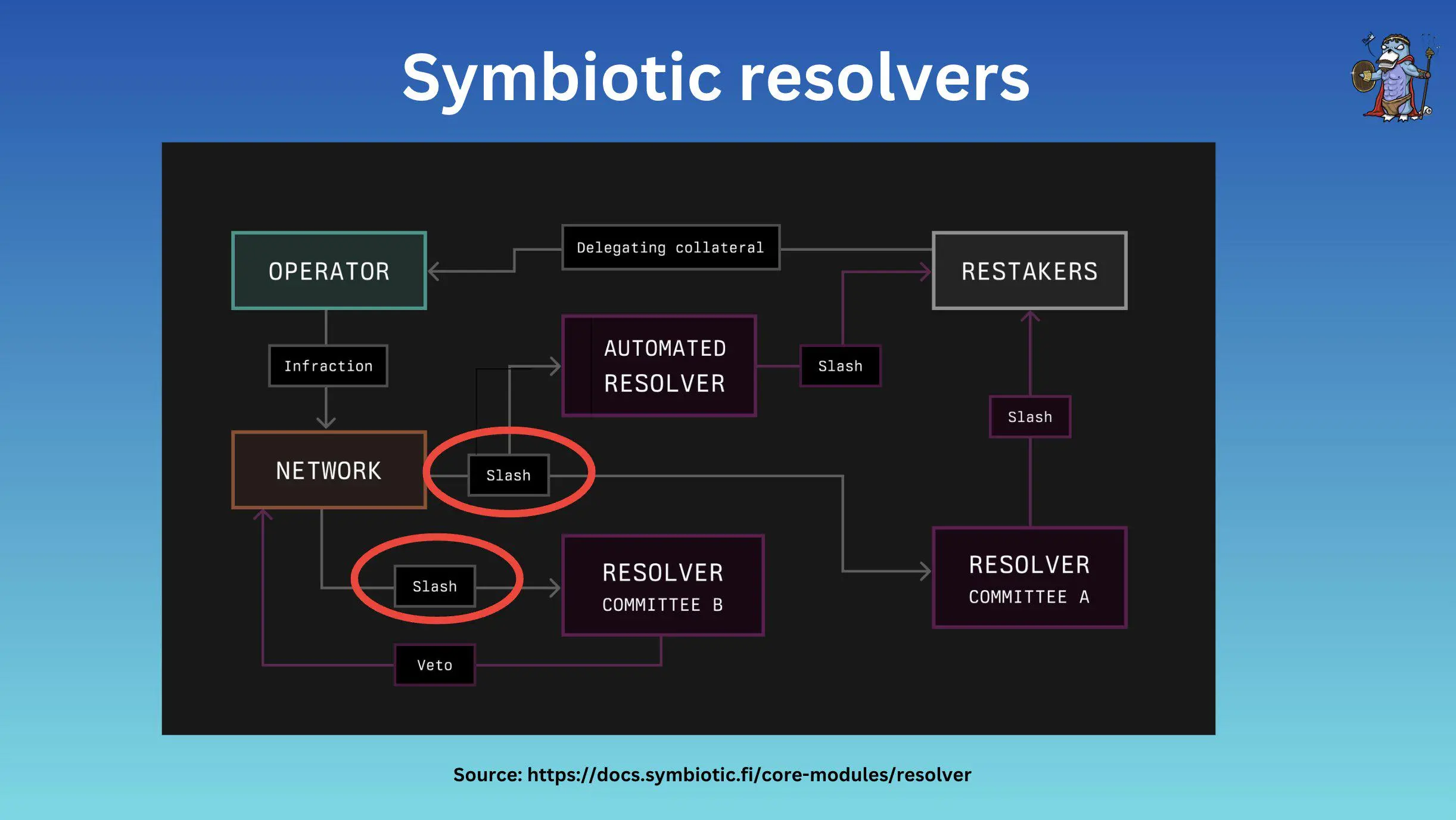
The foundation lies in smart contracts that “opt-in” staked positions to additional duties. Users deposit native ETH or LSTs into restaking vaults, earning base staking yields plus AVS rewards. Slashing conditions activate if validators falter across secured services, creating correlated risks. This liquid restaking protocols framework preserves liquidity via derivatives, but intersubjective faults – disputes beyond on-chain verifiability – complicate enforcement, as seen in EigenLayer’s bEIGEN fork-aware mechanisms.
Key Risks in Restaking
-
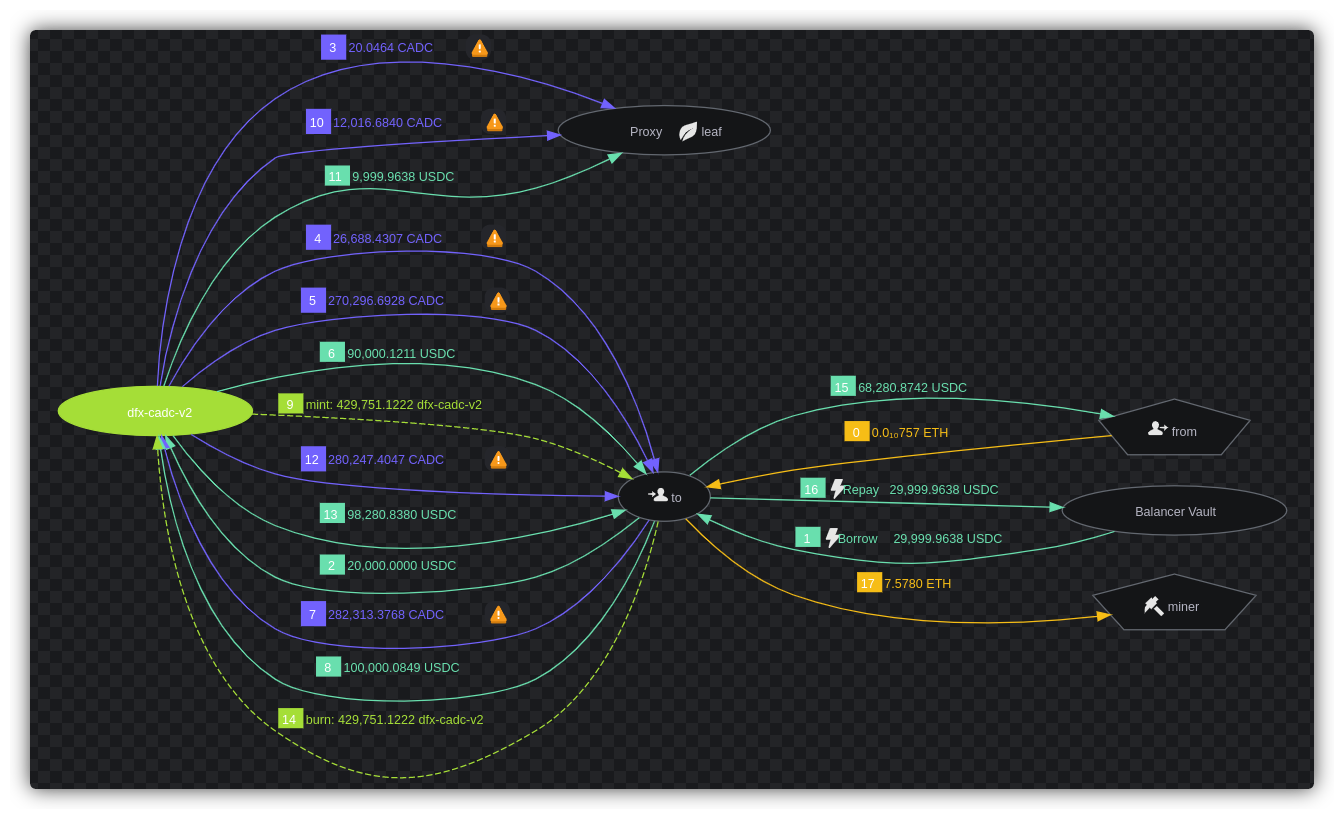
Smart Contract Vulnerabilities: Interactions across multiple smart contracts in restaking protocols expand the attack surface, heightening susceptibility to bugs and exploits. (Source: cryptollia.com)
-

Validator Concentration: Centralization of validation power among a few major liquid staking providers creates systemic risks, potentially triggering cascading failures. (Source: chainscorelabs.com)
-
Cross-Protocol Slashing Correlations: Shared validators and staked assets across protocols can lead to correlated slashing events, amplifying losses in interconnected systems. (EigenLayer restaking mechanics)
From a risk management perspective, the appeal is clear: compounded yields without opportunity cost. However, validator economics distort under liquid staking pools, where top providers dominate, amplifying tail risks. My analyses, drawing on 14 years in financial risk modeling, highlight how black swan events in one AVS could cascade, eroding LST pegs and liquidity.
EigenLayer’s Role in the Restaking Boom
EigenLayer set the standard, amassing billions in Total Value Locked by repurposing ETH for Ethereum L2s, oracles, and bridges. Its design separates objective faults (e. g. , double-signing) from intersubjective ones, using middleware for dispute resolution. Liquid restaking tokens (LRTs) like those from EtherFi or Renzo enhance composability, trading restaked positions on DEXs while capturing layered APYs.
Yet caution prevails. EigenLayer’s growth exposes centralization: a handful of LST issuers control vast stakes, vulnerable to operational failures. Recent collaborations, such as Ethos securing Cosmos chains with $4 billion in commitments from Puffer, Swell, and others, extend this model inter-ecosystem. Ether stakes now bootstrap validators on non-EVM chains, blending Ethereum’s security model with Cosmos’ app-specific architecture.
Permissionless Evolution: Symbiotic and Cross-Chain Frontiers
Symbiotic advances the restaking consensus model with true permissionlessness. Network builders customize collateral types, operator sets, and slashing rules via immutable agreements, supporting LsETH for dual Ethereum and Symbiotic rewards. This flexibility suits diverse dApps, from rollups to data availability layers, but escalates smart contract complexity, widening the attack surface.
Cross-chain restaking, via Renzo, Kernel DAO, and Solayer, bridges Ethereum and Solana, chasing elevated APYs through liquid tokens and shared AVS security. Solana’s high throughput complements Ethereum’s capital depth, yet bridge exploits and asset correlations loom large. Validator concentration persists, with major pools distorting incentives, potentially triggering systemic failures in volatile LST environments.
Rigorous due diligence is non-negotiable. Stress-test against slashing cascades, regulatory headwinds, and liquidity crunches. Restaking derivatives liquidity offers escape valves, but only if peg stability holds. As DeFi matures, this model promises efficient DeFi network security restaking, provided risks stay managed.
Delving deeper into these risks underscores the need for quantitative stress-testing in every restaking strategy. Smart contract interactions across AVSs and LSTs expand the attack surface exponentially; historical DeFi exploits demonstrate how one vulnerability can trigger multi-protocol slashing events, eroding principal faster than yields accrue.
Stress-Testing Restaking Against Black Swans
Validator concentration amplifies tail risks. Major liquid staking pools distort incentives, funneling power to a few operators whose downtime or malice could cascade failures. My FRM-backed models simulate scenarios where a 10% LST depeg, triggered by correlated AVS faults, wipes 20-30% of restaked value in hours. Cross-chain extensions, like Ethereum-Solana bridges via Renzo or Solayer, introduce bridge hacks and liquidity mismatches, chasing APYs that often mask true volatility.
Comparison of Major Restaking Protocols
| Protocol | TVL/Commitments | Collateral/Focus | Key Features | Risks |
|---|---|---|---|---|
| EigenLayer | Billions in TVL | ETH/LST | Decentralized Ethereum restaking protocol enabling reuse of staked ETH for AVSs | High centralization risk |
| Symbiotic | Not specified | Diverse collaterals (e.g., LsETH) | Permissionless shared security layer with flexible customization for networks and operators | Elevated smart contract complexity |
| Ethos | $4B commitments | Restaked ETH | AVS on EigenLayer securing Cosmos chains with commitments from EtherFi, Puffer, Renzo, Swell, Kelp | Inter-ecosystem correlation risks |
Symbiotic’s permissionless design shines for flexibility, letting builders tailor collateral from LsETH to BTC wrappers. Yet this customization demands bespoke audits; without them, slashing economics falter under intersubjective disputes. Ethos’ $4 billion push with EtherFi, Puffer, and Swell to secure Cosmos chains exemplifies ambition, but blends EVM security with app-chain fragilities, heightening regulatory scrutiny as staked assets cross jurisdictions.
Multi-protocol security thrives on diversified collateral, but only if operators decentralize. Current trends show top-five LSTs controlling 60% and of restaking TVL, a fragility begging diversification mandates in protocol SLAs.
Regulatory uncertainty compounds these technical perils. Staking derivatives increasingly attract securities labels, potentially freezing withdrawals or imposing KYC gates. Protocols must embed fork-aware tokens like EigenLayer’s bEIGEN to navigate disputes, but enforcement remains untested in court.
Navigating EigenLayer restaking tokens and LRTs requires balancing yield allure against these headwinds. Liquid restaking preserves composability, enabling DEX trades amid locked stakes, yet peg breaks in volatile markets expose derivatives to runs. Opinionated take: cap exposure at 10-15% of portfolio, prioritizing protocols with proven operator sets and third-party insurance.
Outlook for Token Reuse Restaking
As restaking evolves, expect BTC integration via Babylon and multi-asset vaults, amplifying token reuse restaking efficiency. Symbiotic’s framework positions it for dominance in non-EVM ecosystems, while EigenLayer refines AVS middleware for scalability. Cross-chain plays promise layered security, but demand bridge hardening and oracle redundancies.
Risk-managed deployments win. By embedding rigorous VaR models and diversification, investors unlock compounded returns without courting catastrophe. This restaking consensus model reshapes DeFi’s security fabric, demanding vigilance to sustain its promise.
About the Author