

In the evolving landscape of Ethereum's DeFi ecosystem, where Ethereum trades at $1,967.61 amid a modest 24-hour gain of and $13.71, EigenLayer's introduction of the EigenGov Protocol Council marks a strategic pivot toward fortified governance for restaking derivatives. This council, populated by domain experts, steps in to review EigenLayer Improvement Proposals (ELIPs), greenlight protocol upgrades, and vet new Actively Validated Services (AVS). For holders of liquid restaking tokens and sophisticated restaking derivatives, this framework promises calibrated security, mitigating the correlated slashing risks that have long shadowed pooled ETH restaking.
EigenLayer's restaking model revolutionized staking by allowing validators to secure multiple AVSs with the same ETH collateral, birthing a pooled security paradigm. Yet, as Ethereum's price holds steady around $1,967.61, the protocol faces scrutiny over slashing exposures. An AVS might suffer from another service's misbehavior, diluting control and amplifying systemic vulnerabilities. Enter EigenGov: a council-based structure that injects expert veto rights into decision-making, ensuring restaking governance councils prioritize liquid restaking security without stifling innovation.
EigenGov Protocol Council: Guardians of Restaking Integrity
The Protocol Council's mandate is precise and potent. Composed of seasoned minds in cryptography, economics, and blockchain engineering, it wields authority over core protocol evolution. Proposals for new AVS admissions undergo rigorous scrutiny, balancing security demands against capital efficiency. This isn't mere bureaucracy; it's a bulwark against hasty integrations that could cascade risks across the restaking derivatives market.
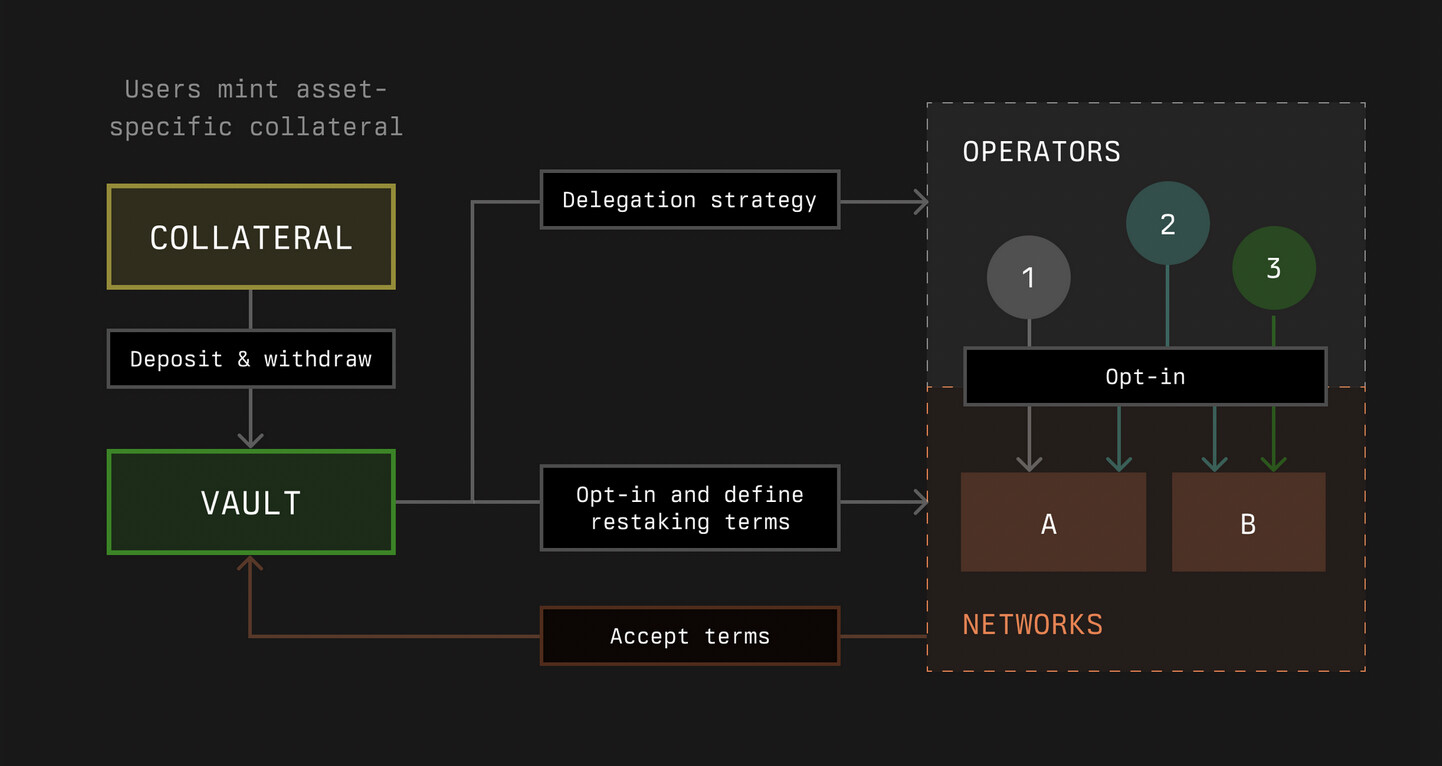
Consider the mechanics: ELIPs must demonstrate robust slashing justifications, proportionate to threats. Features like Unique Stake Allocation let operators ring-fence collateral per AVS, while Operator Sets enable tailored slashing conditions. These tools, overseen by the council, isolate incidents, preserving the viability of LST restaking strategies. EigenLayer's foundation has long eyed such enhancements, as hinted in recent governance overhauls emphasizing AVS security.
"EigenLayer provides a new mechanism for pooled security by enabling modules to be secured by restaked ETH rather than their own tokens. "- EigenCloud on The Restaking Collective
This council model draws from proven DAOs but tailors veto powers to EigenLayer's unique threats, fostering trust in restaking derivatives governance.
Navigating Slashing Risks in a Multi-AVS World
Slashing remains the Achilles' heel of restaking. Shared stake means one AVS's fault can penalize others, eroding yields for derivative holders. EigenLayer's upcoming rewards v2 and slashing mechanics for 2025, coupled with council oversight, aim to recalibrate this. Penalties will be justified and proportionate, with council reviews preventing overreach.
Historical data underscores the stakes. Early restaking pilots exposed inadvertent risk spillovers, as noted in security analyses. The Stanford Blockchain Review highlighted how AVSs lose slashing autonomy in pooled setups. EigenGov counters this by mandating council approval for high-risk upgrades, embedding strategic caution into the protocol's DNA.
For restaking derivatives like those on our platform, this translates to enhanced composability. Liquid restaking tokens can now venture deeper into yield optimization, backed by governance that prioritizes longevity over short-term hype. As Ethereum consolidates at $1,967.61, with a 24-hour range from $1,907.15 to $2,001.87, such stability in governance bolsters confidence in compounded returns.
Strategic Positioning for Restaking Derivatives Investors
Restaking derivatives thrive on reliable security primitives. EigenLayer EigenGov elevates this by aligning incentives through council stewardship. Institutional players, chasing multi-year yield cycles, will appreciate how veto rights curb tail risks, enabling bolder allocations to advanced LSTs.
Read more on how EigenLayer's council-based DAO governance is reshaping restaking security: EigenLayer News.
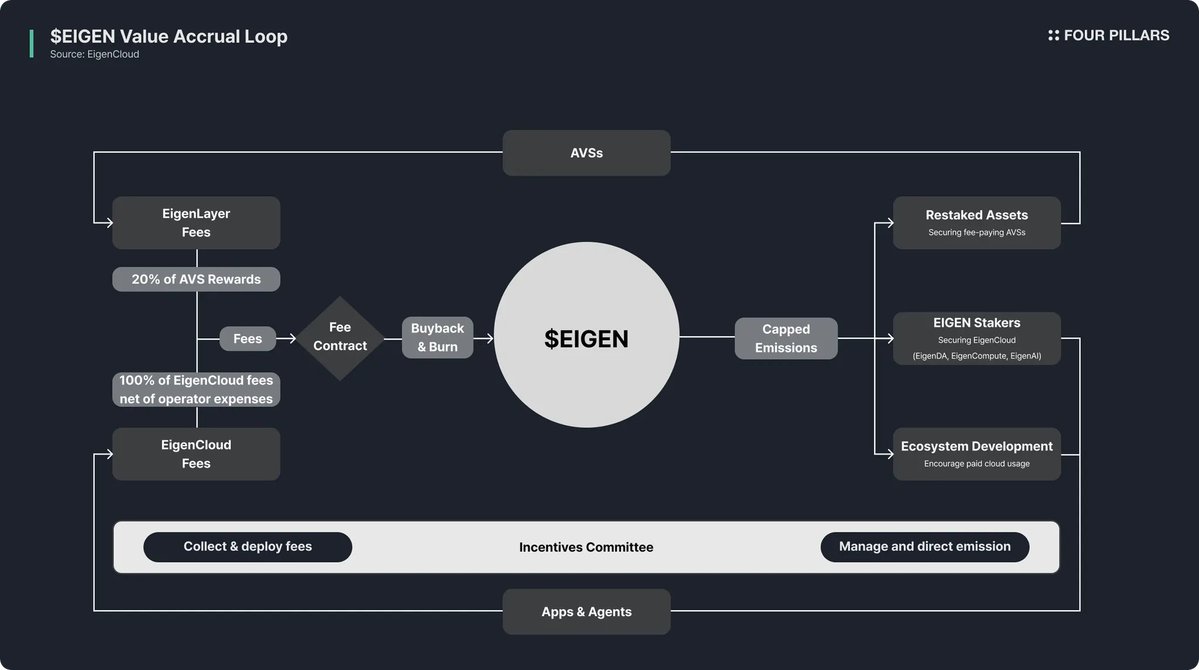
The council's role extends to tokenomics tweaks, potentially juicing EIGEN incentives while safeguarding the ecosystem. This thoughtful layering of expertise positions EigenLayer as the linchpin for Ethereum's modular future, where restaking derivatives unlock liquidity without compromising on defense.
EigenLayer (EIGEN) Price Prediction 2027-2032
Forecasts based on EigenGov Council governance, AVS growth, restaking security upgrades, and Ethereum DeFi trends (2026 baseline average: $2.80)
| Year | Minimum Price (USD) | Average Price (USD) | Maximum Price (USD) | YoY % Change (Avg from prior year) |
|---|---|---|---|---|
| 2027 | $1.80 | $4.20 | $8.50 | +50% |
| 2028 | $3.50 | $7.80 | $16.00 | +86% |
| 2029 | $5.00 | $13.50 | $28.00 | +73% |
| 2030 | $4.00 | $10.50 | $22.00 | -22% |
| 2031 | $6.50 | $16.80 | $35.00 | +60% |
| 2032 | $9.00 | $24.00 | $50.00 | +43% |
Price Prediction Summary
EIGEN token is forecasted for strong long-term growth driven by governance enhancements via EigenGov Council, AVS ecosystem expansion, and improved restaking security features like slashing v2 and unique stake allocation. Projections reflect crypto market cycles, with average prices growing from $4.20 in 2027 to $24.00 by 2032 (over 750% cumulative from 2026 $2.80 baseline), incorporating bearish dips and bullish surges tied to adoption and ETH correlation.
Key Factors Affecting EigenLayer Price
- EigenGov Protocol Council for reviewing ELIPs, upgrades, and AVS admissions
- AVS growth providing pooled security for oracles, sidechains, and DeFi services
- Restaking rewards v2 and proportionate slashing reducing risks
- Ethereum restaking adoption and capital efficiency improvements
- Market cycles: bull runs in 2028-2029 and 2031-2032 amid regulatory clarity
- Competition from other restaking protocols and overall crypto market cap expansion
Disclaimer: Cryptocurrency price predictions are speculative and based on current market analysis. Actual prices may vary significantly due to market volatility, regulatory changes, and other factors. Always do your own research before making investment decisions.
Investors in restaking derivatives stand to gain from this governance evolution, as EigenLayer veto rights filter out suboptimal AVS integrations, preserving yield integrity across LST protocols. Picture a scenario where a nascent oracle AVS proposes aggressive slashing parameters; the council intervenes, demanding empirical validation. This gatekeeping elevates liquid restaking security, allowing derivatives to compound returns with reduced tail exposure.
Key Mechanisms Bolstering Derivatives Resilience
Unique Stake Allocation emerges as a cornerstone, permitting operators to dedicate specific ETH portions to individual AVSs. No longer does a bridge AVS's lapse imperil an oracle's collateral. Operator Sets further refine this by grouping validators with aligned risk appetites, customizing slashing triggers per cohort. Under EigenGov's watchful eye, these innovations sidestep the pitfalls of undifferentiated pooled security, a concern flagged in BlockSec's security deep dives.
EigenGov Benefits for Restaking Derivatives
- Council Oversight: Protocol Council of domain experts reviews ELIPs, oversees upgrades, ensuring strategic governance and security.
- Slashing Isolation: Unique Stake Allocation and Operator Sets isolate risks, tailoring slashing to protect restaked ETH.
- AVS Vetting: Council rigorously admits new Actively Validated Services (AVSs), enhancing ecosystem security.
- Yield Protection: Proportionate penalties and risk isolation safeguard yields, boosting capital efficiency.

These layers compound capital efficiency. As Ethereum hovers at $1,967.61, up $13.71 over 24 hours with a low of $1,907.15, restakers can allocate confidently, knowing governance councils temper the volatility inherent in multi-AVS exposure. Derivatives platforms, from yield-bearing LSTs to structured products, now integrate these safeguards seamlessly, unlocking strategies once deemed too risky.
The EigenLayer Foundation's overhaul, echoing CoinDesk reports on EIGEN incentives, signals maturity. By prioritizing AVS security as a pillar, alongside rewards v2 slated for 2025, the protocol readies for scale. Slashing will evolve from blunt instruments to precision tools, reviewed quarterly by council experts to align with ecosystem threats.
Outlook for Restaking Governance and Yields
Looking ahead, restaking derivatives governance via EigenGov sets a blueprint for Ethereum's security marketplace. DAOs with council hybrids could proliferate, blending decentralization with expertise. For yield optimizers, this means probing deeper into AVS diversity without fear of contagion. Historical parallels abound: just as Ethereum's beacon chain stabilized staking post-Merge, EigenLayer's council stabilizes restaking amid explosive growth.
Yet challenges linger. Council composition must remain dynamic to avoid capture, with transparent election cycles mandated in ELIPs. Tokenomics adjustments, potentially inflating EIGEN utility through governance staking, warrant scrutiny. My analysis of past cycles suggests that protocols embedding such foresight capture outsized multi-year yields, often 2-3x base staking rates.
Strategic positioning demands vigilance. Favor operators leveraging Operator Sets for niche AVSs, diversifying across council-approved services. As ETH's 24-hour high touched $2,001.87 before settling at $1,967.61, this governance anchor provides the ballast for leveraged restaking plays. Platforms like RestakingDerivatives. com equip you with real-time comparisons, spotlighting protocols attuned to these shifts.
EigenLayer's trajectory underscores restaking's maturation. From pooled ETH experiments to council-vetted fortresses, the ecosystem hardens against threats while amplifying returns. For those navigating LST restaking waters, EigenGov isn't just governance; it's the strategic edge in a yield-saturated DeFi arena.




No comments yet. Be the first to share your thoughts!