
Understand restaking mechanics and risks
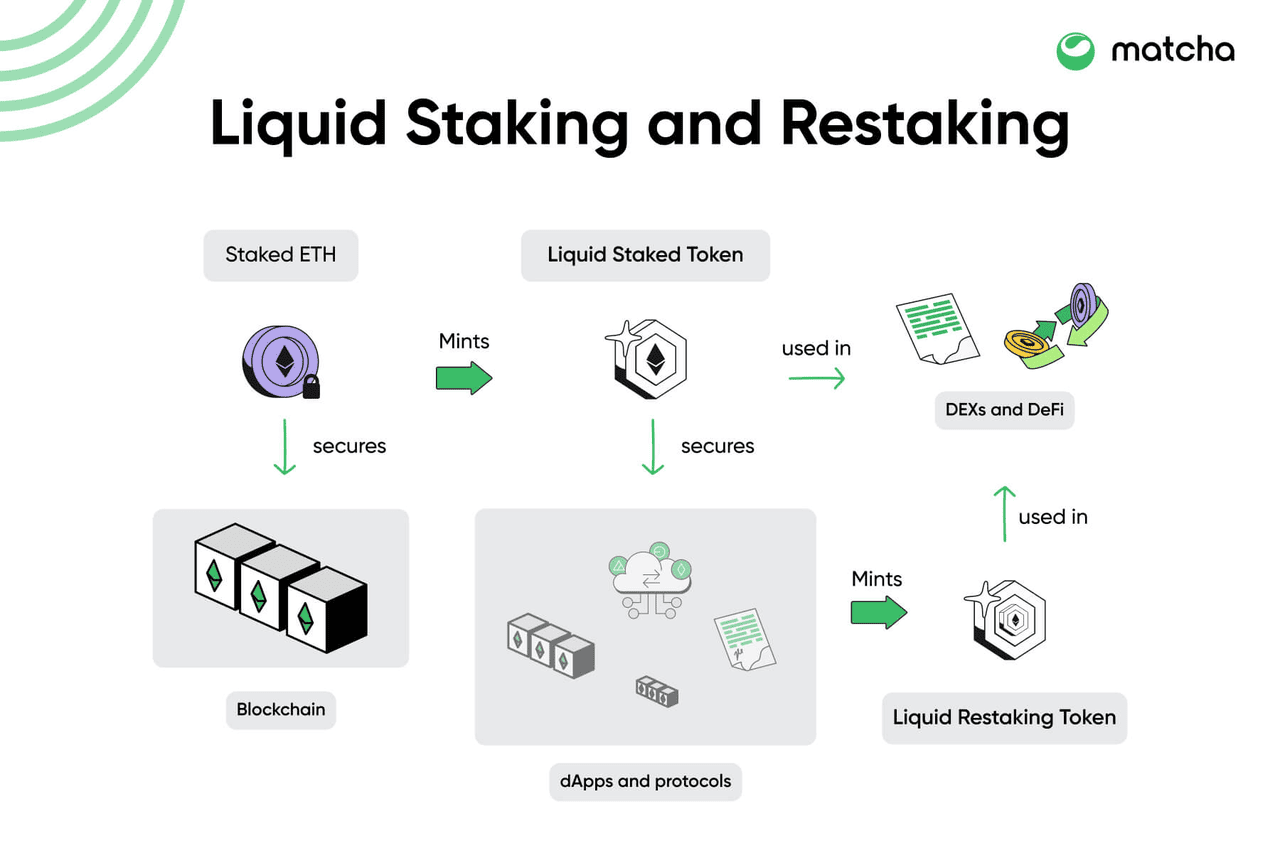
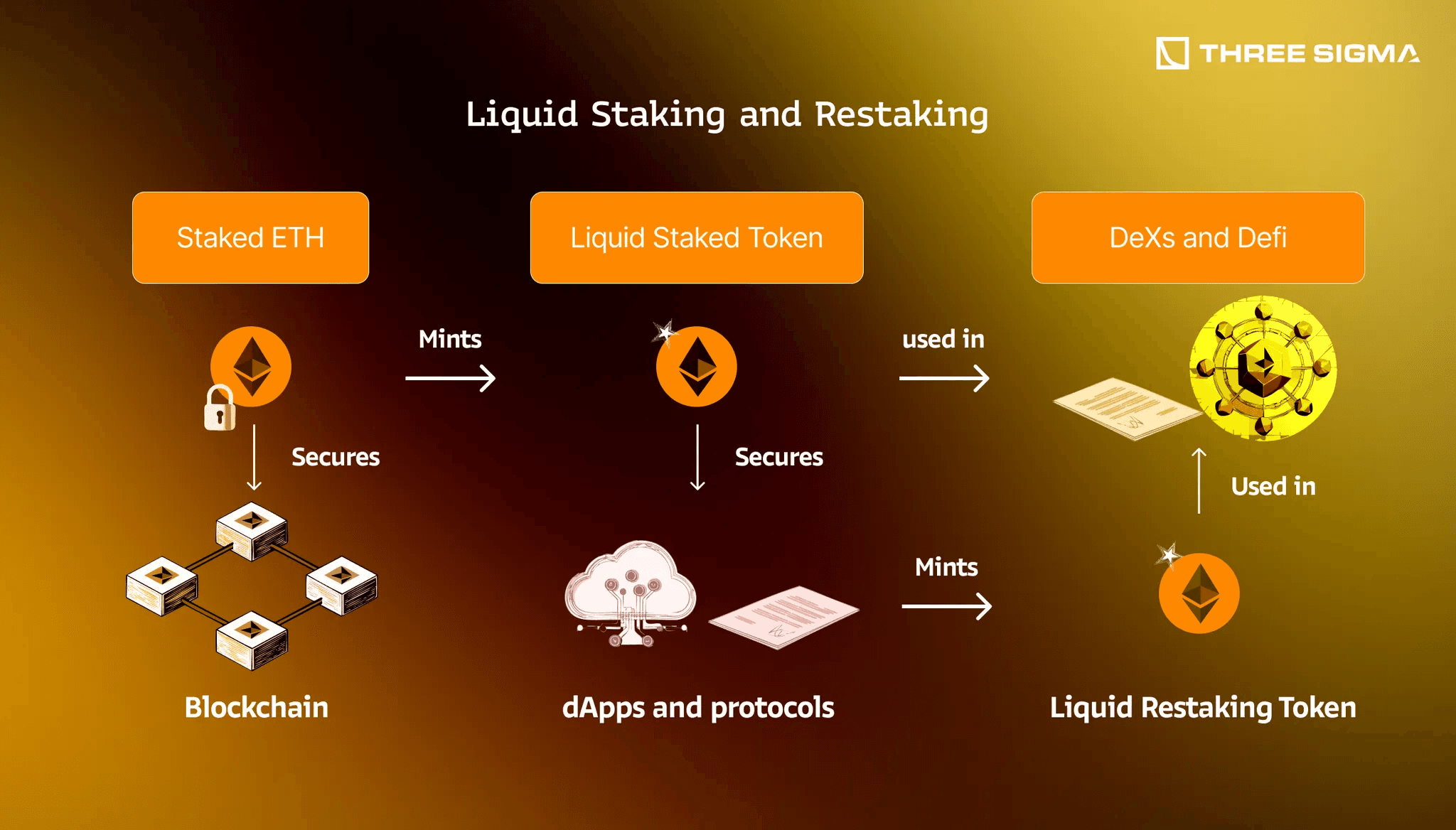
Restaking extends the basic concept of liquid staking. In standard liquid staking, you deposit ETH into a protocol like Lido or Rocket Pool, receive a derivative token (such as stETH or rETH), and earn staking rewards while maintaining liquidity. You are securing the Ethereum network once.
Restaking takes those derivative tokens and locks them into a second layer of security protocols. This allows your same capital to secure multiple networks simultaneously, such as Ethereum and various rollups or oracle networks. As Bitstamp explains, this process generates additional yield on top of the base staking rewards by reusing the same assets across multiple protocols.
This layered approach creates a complex risk profile. While it offers higher potential returns, it introduces new vectors for loss, including slashing events from the secondary protocols and smart contract bugs. Understanding this distinction is critical before allocating capital in 2026.
Choose a protocol with verified security
Restaking derivatives amplify yield but also amplify risk. If a protocol suffers a smart contract exploit or fails to manage slashing events, your entire principal can vanish. You must treat security verification as a checklist, not a suggestion.
Start by auditing the smart contract history. Look for multiple independent audits from reputable firms like OpenZeppelin or Trail of Bits. A single audit is a baseline; multiple audits with public reports show transparency. Check if the protocol has a bug bounty program on platforms like Immunefi. This signals that the team expects vulnerabilities and has funded external researchers to find them before attackers do.
Next, evaluate the decentralization of the operator network. Centralized operator sets are single points of failure. If one entity controls a large share of the staked capital, they become a target for collusion or hacking. Look for protocols that distribute voting power and operator keys across many independent nodes. Decentralization ensures that no single actor can maliciously slash your stake or compromise the network consensus.
Finally, verify the slashing protection mechanism. Slashing occurs when validators behave maliciously, resulting in the loss of staked ETH. A robust restaking protocol must have a clear, on-chain slashing protection policy. This should include insurance funds, validator insurance, or a slashing protection module that reimburses users in the event of a slashing event. Without this, you are bearing the full risk of validator misbehavior.
Use the table below to compare the top restaking derivatives providers on these critical security metrics.
| Protocol | Audit Status | Slashing Protection | TVL (Est.) |
|---|---|---|---|
| EigenLayer | OpenZeppelin, Trail of Bits | Insurance Fund | 5,200 |
| Swell | OpenZeppelin, Spearbit | Validator Insurance | 1,800 |
| Karak | CertiK, Halborn | Smart Contract Coverage | 450 |
| Renzo | OpenZeppelin, Spearbit | Insurance Pool | 900 |
Execute the staking and restaking flow
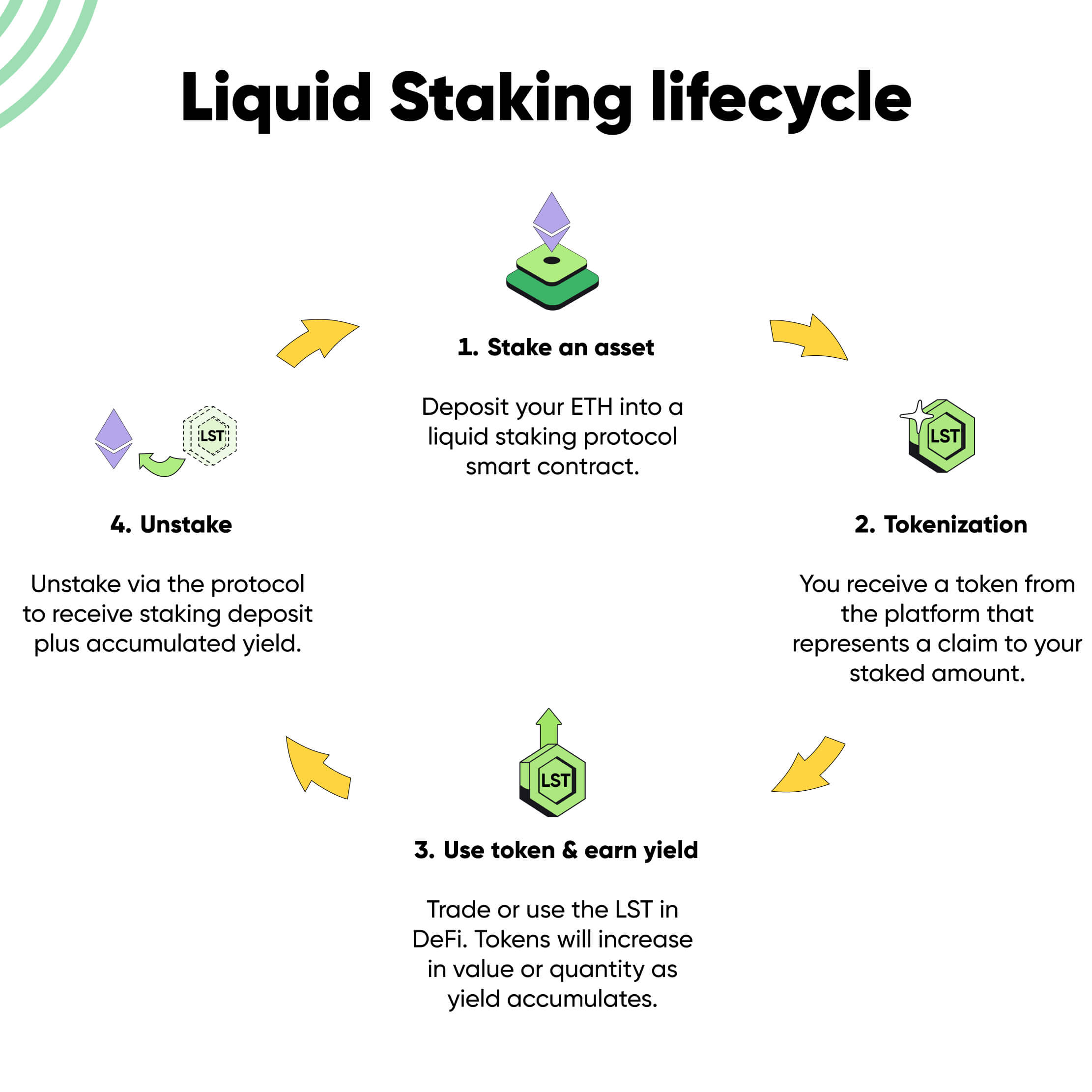
This workflow moves your ETH through two distinct layers to generate yield from both staking and restaking protocols. The process converts your asset into a liquid staking token (LST) first, then deposits that derivative into a restaking protocol like EigenLayer to secure additional networks. This dual-layer approach captures base Ethereum staking rewards plus the extra yield generated by the restaking layer.
1. Deposit ETH into a liquid staking protocol
Begin by converting your native ETH into a liquid staking token. This step locks your ETH in the Ethereum validator set while issuing a receipt token (such as stETH or rETH) that represents your staked position. You can use established protocols like Lido or Rocket Pool to mint these tokens. The receipt token maintains a 1:1 peg to your underlying ETH plus accrued staking rewards, allowing you to retain liquidity while earning passive yield.
2. Transfer the liquid staking token to a restaking protocol
Once you hold the liquid staking token, move it to a restaking platform. This step involves depositing your LST into a smart contract that restakes the underlying validator rights to secure additional services, such as oracles or sidechains. By restaking, you are essentially reusing the same security deposit to protect multiple networks simultaneously. This action unlocks a secondary yield stream on top of your initial staking rewards.
3. Receive and manage restaking derivatives
After the deposit is confirmed, the restaking protocol issues a derivative token (often called an LRT) representing your restaked position. This token tracks your share of the combined yield from both the Ethereum staking layer and the restaking services. You can now hold this LRT to accumulate yield automatically or use it in other DeFi applications for borrowing or liquidity provision. Always verify the specific smart contract addresses for your chosen protocol to avoid phishing risks.
Convert native ETH into a liquid staking token (LST) like stETH or rETH. This locks your ETH in the Ethereum validator set while issuing a receipt token that tracks your staked position and accrued rewards.
Move your LST to a restaking platform. This deposits the token into a smart contract that restakes the underlying validator rights to secure additional networks, unlocking a secondary yield stream.
The restaking protocol issues a derivative token (LRT) representing your position. This token tracks combined yield from both Ethereum staking and restaking services, which you can hold or use in DeFi.
Monitor yield and manage smart contract exposure
Restaking derivatives turn static staking into a complex ecosystem of layered risk. Your yield is no longer just from validator fees; it is also exposed to the health of every protocol using your restaked security. If you treat these positions like set-and-forget savings accounts, you risk losing principal to smart contract bugs or slashing events that ripple through the entire stack.
Track your effective annual percentage yield (APY) daily. Most restaking platforms display a "base" yield from Ethereum consensus rewards and an "extra" yield from liquid restaking tokens (LRTs) or points programs. These extra yields are often temporary incentives designed to attract liquidity. They can disappear overnight if a protocol runs out of marketing budget or if the underlying asset price crashes. Set up a spreadsheet or a dashboard alert to monitor the difference between your theoretical APY and what actually hits your wallet. If the gap widens significantly, investigate whether the protocol is subsidizing yields with its own token emissions, which can create sell pressure on your rewards.
Smart contract exposure is the silent killer in restaking. When you restake, you are often interacting with multiple contracts: the original staking contract, the restaking vault, and the liquid token wrapper. A vulnerability in any single layer can drain the entire pool. Do not assume that a protocol with a high yield is safer because it has been audited. Audits are snapshots in time; they do not guarantee future security. Look for protocols that have implemented time-locked upgrades or have active bug bounty programs with significant rewards. This signals that the team is prepared for real-world attacks rather than just theoretical ones.
Set up alerts for slashing events and protocol vulnerabilities. Slashing occurs when a validator behaves maliciously or goes offline, resulting in the loss of a portion of the staked ETH. In a restaking context, a single slashing event can impact all protocols relying on that validator. Use blockchain explorers like Etherscan to track the status of the validators you are indirectly supporting. If a validator is slashed, the restaking protocol may need to pause withdrawals or adjust rewards to cover the loss. Subscribe to official announcements from the protocols you use. Many restaking platforms send email or Telegram alerts for critical updates. Do not rely on social media rumors for security information. Official channels are the only source you can trust when your funds are at risk.
Verify your position before withdrawing
Before initiating any exit, you must confirm the current unbonding status of your restaked assets. Restaking derivatives often involve secondary lock-up periods that extend beyond the base network’s withdrawal queue. If you attempt to withdraw while your position is still in a cooling-off phase, the transaction will fail or result in partial loss of liquidity.
Check the specific protocol’s dashboard to see if your stake is actively securing any additional services. Some restaking layers impose penalties or temporary freezes if you exit during high-demand periods or before slashing windows close. Ensure your derivative tokens are not locked in any active staking contracts elsewhere in the ecosystem.
Use this checklist to ensure no slashing risks or lock-up periods are missed before you proceed.
- Confirm base network unbonding timer is complete.
- Verify no active restaking service commitments remain.
- Check for any protocol-specific exit penalties or fees.
- Ensure derivative tokens are liquid and not locked in other contracts.
Frequently asked questions about restaking
Can you still mine Ethereum in 2026?
No. Ethereum mining ended permanently on September 15, 2022, when the network transitioned to Proof of Stake. You cannot use GPUs to mine ETH today. Instead, you must stake ETH or participate in restaking protocols to earn yield.
What will 1 ETH be worth in 2026?
Price forecasts vary, but current data suggests ETH may reach approximately $1,725 by mid-2026, reflecting a modest increase from recent levels. These projections are estimates, not guarantees, and depend heavily on market conditions and adoption rates.
Is restaking safer than traditional staking?
Restaking offers higher potential yields but introduces additional smart contract risks. While traditional staking secures the Ethereum network, restaking extends that security to other protocols. This creates a complex risk environment where a vulnerability in one linked protocol can impact your entire stake.
Do I need technical skills to restake?
Not necessarily. Most restaking derivatives are managed through user-friendly interfaces provided by Liquid Restaking Tokens (LRTs). However, understanding the underlying mechanics helps you assess risks and choose the right protocol for your goals.
No comments yet. Be the first to share your thoughts!