

As Ethereum hovers at $1,966.85, liquid restaking protocols continue to lure yield chasers with promises of compounded returns. Yet beneath the surface, restaking derivatives risks simmer, turning what looks like a yield multiplier into a potential DeFi detonator. EigenLayer's blueprint has spawned a web of liquid restaking tokens (LRTs) that rehypothecate staked ETH across AVSs, LSTs, and beyond. This isn't just extra yield; it's a house of cards built on interconnected leverage.
Market data from early 2026 paints a precarious picture. TVL in restaking has ballooned, but fee generation lags, signaling shallow adoption amid mounting liquid restaking systemic risks. Vitalik Buterin's warnings echo louder now: restaking introduces novel slashing vectors that could cascade through the ecosystem. I've traded through crypto winters and commodity squeezes; this setup reeks of overexposure, where one validator fault ripples into protocol-wide insolvency.
The Slashing Cascade: Restaking's Core Vulnerability
At the heart of EigenLayer restaking dangers lies amplified slashing risk. Stake your ETH once, and you're exposed to Ethereum's penalties. Restake via LRTs, and suddenly those assets back multiple services - oracles, bridges, data availability layers. A single misbehaving AVS slashes your principal, but because LRTs are collateralized everywhere, liquidations fire across lending markets like Aave or Morpho.
Consider a real-world parallel: 2022's Lido centralization scares, but on steroids. Sources like ChainScore Labs highlight how pooled security creates rehypothecation in restaking, tying disparate protocols into a fragile stack. If slashing hits 10% on one front, correlated LSTs devalue, triggering margin calls. In my hybrid trading lens, this is like layering commodity futures on volatile equities - yields compound, but so do drawdowns.
Smart Contract Mazes Breeding Exploits
Restaking's complexity breeds smart contract nightmares. Layers upon layers: LST issuance, restaking vaults, reward distributors, LRT wrappers. A bug in any - say, an EigenLayer operator registry flaw - drains funds ecosystem-wide. Cryptonium. cloud notes how interconnected contracts turn isolated vulnerabilities into systemic black holes.
Formal verification gaps exacerbate this. ChainScore Labs warns of specification ambiguity as a deterministic attack vector. Protocols rush to market, specs blur, attackers pounce. We've seen it before with Ronin or Wormhole; restaking scales the blast radius. Pragmatically, diversify across Symbiotic or Karak if you must, but audit trails must be ironclad. My FRM background screams for stress-testing these stacks against correlated failures.
Ethereum (ETH) Price Prediction 2027-2032: Restaking Derivatives Risks
Forecasts from 2026 base ($1,966.85), mild slashing (-15% to $1,671.82), severe slashing (-30% to $1,376.80), incorporating systemic risks in liquid restaking protocols like slashing cascades, liquidity crises, and smart contract vulnerabilities.
| Year | Minimum Price (Bearish: Severe Slashing Impact) | Average Price (Base Case) | Maximum Price (Bullish: Risk Mitigation) | Avg YoY % Change |
|---|---|---|---|---|
| 2027 | $1,200.00 | $2,500.00 | $4,000.00 | +27% |
| 2028 | $1,500.00 | $3,500.00 | $6,000.00 | +40% |
| 2029 | $2,000.00 | $5,000.00 | $9,000.00 | +43% |
| 2030 | $2,500.00 | $7,000.00 | $12,000.00 | +40% |
| 2031 | $3,000.00 | $9,500.00 | $16,000.00 | +36% |
| 2032 | $4,000.00 | $12,000.00 | $20,000.00 | +26% |
Price Prediction Summary
ETH faces near-term downside risks from restaking slashing events and systemic DeFi vulnerabilities, with minimum prices reflecting prolonged bearish scenarios. Average prices project recovery and growth to $12,000 by 2032 amid adoption and upgrades, while maximums assume robust risk management and bullish cycles.
Key Factors Affecting Ethereum Price
- Amplified slashing and cascading liquidation risks from restaking
- Smart contract vulnerabilities and liquidity/depegging in LRTs
- Centralization and counterparty risks in protocols
- Regulatory uncertainty around rehypothecation
- Ethereum upgrades mitigating risks and boosting use cases
- Broader market cycles, competition, and DeFi adoption trends
Disclaimer: Cryptocurrency price predictions are speculative and based on current market analysis. Actual prices may vary significantly due to market volatility, regulatory changes, and other factors. Always do your own research before making investment decisions.
Liquidity Black Holes in LRT Depegging
LRTs promise liquidity, but deliver traps. These tokens track underlying staked ETH, yet volatility or redemption queues cause depegs. KuCoin analysis flags how market stress deviates LRTs from peg, stranding holders amid LST restaking overexposure. Picture ETH at $1,966.85 dipping 5%; LRTs gap to 98 cents on the dollar, sparking forced sells.
Overleveraging amplifies this. LRTs as collateral in DeFi loops - borrow, restake, repeat - mirror 2021's perpetuals mania. Juan Pellicer's first-principles take nails it: major slashing events cascade liquidations. Blockworks calls restaking a ticking bomb; I concur, but with a hybrid twist. Pair LRT positions with naked ETH puts for hedges, turning systemic peril into asymmetric bets.
Centralization creeps in too. Capital funnels to top protocols, birthing validator cartels. Digital Finance News outlines collusion risks, eroding Ethereum's ethos. Add regulatory fog - rehypothecation probes from SEC watchers - and you've got a powder keg.
Regulatory uncertainty looms larger as restaking derivatives mimic traditional rehypothecation, drawing parallels to 2008's shadow banking pitfalls. Skadden's reports flag leverage cycles amplifying volatility; with ETH steady at $1,966.85, one policy shift could freeze LRT redemptions overnight. I've seen commodities regulators clamp down on similar yield stacks - expect the same here if TVL keeps concentrating.
Cross-Chain Traps: Interoperability's Hidden Fault Lines
Restaking's sprawl across chains introduces interoperability risks that could fracture the entire setup. Bridges and cross-chain AVSs link EigenLayer to L2s and beyond, but we've learned from past hacks - think Multichain's $126M drain. Cryptollia warns of vulnerabilities in these mechanisms, where a bridge exploit slashes restaked assets ecosystem-wide. In a hybrid view, treat these as correlated tail risks; one chain's outage cascades to ETH core liquidity crunches.
Counterparty risks compound this in lending loops. Borrow against LRTs on platforms like Aave, and a borrower's default - fueled by depegs or slashes - hits lenders hard. DIA data underscores how insufficient collateral in these setups leads to unrecoverable losses, turning yield farms into debt traps.
Top Liquid Restaking Protocols: TVL, Slashing Exposure, Depeg History, and Risk Scores (Feb 2026)
| Protocol | TVL (USD) | Slashing Exposure | Depeg History | Risk Score (1-10) |
|---|---|---|---|---|
| EigenLayer | $25.4B | High (15-20% multi-service) | 2 major events (Q1 2025, Q4 2025) | 8/10 🔥 |
| Symbiotic | $4.2B | Medium (8-12% diversified) | None reported | 5/10 ✅ |
| Karak | $3.1B | Medium-High (10-15% AVS-linked) | 1 minor event (Jan 2026) | 6/10 ⚠️ |
Leverage Loops and Contagion Nightmares
Leverage in restaking derivatives pushes yields sky-high but courts disaster. Stack LRTs into perps or options, and a 10% ETH dip at $1,966.85 spirals into 50% drawdowns via forced unwinds. Encrypthos highlights systemic contagion, where one protocol's failure erodes confidence in all LSTs, potentially tanking base-layer staking.
Specification ambiguity seals the deal for attackers. ChainScore Labs details how fuzzy protocol docs create exploitable gaps, leading straight to insolvency. Restaking isn't mature enough for such sloppiness; formal verification isn't optional, it's survival.
Pragmatic players hedge these exposures. I've layered ETH calls with LRT shorts in my book, capturing restaking derivatives risks as theta decay plays. Monitor operator diversity via Dune dashboards; cap any single protocol at 20% of stack. Symbiotic's permissionless model offers a counterweight to EigenLayer dominance, diluting liquid restaking systemic risks.


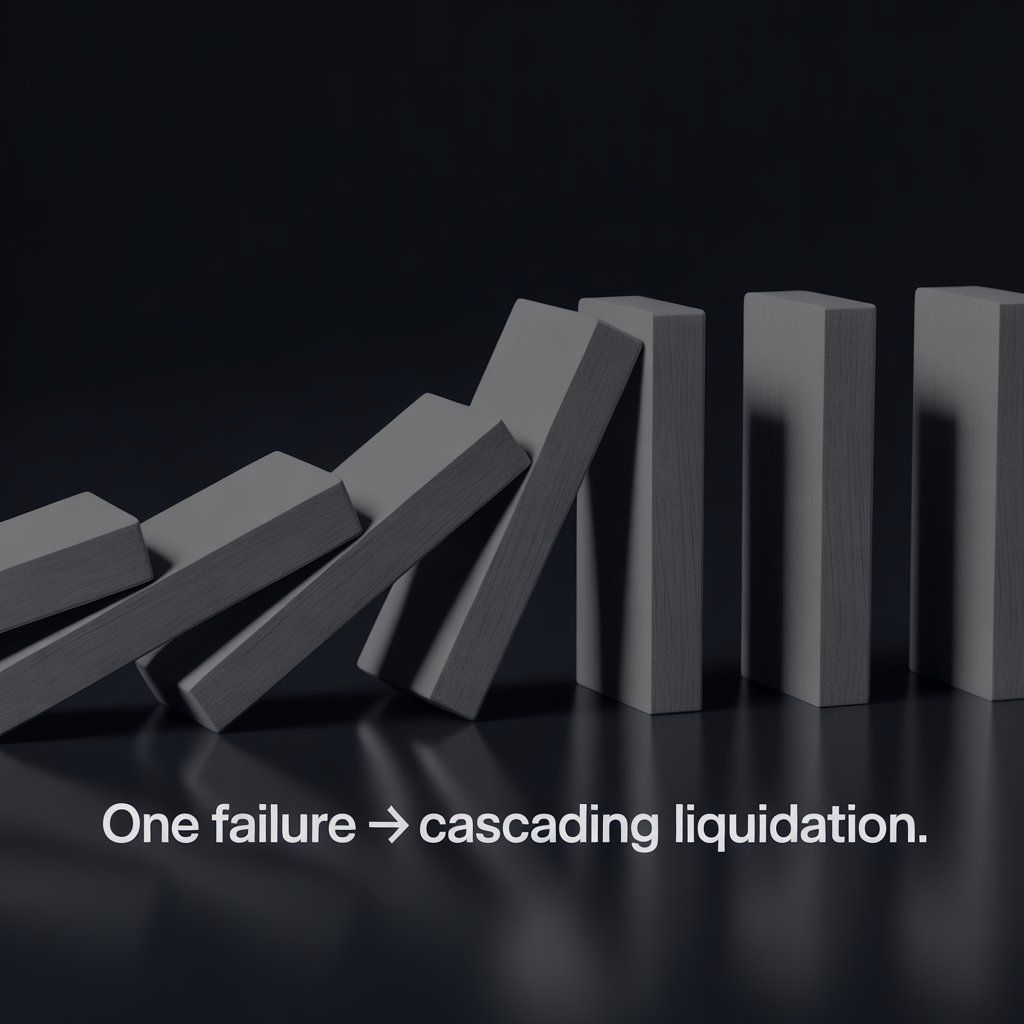


DeFi's resilience will be tested in 2026. As TVL chases yields amid flat fees, EigenLayer restaking dangers from rehypothecation in restaking demand vigilance. Diversify vaults, stress-test portfolios against dual slashes, and keep dry powder for dips. Hybrid strategies - blending on-chain signals with macro overlays - turn these perils into edge. Restaking rewards the prepared; the rest get rekt. Check restakinglayer.org for DA-specific watches, but build your own risk radar.




No comments yet. Be the first to share your thoughts!