
Choose a restaking strategy
Use Restaking Derivatives works best as a clear sequence: define the constraint, compare the realistic options, test the tradeoff, and choose the path with the fewest hidden costs. That order keeps the advice usable instead of decorative. After each step, pause long enough to check whether the recommendation still fits the reader's actual situation. If it depends on perfect timing, unusual access, or a best-case budget, include a simpler fallback.
| Factor | What to check | Why it matters |
|---|---|---|
| Fit | Match the option to the primary use case. | A good deal still fails if it does not fit the job. |
| Condition | Verify age, wear, and service history. | Hidden condition issues erase upfront savings. |
| Cost | Compare purchase price with likely upkeep. | The cheapest option is not always the lowest-cost option. |
Select a liquid restaking token
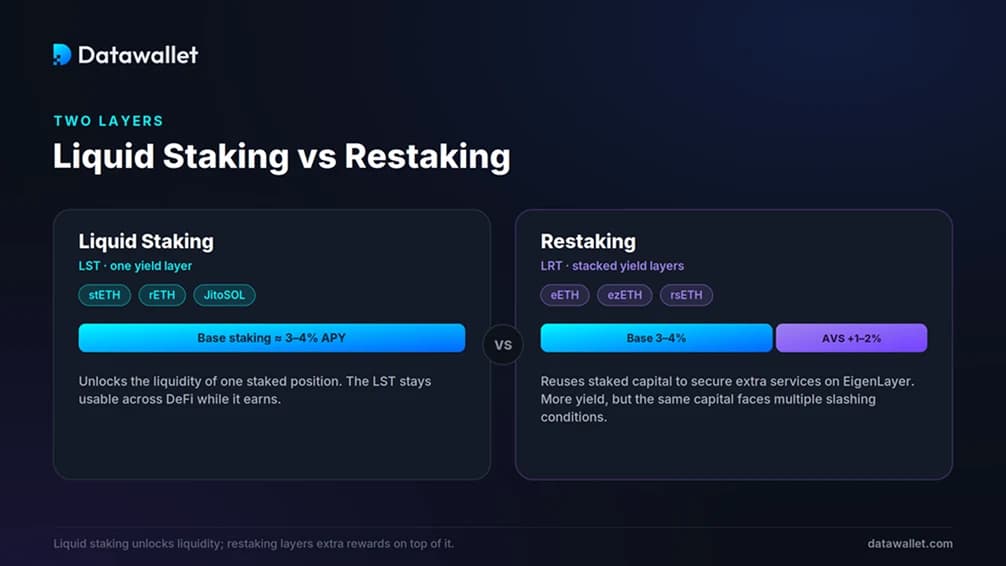
Choosing the right Liquid Restaking Token (LRT) determines your yield efficiency and exposure to restaking-specific risks. By 2026, the market has consolidated around protocols that offer transparent treasury management and robust slashing protection. You should evaluate candidates based on their underlying staking yield, the yield generated from restaking activities, and the safety of their smart contracts.
Evaluate yield composition
A healthy LRT yield typically consists of two parts: the base Ethereum staking yield (currently around 3-4%) and the additional yield from restaking points or fees. Protocols like Ether.fi and Renzo have established themselves by offering diversified exposure to multiple restaking networks, which can smooth out volatility in specific sectors. Compare the real yield after fees across platforms; some protocols charge higher management fees for more active treasury management, while others offer passive exposure with lower fees.
Check slashing and security mechanisms
Restaking introduces the risk of slashing if the underlying validator behaves maliciously or fails. Leading LRT protocols mitigate this by using distributed validator technology (DVT) or by holding insurance funds. For instance, Puffer Finance focuses heavily on DVT to decentralize validator keys, reducing the risk of a single point of failure. Review the protocol’s whitepaper and audit reports to understand how they handle slashing events and whether they have a history of covering losses for users.
Review liquidity and redemption terms
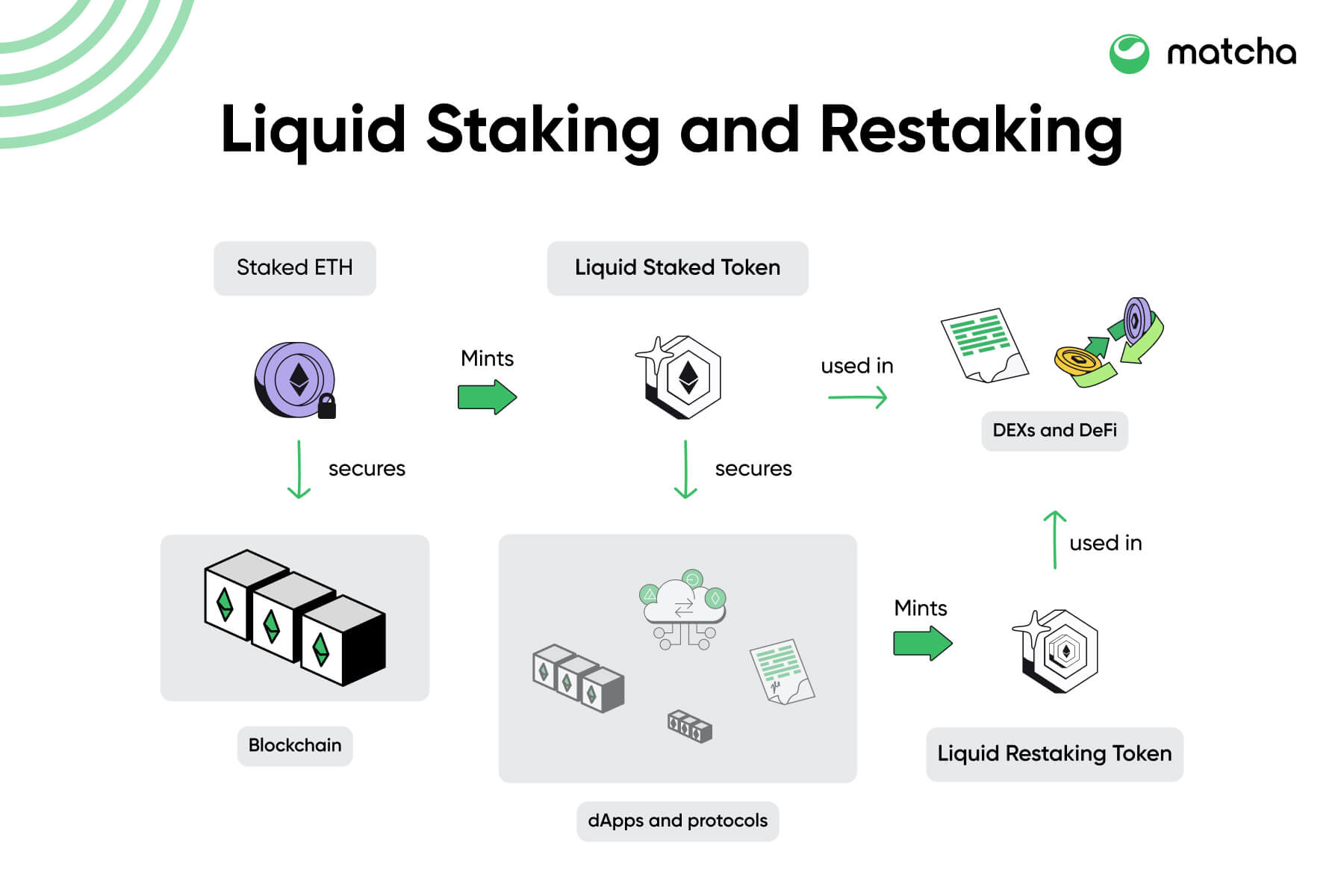
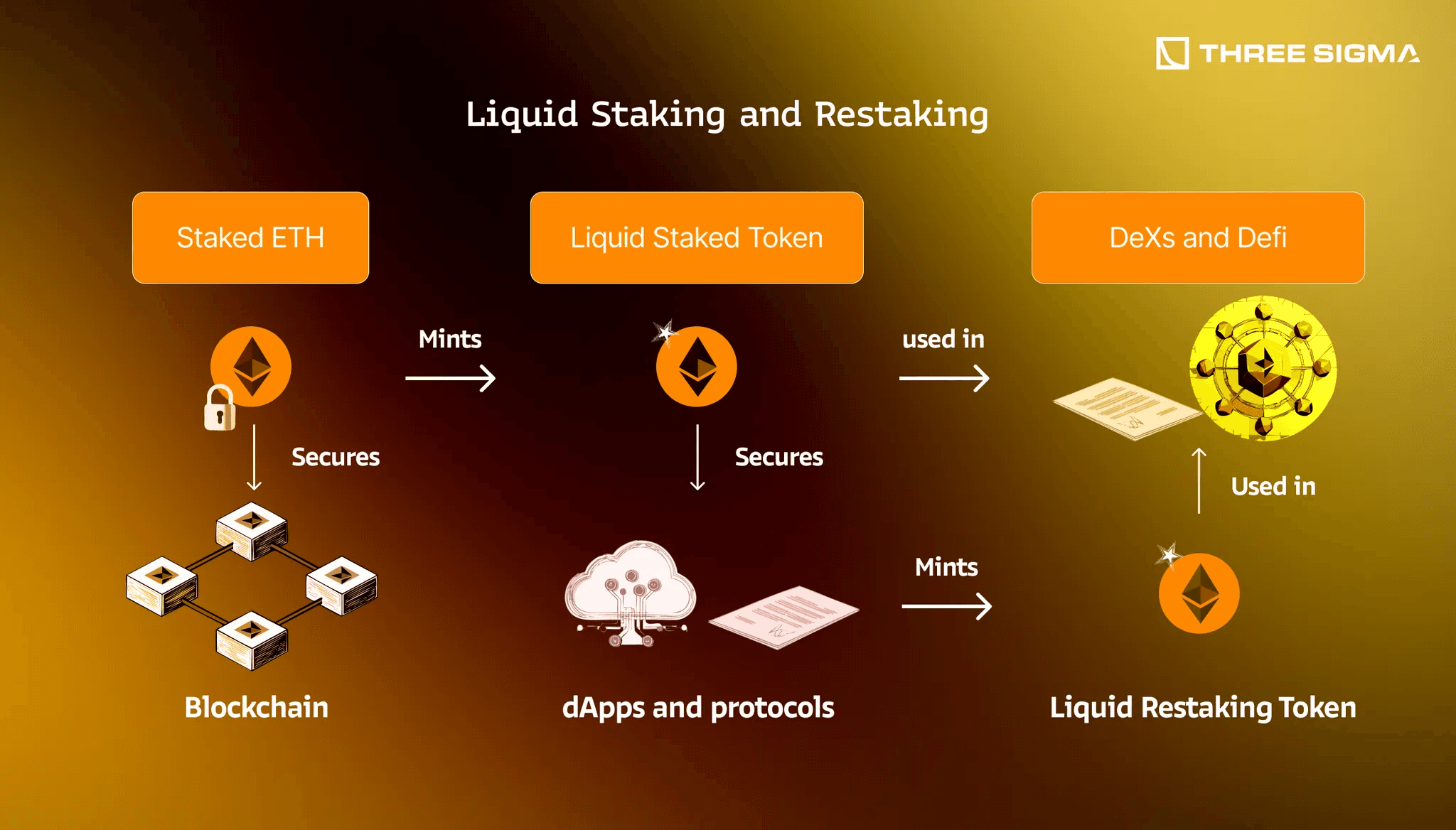
Liquidity is critical. You need to be able to exit your position quickly if market conditions change. Look for LRTs that have deep liquidity pools on major decentralized exchanges. Avoid protocols with complex lock-up periods or high slippage on large trades. The diagram below illustrates the flow of assets from staking to restaking, helping you visualize where your funds are deployed and what yield layers they are exposed to.
Compare protocol governance
Governance determines how protocol treasury funds are used and how upgrades are implemented. Some LRTs are governed by decentralized autonomous organizations (DAOs) where token holders vote on key decisions, while others are more centralized. For transparency, prefer protocols that publish regular governance proposals and treasury reports. This ensures you understand who controls the funds and how risks are managed over time.
Execute the restaking transaction
Restaking requires bridging your ETH to a Liquid Restaking Token (LRT) protocol, staking it, and receiving a derivative that represents both your staked ETH and the additional restaked yield. This process combines two layers of security: the underlying Ethereum consensus layer and the specific protocol’s validation requirements.
Follow these steps to complete the transaction.
Before you can restake, your ETH must reside on the blockchain network where the LRT protocol operates. Most major protocols, such as Ether.fi or Renzo, operate on Ethereum mainnet or layer-2 solutions like Arbitrum and Base. Use an official bridge or a trusted aggregator like Orbiter Finance to move your ETH. Ensure you have enough native gas tokens for the destination chain to cover transaction fees.

Navigate to the official website of your chosen LRT protocol. Connect your Web3 wallet, such as MetaMask or Rabby. Verify the URL carefully to avoid phishing sites. Once connected, the interface will display your available balance and the current APY for the specific restaking pool you intend to join.
Enter the amount of ETH you wish to restake. The protocol will calculate the equivalent amount of LRTs you will receive. Review the smart contract address displayed on the interface to ensure you are interacting with the verified deployment. Confirm the transaction details, including gas fees, and sign the deposit.

After the transaction confirms on-chain, check your wallet for the newly minted LRTs. These tokens represent your restaked position and can often be used in other DeFi applications for additional yield or liquidity mining. Record the transaction hash for your records and monitor your position through the protocol’s dashboard to track accrued rewards.
Manage slashing and smart contract risk
Restaking derivatives amplify yield by reusing staked assets across multiple protocols, but they also stack the associated risks. If the underlying validator misbehaves or a smart contract is exploited, your capital can be partially or entirely lost. Because these protocols are non-custodial and often rely on complex, interconnected code, you must actively monitor and mitigate these threats rather than assuming passive safety.
Monitor slashing conditions
Slashing happens when a validator node violates protocol rules, such as going offline or signing conflicting blocks. In a restaking context, you are often exposed to multiple slashing conditions simultaneously. To manage this, prioritize protocols that offer "slashing protection" or insurance mechanisms.
- Check for insurance pools: Some liquid restaking tokens (LRTs) include insurance funds that compensate users in case of slashing. Verify if the protocol you are using has this feature and how it is funded.
- Review validator performance: If you are running your own validators or choosing specific ones, monitor their uptime and slash history. Use official Ethereum explorers or third-party dashboards to track validator status.
- Understand the penalty structure: Different protocols have different slashing penalties. Some may only slash a portion of your stake, while others could result in total loss. Read the protocol’s documentation carefully to understand the worst-case scenario.
Audit smart contract risk
Smart contract bugs are a primary cause of losses in DeFi. Restaking protocols, which often involve multiple layers of abstraction and cross-protocol interactions, are particularly vulnerable.
- Prioritize audited protocols: Only use protocols that have undergone rigorous security audits from reputable firms. Look for multiple audits and bug bounty programs.
- Review audit reports: Don’t just check if a protocol is audited; read the audit reports. Pay attention to the severity of identified issues and whether they have been resolved.
- Limit exposure: Diversify your restaking positions across multiple protocols to avoid putting all your capital in one basket. This reduces the impact of a single protocol failure.
- Stay informed: Follow official channels of the protocols you use for announcements about security incidents or upgrades. Early awareness can help you withdraw your funds before a potential exploit.
Check if the protocol has undergone multiple audits from reputable firms and review the audit reports for resolved high-severity issues.
Ensure the protocol offers slashing insurance or compensation mechanisms, and understand the terms and funding sources.
Use official Ethereum explorers or third-party dashboards to track the uptime and slash history of validators you are using.
Spread your restaking capital across multiple audited protocols to mitigate the risk of a single protocol failure.
Exit the position safely
Unwinding a restaking position requires reversing the flow: you must first unwrap the liquid restaking token (LRT) to recover the underlying liquid staking token (LST), and then withdraw that LST back to native ETH. This sequence is not instantaneous; both steps involve protocol-specific mechanics and potential queuing periods that affect your timing and capital availability.
Before initiating any transaction, verify the current status of the withdrawal queue on your specific restaking protocol. Many LRTs impose a cooldown period or require you to wait in line before the underlying LST can be unbonded. Checking these parameters prevents failed transactions and helps you estimate the total time until your native ETH is liquid.
Navigate to the restaking protocol’s interface and select the unwrap function. This action burns your LRT and mints the corresponding underlying LST (such as stETH or rETH). Ensure you have sufficient ETH in your wallet to cover the gas fees for this transaction, as network congestion can spike costs during high-traffic periods.
Once you hold the LST, initiate the withdrawal request to convert it back to native ETH. Most major liquid staking protocols now offer accelerated withdrawal mechanisms or allow you to sell the LST on a decentralized exchange (DEX) for immediate liquidity if you do not wish to wait for the official unbonding period. If using the official queue, confirm the expected completion date displayed by the protocol.
After the unbonding period concludes, return to the protocol dashboard to claim your native ETH. This final step releases the assets from the staking contract back to your wallet. Verify that the received amount matches your expectation, accounting for any accrued staking rewards or protocol fees that may have been deducted during the process.
No comments yet. Be the first to share your thoughts!