
Restaking derivatives 2026: the new yield layer
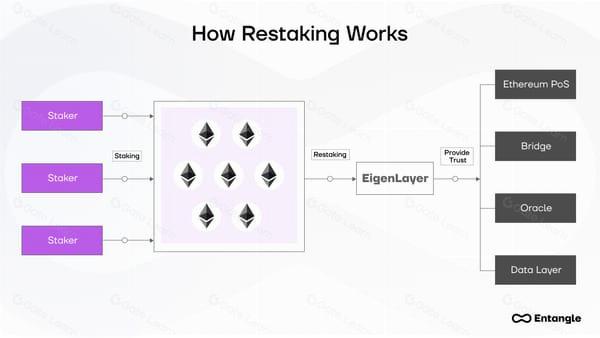
Restaking derivatives have evolved from a novel experiment into a foundational layer of crypto infrastructure. By allowing validators to reuse their staked ETH to secure additional networks, these protocols create a "security premium" on top of base staking yields. This mechanism effectively layers security and yield, turning a single asset into a multi-purpose resource.
The landscape is currently split into two distinct categories: EigenLayer-based restaking and native restaking protocols. EigenLayer, the pioneer of the concept, operates as an active verification layer that sits alongside Ethereum, enabling "restaked" assets to secure AVSs (Actively Validated Services) like oracles or bridge validators. In contrast, native restaking protocols, such as Jito or Lido’s restaking modules, integrate the security layer directly into their staking architecture, often focusing on MEV (Maximal Extractable Value) redistribution or simplified yield aggregation.
Base yields remain the floor. As of early 2026, solo staking Ethereum offers approximately 2.8% to 3.2% annually. Restaking derivatives layer additional returns on this baseline, but they also introduce new vectors of risk, including slashing conditions that can penalize validators for failures across any of the secured networks. Understanding the difference between these two models is essential for evaluating whether the extra yield justifies the added complexity.
EigenLayer v2 update: expanding the attack surface
Use this section to make the Restaking Derivatives decision easier to compare in real life, not just on paper. Start with the reader's actual constraint, then separate must-have requirements from details that are merely nice to have. A practical choice should survive normal use, maintenance, timing, and budget. If a recommendation only works in an ideal situation, call that out plainly and give the reader a fallback path.
The simplest way to use this section is to write down the must-have criteria first, then compare each option against those criteria before weighing nice-to-have features.
Native restaking tokens: Bitcoin and Solana models
Use this section to make the Restaking Derivatives decision easier to compare in real life, not just on paper. Start with the reader's actual constraint, then separate must-have requirements from details that are merely nice to have. A practical choice should survive normal use, maintenance, timing, and budget. If a recommendation only works in an ideal situation, call that out plainly and give the reader a fallback path.
| Factor | What to check | Why it matters |
|---|---|---|
| Fit | Match the option to the primary use case. | A good deal still fails if it does not fit the job. |
| Condition | Verify age, wear, and service history. | Hidden condition issues erase upfront savings. |
| Cost | Compare purchase price with likely upkeep. | The cheapest option is not always the lowest-cost option. |
Liquid restaking tokens: liquidity vs. complexity
Use this section to make the Restaking Derivatives decision easier to compare in real life, not just on paper. Start with the reader's actual constraint, then separate must-have requirements from details that are merely nice to have. A practical choice should survive normal use, maintenance, timing, and budget. If a recommendation only works in an ideal situation, call that out plainly and give the reader a fallback path.
The simplest way to use this section is to write down the must-have criteria first, then compare each option against those criteria before weighing nice-to-have features.
Risk layers: slashing, correlation, and smart contracts
Use this section to make the Restaking Derivatives decision easier to compare in real life, not just on paper. Start with the reader's actual constraint, then separate must-have requirements from details that are merely nice to have. A practical choice should survive normal use, maintenance, timing, and budget. If a recommendation only works in an ideal situation, call that out plainly and give the reader a fallback path.
The simplest way to use this section is to write down the must-have criteria first, then compare each option against those criteria before weighing nice-to-have features.
Choosing a restaking strategy for 2026
Selecting a restaking strategy requires matching your risk tolerance to the specific yield mechanics of each layer. The market has fragmented into three distinct buckets: native staking, EigenLayer-based points strategies, and Liquid Restaking Tokens (LRTs). Each offers different tradeoffs between yield stability, complexity, and exposure to smart contract risk.
Native Restaking: The Baseline
Native restaking involves locking ETH directly into EigenLayer’s smart contracts. This approach offers the highest transparency and the lowest counterparty risk, as you hold the actual staked ETH and earn the base Ethereum yield plus any additional restaking rewards. However, the capital efficiency is low because your assets are locked, and the yield is typically lower than leveraged strategies. This is the safest entry point for conservative investors who prioritize capital preservation over aggressive yield chasing.
EigenLayer Points Strategies
Points strategies focus on accumulating EigenLayer points rather than immediate yield. These strategies often involve providing liquidity to EigenLayer’s EIP-4788 or similar mechanisms to earn points that may convert to future token emissions. The yield here is speculative and dependent on future token valuations. While the potential upside can be significant if the Eigen token performs well, the downside risk is high if points do not convert to valuable rewards. This strategy suits investors with a higher risk tolerance who are betting on the long-term success of the EigenLayer ecosystem.
Liquid Restaking Tokens (LRTs)
LRTs, such as those from EigenLayer partners like EtherFi or Renzo, offer the highest yield potential but come with increased complexity and risk. LRTs allow you to maintain liquidity while restaking, enabling you to use your staked ETH as collateral in DeFi protocols. This leverage can amplify returns, but it also exposes you to smart contract risks, liquidation risks, and the performance of the specific LRT protocol. Choose LRTs if you are comfortable with higher volatility and want to maximize yield through composability.
Making the Decision
Your choice should depend on your primary goal: safety, speculation, or yield maximization. If you want safety, stick to native restaking. If you are betting on the EigenLayer token, consider points strategies. If you want to maximize yield through DeFi composability, LRTs are the way to go. Always assess the smart contract risk of any protocol you interact with, as restaking amplifies both rewards and vulnerabilities.
No comments yet. Be the first to share your thoughts!