
The 2026 Restaking Landscape
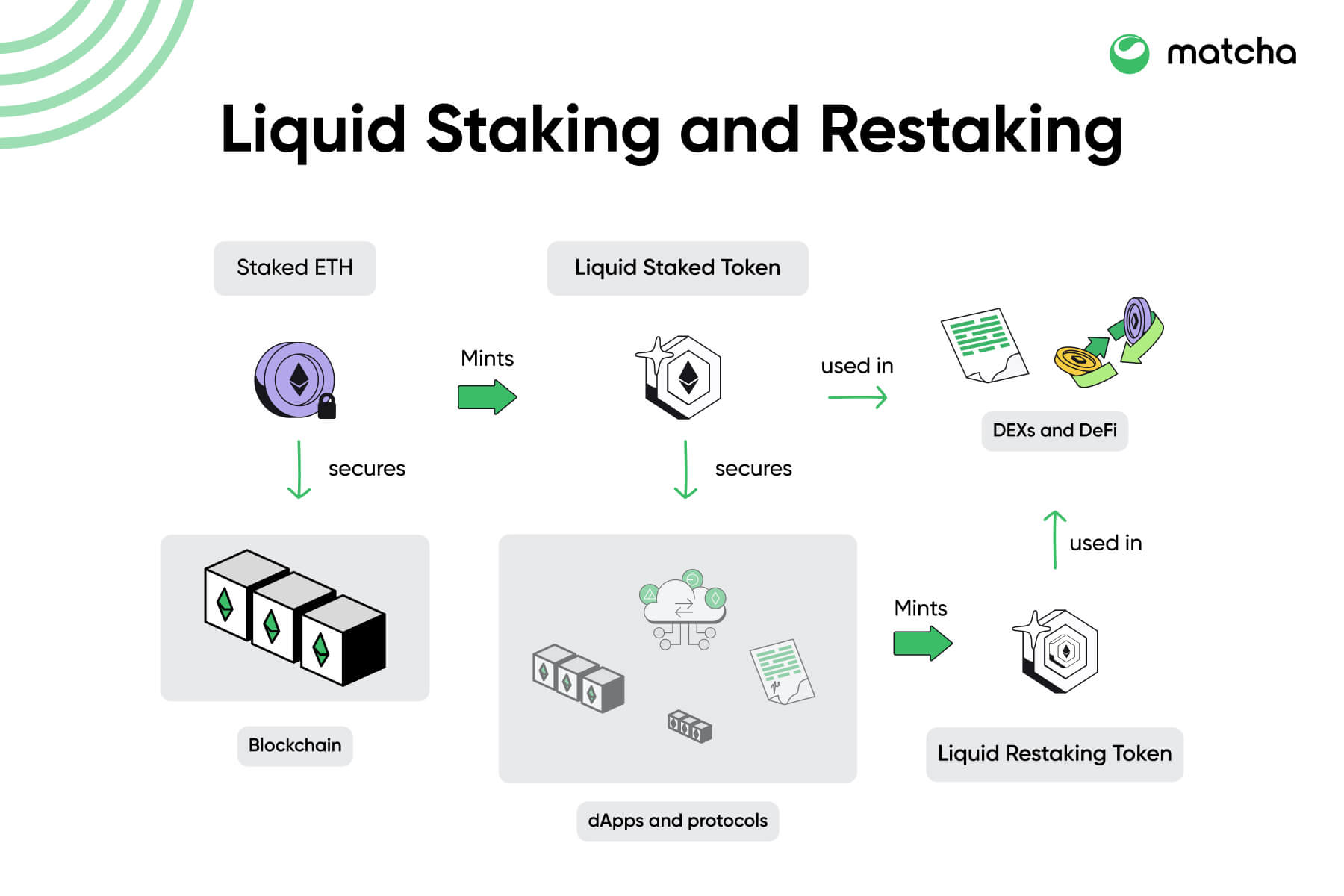
Restaking derivatives have evolved from experimental protocols into a foundational layer of the crypto economy. In 2026, the market has moved beyond simple yield farming toward a complex ecosystem where Liquid Restaking Tokens (LRTs) serve as the primary vehicle for capital efficiency. This shift allows stakers to secure multiple networks simultaneously, transforming static Ethereum stakes into active, multi-layered collateral.
The core distinction lies in the layering of security. Native staking involves locking ETH to validate the Ethereum mainnet, earning base rewards for maintaining consensus. LRTs, however, take that staked ETH and restake it across additional infrastructure layers, such as oracle networks or bridge validators. This creates a recursive yield model where the same capital generates returns from multiple sources, significantly boosting the effective annual percentage yield (APY) compared to traditional staking.
This structural change has attracted significant institutional attention. Corporate treasuries and large-scale investors are increasingly viewing LRTs as a way to maximize capital deployment without sacrificing security. According to DAIC Capital, the 2026 staking economy is defined by this integration of restaking networks with broader deflationary tokenomics, driving demand for these derivative assets.
The performance of these derivatives is closely tied to the underlying asset. As Ethereum continues to serve as the settlement layer for much of this activity, its price action and network activity directly influence the viability and attractiveness of restaking protocols.
Comparing LRT Protocols and Yield Sources
The liquid restaking token (LRT) market has split into two distinct camps: Ethereum-native protocols like EigenLayer and Solv, and Bitcoin-focused entrants like Babylon. Understanding the trade-offs between these ecosystems is essential for assessing risk in 2026. Ethereum LRTs generally offer higher yields driven by restaking points and MEV, but they carry complex smart contract risks. Bitcoin LRTs provide exposure to the largest cryptocurrency’s security model but often face lower yields due to limited native DeFi integration.
Ethereum-Based LRTs
EigenLayer pioneered the restaking model, allowing ETH stakers to secure additional "restaked" services. Protocols like Solv Finance build on this by offering diversified yield strategies. The primary appeal is the ability to earn multiple yield streams from a single staked asset. However, this comes with significant smart contract risk. If a restaked service fails, the underlying ETH is at risk. The yield is often volatile, tied to protocol points and market demand for restaked capacity.
Bitcoin-Based LRTs
Babylon introduces Bitcoin restaking, leveraging BTC’s hash power to secure other chains. This creates a new yield source for dormant BTC. The security model is different: instead of smart contract risk alone, it involves the economic security of the Bitcoin network. Yields are typically lower than Ethereum LRTs but are considered more stable by some investors. The main limitation is liquidity; Bitcoin restaking is still nascent, with fewer protocols and less mature DeFi integrations compared to Ethereum.
Key Trade-offs
| Feature | Ethereum LRTs (EigenLayer/Solv) | Bitcoin LRTs (Babylon) |
|---|---|---|
| Underlying Asset | ETH | BTC |
| Primary Yield Source | Restaking points, MEV, protocol incentives | Bitcoin security fees, cross-chain staking |
| Risk Profile | High smart contract complexity | Lower smart contract risk, higher liquidity risk |
| Maturity | High (mature ecosystem) | Low (emerging ecosystem) |
Decision Framework
Choose Ethereum LRTs if you seek higher yields and are comfortable with complex smart contract risks. Choose Bitcoin LRTs if you prioritize capital preservation and believe in the long-term value of Bitcoin’s security model. Diversification across both may offer a balanced approach, but ensure you understand the specific risks of each protocol before allocating capital.
| Protocol | Asset | Yield Source | Risk Level |
|---|---|---|---|
| EigenLayer | ETH | Restaking Points | High |
| Solv Finance | ETH | Diversified Strategies | High |
| Babylon | BTC | Security Fees | Medium |
How LRT Yield Stacks Up
Liquid Restaking Tokens (LRTs) generate returns through three distinct layers. The first layer is base staking yield from Ethereum validators. The second comes from restaking fees paid by protocols securing their security through EigenLayer. The third layer arises from DeFi composability, where LRTs are used as collateral in lending markets or liquidity pools.
Think of this yield structure as a layered cake. Each tier adds a different flavor of risk and reward. If one layer underperforms, the others may still provide returns. This diversification is what makes composite APY attractive to investors seeking higher yields than standard staking.
The composite APY in 2026 is driven by the interplay of these layers. Base staking yields fluctuate with network demand. Restaking fees depend on the number of protocols seeking security. DeFi yields vary with market volatility and liquidity depth. Understanding these drivers helps investors assess the sustainability of an LRT's return profile.
Assessing Slashing and Systemic Risks
Restaking derivatives amplify yield by leveraging Ethereum’s security, but they also concentrate risk. When you restake, your ETH is not just securing the base layer; it is often simultaneously securing multiple Actively Validated Services (AVS). This creates a complex web of dependencies where a failure in one layer can trigger cascading penalties across the entire portfolio.
Slashing Conditions
Slashing is the primary mechanical risk in restaking. If a validator operator behaves maliciously or fails to perform its duties, the protocol can confiscate a portion of the staked ETH. In a restaking context, this risk is multiplied. You are not just trusting one set of validators but a network of operators who may be running services for several different protocols. A single misconfiguration or malicious act by an operator can result in slashing events across all the AVSs they support, potentially wiping out a significant portion of your restaked capital.
Understanding slashing conditions is critical before allocating capital to LRTs. The penalty is not just a temporary loss of rewards; it is a permanent reduction of principal.
Smart Contract Vulnerabilities
Restaking protocols rely on complex smart contracts to manage the delegation of stake and the distribution of rewards. These contracts are inherently exposed to code vulnerabilities. A bug in the smart contract logic could allow an attacker to drain funds or manipulate the staking ratios. Unlike traditional staking, where the risk is mostly operational, restaking introduces layer-2 and layer-3 smart contract risks that are often less audited and more complex. Users must carefully review the audit history and bug bounty programs of the specific restaking protocol they choose.
Correlation Risks
The most insidious risk in the restaking ecosystem is correlation. As more protocols adopt restaking, the underlying security of the Ethereum network becomes increasingly concentrated among a few large staking providers and restaking platforms. If a major restaking protocol fails or if Ethereum’s base layer experiences a significant security breach, the impact will be felt across all restaking derivatives. This systemic correlation means that diversification across different restaking platforms may not provide the risk mitigation investors expect. The entire ecosystem is tethered to the health and security of Ethereum, making it a high-stakes environment where the downside potential is severe.
No comments yet. Be the first to share your thoughts!