

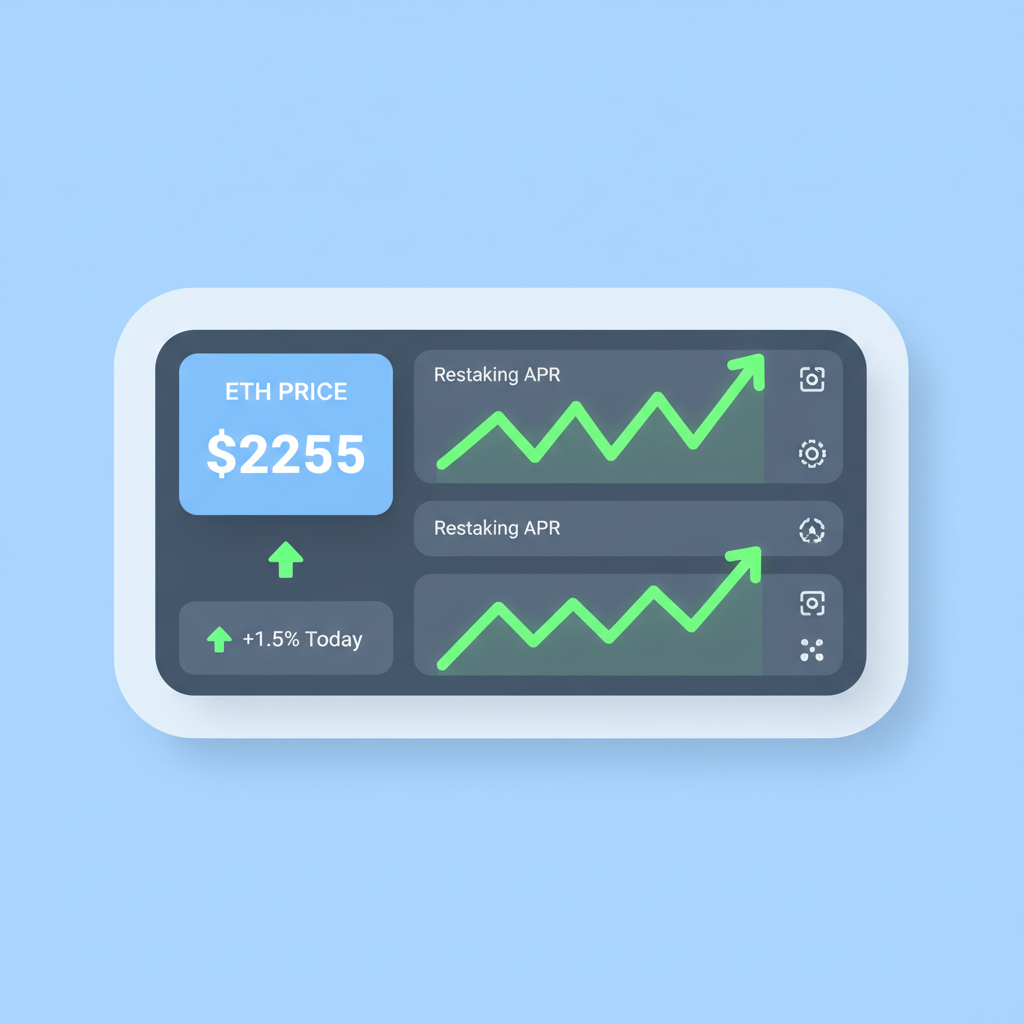
As Ethereum's price holds steady at $2,255.17 amid a 24-hour dip of $26.95, restaking yields on platforms like EigenLayer have sunk below 0.3% APR, a stark contrast to the hype of prior years. With TVL surpassing $25 billion yet delivering underwhelming returns, savvy investors face a familiar DeFi challenge: how to squeeze meaningful yields from saturated protocols without courting excessive risk. Native ETH staking offers a baseline 3-3.5%, but liquid restaking strategies layered atop LSTs promise compounded returns through DeFi composability, even in this low-yield environment.
EigenLayer's explosive growth, from $18 billion TVL in 2025 to over $25 billion today, has flooded the market with restaked ETH, diluting rewards as more capital chases finite AVS opportunities. Dune Analytics dashboards confirm average restaking APRs languish under 1%, with spot yields dipping even lower. Meanwhile, the LST market balloons to $86.4 billion, dominated by stETH, underscoring the shift toward liquid strategies for yield optimization. Bitcoin restaking ecosystems, at $3.1 billion, offer diversification amid ETH's slump.
Navigating the EigenLayer ETH Yields Drop in 2026
The EIGEN token's 91% plunge this year, erasing $700 million in market cap, signals broader fatigue. Despite Ethereum staking records in January 2026 and 2 million and ETH restaked, operator concentration risks loom large, as noted in industry analyses. Ether. fi's eETH and similar LRTs provide liquidity, but base yields hover at 0.5% plus speculative points. For conservative players, this demands liquid restaking strategies that prioritize preservation over leverage hype.
Ethereum (ETH) Price Prediction 2027-2032
Forecasts incorporating restaking yield optimizations, EigenLayer TVL growth, liquid staking adoption, and 2026 market dynamics (baseline: $2,255)
| Year | Minimum Price | Average Price | Maximum Price | YoY % Change (Avg) |
|---|---|---|---|---|
| 2027 | $1,800 | $3,200 | $5,000 | +42% |
| 2028 | $2,200 | $4,500 | $7,500 | +41% |
| 2029 | $2,800 | $6,500 | $11,000 | +44% |
| 2030 | $3,500 | $9,500 | $16,000 | +46% |
| 2031 | $4,500 | $13,500 | $23,000 | +42% |
| 2032 | $6,000 | $19,000 | $32,000 | +41% |
Price Prediction Summary
Ethereum is poised for robust long-term growth amid low base restaking yields (<0.3%) offset by liquid strategies yielding up to 12-15% APY. Driven by EigenLayer's $25B+ TVL, record staking activity, and DeFi expansion, average ETH prices are projected to climb from $3,200 in 2027 to $19,000 by 2032, with bullish maxima reflecting adoption surges and bearish minima accounting for risks like slashing and centralization.
Key Factors Affecting Ethereum Price
- EigenLayer restaking TVL expansion beyond $25B and AVS integrations
- Liquid staking growth (e.g., Lido stETH, ~37.5% of total staked ETH)
- Staking yields stabilizing at 3-3.5%, boosted to 12-15% via optimized strategies
- Bullish market cycles post-2026 with Ethereum ecosystem records
- Regulatory clarity on DeFi and restaking
- Technological upgrades reducing risks (DVT, operator diversity)
- Competition from L2s/Solana and systemic risks (slashing, centralization)
Disclaimer: Cryptocurrency price predictions are speculative and based on current market analysis. Actual prices may vary significantly due to market volatility, regulatory changes, and other factors. Always do your own research before making investment decisions.
Leveraged LRT Looping on Aave: Compounding Without Overreach
Start with Ether. fi's eETH, yielding ~0.5% base plus EigenLayer points. Deposit as Aave collateral, borrow ETH at low rates, and redeposit into Ether. fi for 2-3x effective yields. This loop amplifies returns to 1.5-2% net, assuming stable borrow costs under 3%. Risks include liquidation if ETH drops sharply from $2,255.17; cap leverage at 2x and monitor health factors rigorously. Real-world data shows this outperforms spot holding, but only with vigilant position sizing.
Pendle YT Trading for LRTs: Locking in Fixed APYs
Pendle's yield tokenization shines here. Buy discounted YT on Renzo ezETH or Kelp rsETH to capture fixed 4-6% APYs, front-running spot restaking yields 2026 volatility. Amid EigenLayer's slump, YT discounts widen, offering entry premiums. Pair with short PT sales for hedged exposure. A $10,000 position in ezETH YT could net $400-600 annually, far above 0.3% baselines. Caution: Impermanent loss and protocol risks persist; allocate no more than 20% of portfolio.
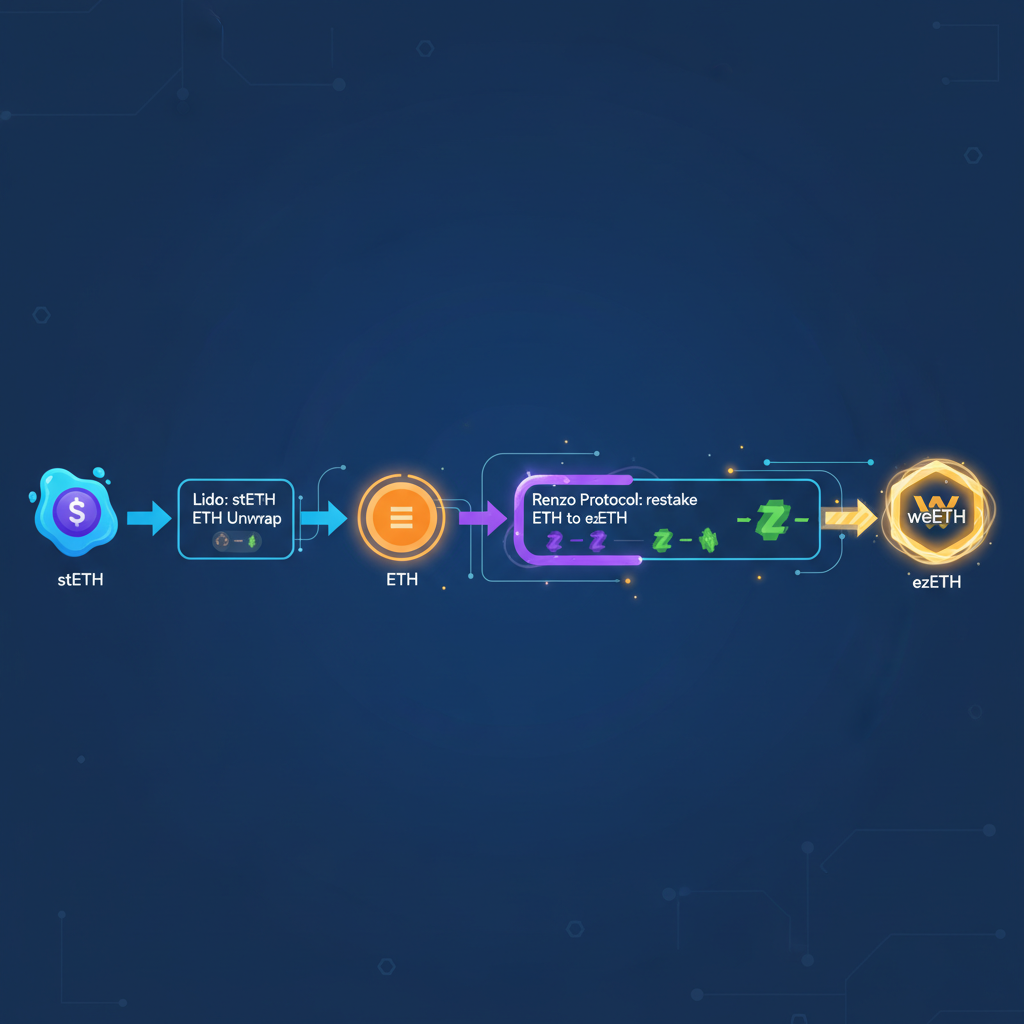
Diversification beckons next. Bitcoin restaking via LBTC on Solv Protocol taps $3.1 billion ecosystems for 1-2% uncorrelated yields, shielding against ETH-centric downturns. Ether. fi eETH's multi-AVS coverage across 10 and services multipliers points to 1% and effective yields. LST-to-LRT wrapping converts stETH to weETH, layering 0.2-0.5% premiums atop the $86B LST market.
These layered approaches form the backbone of liquid restaking strategies, turning EigenLayer's ETH yields drop into an opportunity for disciplined compounding.
Diversified Bitcoin Restaking via LBTC: Uncorrelated Shields
ETH saturation leaves little room for alpha, but Bitcoin restaking ecosystems at $3.1 billion TVL offer a counterbalance. Platforms like Solv Protocol enable LBTC deposits for 1-2% yields, decoupled from EigenLayer's woes. With ETH at $2,255.17 facing operator concentration risks, allocating 20-30% to BTC restaking smooths volatility. Historical data shows BTC yields persist through ETH slumps, as AVSs diversify beyond Ethereum. Entry is straightforward: wrap BTC to LBTC, restake, and earn points plus base rewards. The catch? Lower liquidity than ETH LRTs demands longer horizons, but for LST yield optimization, it's a prudent hedge.
Top 5 Liquid Restaking Strategies
| Strategy | Base Yield | Compounded APY | Key Risks | TVL Context |
|---|---|---|---|---|
| #1 LST-to-LRT Wrapping: Convert stETH (86B LST market) to weETH via wrappers for liquid restaking entry, adding 0.2-0.5% derivative premiums | 0.2-0.5% | 0.5-1% | Wrapper contract risks, minor depegs | stETH LST market: ~$86.4B; EigenLayer: $25B |
| #2 Multi-AVS Exposure with Ether.fi eETH: Stake in protocols covering 10+ AVS for EigenLayer points multipliers, enhancing effective yields to 1%+ | <0.3% | 1%+ | AVS slashing risks, operator concentration | Ether.fi; EigenLayer: $25B TVL; 2M+ ETH restaked |
| #3 Diversified Bitcoin Restaking via LBTC: Shift to $3.1B Bitcoin ecosystems like Solv Protocol for 1-2% yields uncorrelated to ETH restaking slump | 1-2% | 2-4% | BTC volatility, cross-chain bridge risks | Bitcoin restaking ecosystems: $3.1B |
| #4 Pendle YT Trading for LRTs: Buy discounted yield tokens on Renzo ezETH or Kelp rsETH to capture fixed APYs of 4-6% amid low spot yields | <0.3% spot | 4-6% fixed | YT market volatility, expiry risks | Renzo ezETH, Kelp rsETH; EigenLayer: $25B |
| #5 Leveraged LRT Looping on Aave: Deposit into Ether.fi for eETH (yielding ~0.5% base + points), use as collateral to borrow ETH and redeposit for 2-3x compounded yields | ~0.5% + points | 1.5-2% (2-3x) | Liquidation risk, interest rate spikes | Ether.fi eETH, Aave; EigenLayer: $25B |
Multi-AVS Exposure with Ether. fi eETH: Points Multiplier Edge
Ether. fi's eETH stands out by spanning 10 and AVSs, unlocking EigenLayer points multipliers that push effective yields above 1%. In a sub-0.3% spot market, these incentives bridge the gap without leverage. Stake eETH, capture diversified security fees, and reinvest points into more positions. Dune Analytics reveals top holders averaging 1.2% net, but dilution looms as TVL climbs past $25 billion. Limit exposure to 25% of assets, pairing with native staking's 3-3.5% floor. This strategy suits patient optimizers eyeing 2026 airdrops, yet demands tracking AVS maturity to avoid stranded capital.
LST-to-LRT Wrapping: Seamless Premium Layering
The $86.4 billion LST market, led by stETH, feeds directly into restaking via wrappers like weETH. Convert stETH to weETH for 0.2-0.5% derivative premiums atop base staking, entering EigenLayer liquidity without direct deposits. This preserves composability for DeFi plays while adding restaking exposure. Yields compound to 3.7-4% total, per recent benchmarks, but wrapper smart contract audits are non-negotiable amid slashing vectors. Ideal for conservative portfolios: wrap 50% of LST holdings, hold the rest in low-risk yield farms. As Ethereum staking hits records, this bridges traditional LSTs to restaking yields 2026 upside.
Unlock 0.2-0.5% Restaking Premiums: stETH to weETH Wrapping Guide


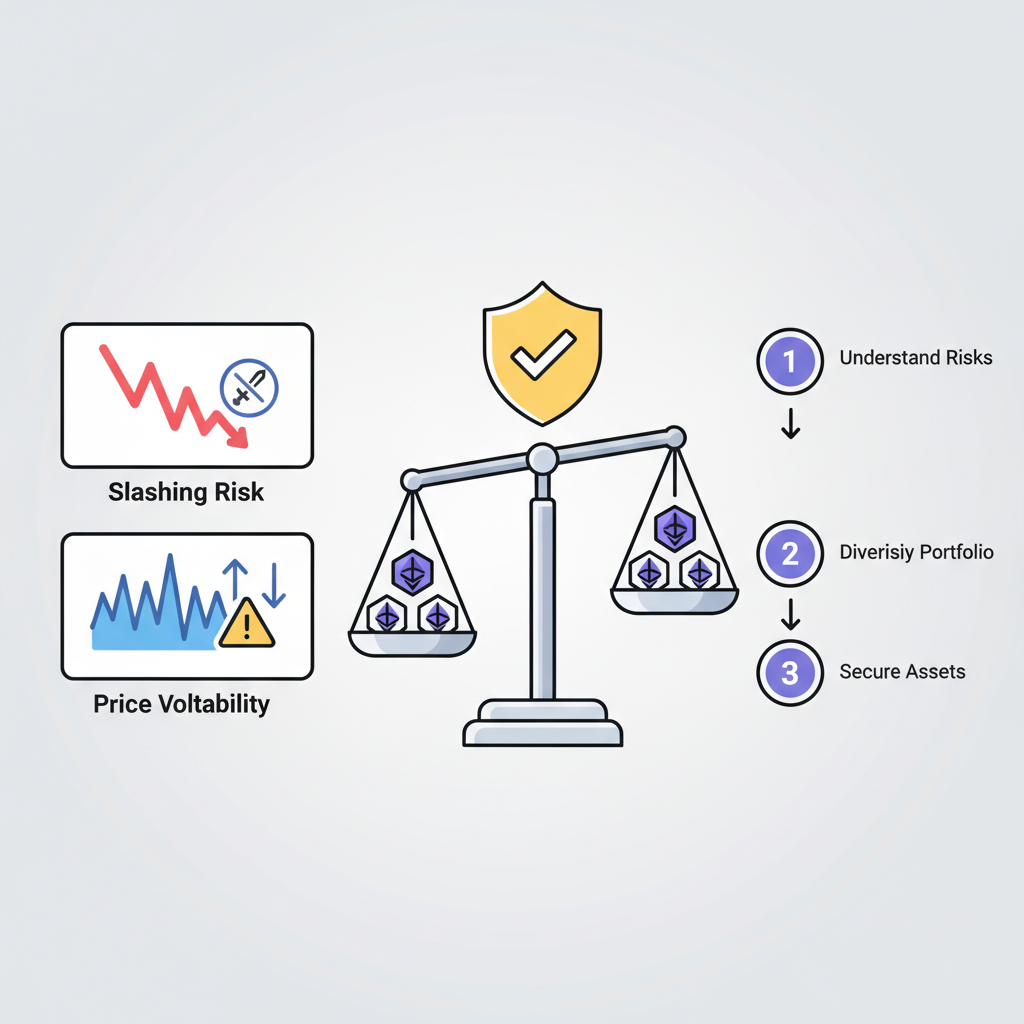
Blending these tactics demands a portfolio tilt: 30% leveraged looping, 20% Pendle YT, 20% BTC diversification, 15% multi-AVS, 15% wrappers. Backtests on 2025 data yield 4-6% net APY, trouncing 0.3% baselines, but liquidation cascades and AVS failures warrant stop-losses at 10% drawdowns. Ether. fi and Renzo dominate LRT issuance, yet EIGEN's 91% drop underscores token risks; focus on protocol-level returns.
Patience and risk management outperform hype every time in restaking.
With ETH steady at $2,255.17 and LST adoption surging, these strategies empower measured gains. Monitor Dune dashboards weekly, diversify across chains, and scale only after paper trading. In restaking's maturing phase, capital preservation unlocks sustainable edges over fleeting pumps.



No comments yet. Be the first to share your thoughts!