
Liquid restaking derivatives 2026 explained
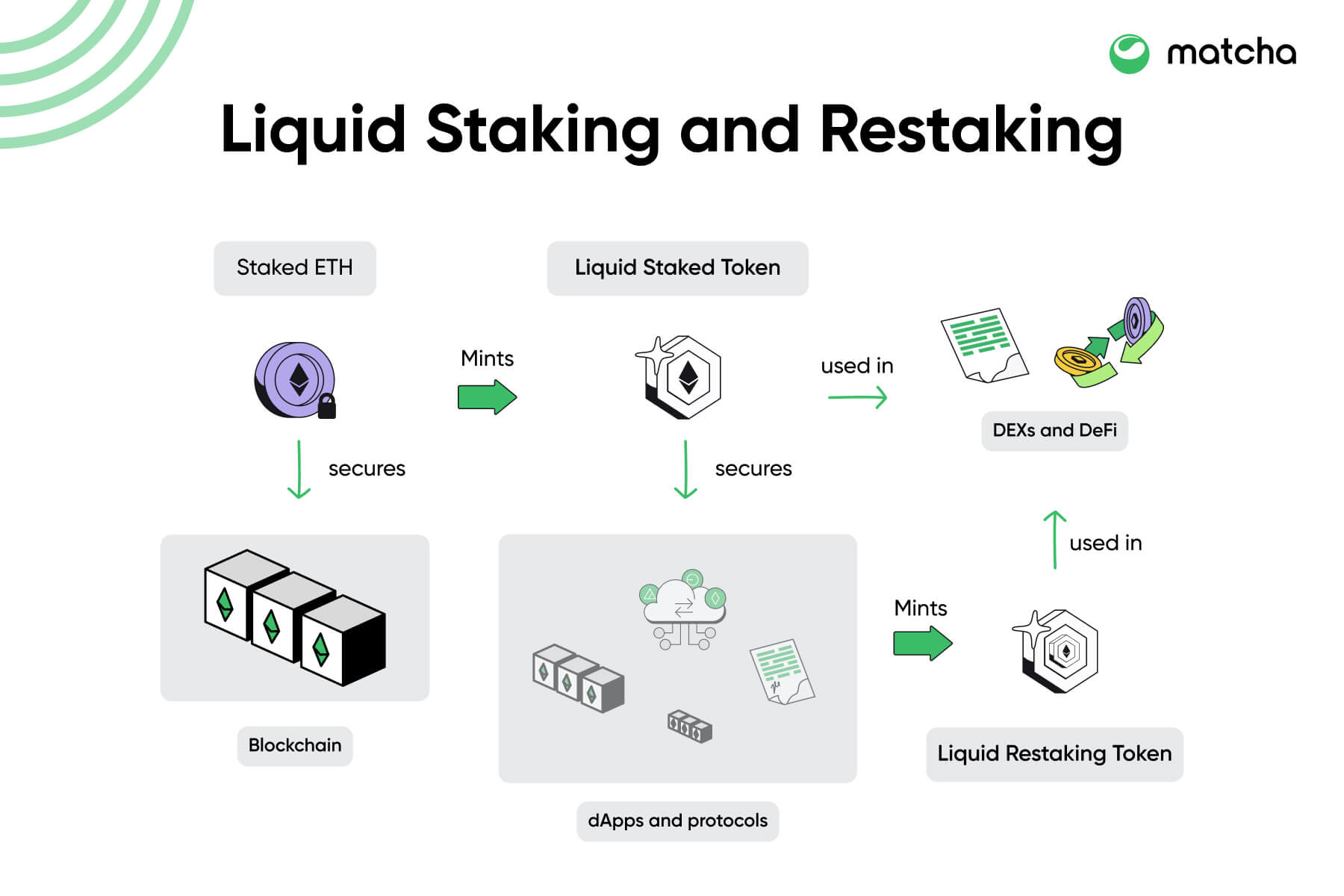
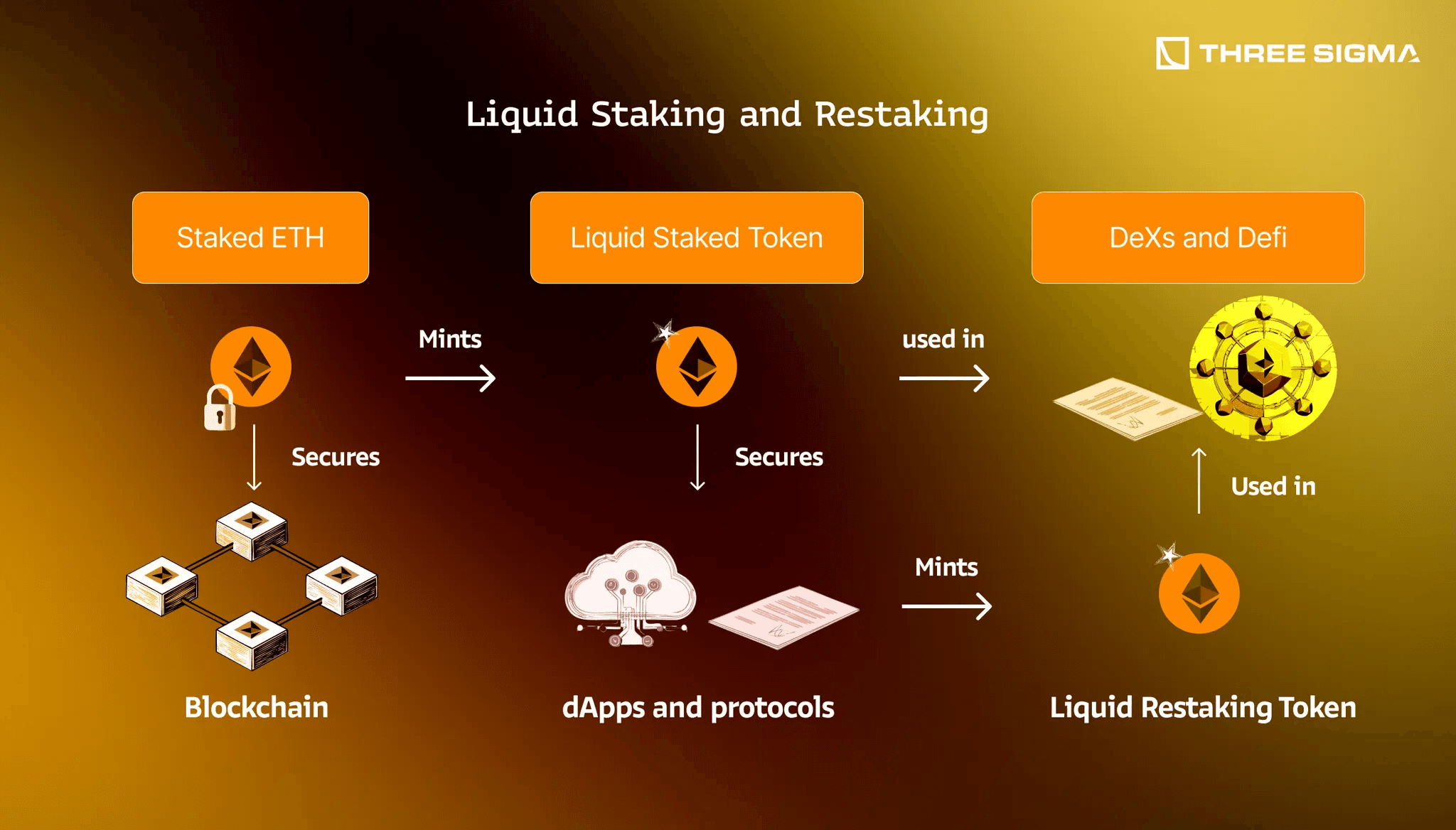
Liquid restaking derivatives (LRTs) represent the next evolution in liquid staking. While traditional liquid staking derivatives (LSDs) like stETH simply represent staked assets and unlock liquidity for DeFi activities [1], LRTs add a second layer of security to new networks. This process, known as restaking, allows the same underlying collateral to secure multiple protocols simultaneously.
In 2026, this model has shifted from a niche experiment to a core yield strategy. By restaking, users can earn additional yield from protocol incentives while maintaining the flexibility of a liquid token. However, this complexity introduces new vectors for risk. The same collateral that generates double yields is also exposed to double slashing conditions if the underlying validator misbehaves.
The market now distinguishes between the base yield from Ethereum consensus and the variable yield from restaking services. Understanding this split is essential for evaluating the true risk-adjusted return of these assets. As the ecosystem matures, the focus has moved from simple yield aggregation to sustainable, long-term security models.
Comparing liquid restaking derivatives 2026 protocols
Liquid restaking derivatives 2026 strategies diverge primarily in their yield composition and underlying risk profiles. While the base layer offers Ethereum staking rewards, the additional yield comes from restaking these assets into security services for other protocols like EigenLayer or new L1s. Not all protocols distribute this extra yield equally, and some introduce complex points systems that may not convert to immediate token value.
The table below compares major protocols based on current market metrics. These figures represent dynamic data points that shift with network activity and restaking demand. Always verify current APYs and TVL before committing capital, as these metrics can fluctuate significantly within short timeframes.
| Protocol | Est. APY | TVL | Restaking Targets |
|---|---|---|---|
| EtherFi (vETH2) | 4-6% | High | EigenLayer, Solana |
| Renzo (ezETH) | 5-7% | High | EigenLayer, Babylon |
| Puffer (pufETH) | 6-8% | Medium | EigenLayer, Ethereum L2s |
| Karak (kETH) | 4-5% | Medium | EigenLayer, Bitcoin |
Market performance and yield volatility
The yield generated by these protocols is not static. It is composed of base staking rewards plus variable restaking rewards, which depend on the demand for restaked security. During periods of high demand for new restaking services, APYs can spike, but they often normalize as the market saturates.
Investors should monitor the total value locked (TVL) in each protocol as a gauge of market confidence. Higher TVL often correlates with more stable yield distributions, but it also increases the potential impact of any single-point failure. Diversifying across multiple LRT protocols can mitigate this concentration risk.
The Hidden Risks of Liquid Restaking Derivatives
Liquid restaking derivatives 2026 offer high yields, but they introduce complex failure modes that go beyond standard staking. When you restake an already staked asset, you are not just securing one network; you are often securing multiple protocols simultaneously. This creates a chain of dependencies where a single point of failure can cascade through the entire system.
Smart Contract and Slashing Risks
The primary danger in liquid restaking is the amplification of slashing events. If a validator node misbehaves on the underlying consensus layer, the penalty is not limited to the initial stake. Because the same asset is often re-pledged across multiple restaking protocols (like EigenLayer), the slashing penalty can be multiplied or applied redundantly. Smart contract vulnerabilities in these intermediary layers can further exacerbate losses, potentially leading to total loss of principal rather than just a portion of rewards.
Liquidity Mismatches
Another critical risk is liquidity mismatch. Liquid restaking tokens (LRTs) are designed to be traded freely, but the underlying staked assets are locked for long periods. During periods of extreme market stress, a rush to sell LRTs can outpace the protocol's ability to unbond or liquidate underlying collateral. This can cause the token price to decouple significantly from its net asset value (NAV), trapping holders in a devalued asset with no easy exit.
Double-Counting Security
The structure of restaking allows for "double-counting" security, where the same capital is used to secure different services. This can create a false sense of system robustness while actually concentrating risk. If the primary consensus layer faces a crisis, the interconnected nature of restaking protocols can lead to systemic contagion.
Market Context
The volatility of restaking yields often correlates with broader market sentiment. Traders should monitor the price action of major restaking tokens alongside the broader crypto market to gauge risk appetite.
Liquid staking vs. restaking
Liquid staking derivatives (LSDs) are the foundational layer of modern Ethereum yield. When you stake ETH directly, your capital is locked and illiquid. LSDs solve this by issuing a derivative token, such as stETH or rETH, that represents your staked ETH and its accrued rewards. You can trade, lend, or swap this token in decentralized finance while the underlying asset continues to earn the network’s base staking yield.
Liquid restaking derivatives (LRTs) add a second layer of yield generation on top of the LSD. Instead of just sitting in a lending market, the underlying staked ETH is restaked into additional protocols, such as the EigenLayer restaking network. This process extends the cryptographic security service of your ETH to other applications, generating extra reward streams. You receive a new derivative token representing this double-layered yield.
The distinction is structural. An LSD provides liquidity and base yield. An LRT provides liquidity, base yield, and restaking yield. This creates a more complex risk profile. If the restaking layer experiences a slashing event or smart contract failure, the value of the LRT token can drop below the value of the underlying LSD. Understanding this hierarchy is critical for evaluating the 2026 landscape of liquid restaking derivatives.
| Feature | LSD | LRT |
|---|---|---|
| Underlying Asset | Staked ETH | LSD Token |
| Primary Yield Source | Network Staking | Restaking Protocols |
| Liquidity | High | High |
| Complexity | Low | High |
| Slashing Risk | Network Level | Network + Restaking Layer |
Liquid Restaking Derivatives 2026: Yield Strategies Checklist
Before allocating capital to any liquid restaking derivative (LRT), verify the protocol’s structural integrity. Yield in 2026 is not guaranteed; it is earned through specific, often complex, risk vectors. Use this checklist to evaluate security, yield sustainability, and exit liquidity.
Ensure the LRT contract has been audited by multiple reputable firms and that the code is verified on-chain. Look for active bug bounty programs and whether the protocol has undergone formal verification. Unaudited or unaudited-for-years contracts are high-risk.
LRTs rely on oracles to price the underlying asset and the derivative. Check if the protocol uses decentralized oracle networks (like Chainlink) rather than a single provider. Single points of failure in price feeds can lead to liquidation risks or arbitrage attacks that drain yields.

Separate base staking rewards from restaking or DeFi yield. If the majority of yield comes from volatile DeFi strategies (e.g., lending fees, liquidity mining), it is less sustainable than yield derived from direct consensus rewards. Ensure the protocol clearly discloses the source of each yield component.
Test the ease of converting the LRT back to the underlying asset or stablecoins. Look at the depth of liquidity pools on major DEXs. High slippage on large orders indicates fragile liquidity, which can trap capital during market downturns.
| Feature | Checklist Status |
|---|---|
| Smart Contract Audits | ✅ Verified |
| Oracle Decentralization | ✅ Multi-source |
| Yield Transparency | ⚠️ Review Docs |
| Exit Liquidity Depth | ✅ High |
Liquid Restaking Derivatives 2026: Yield Strategies FAQ
Investors navigating the 2026 landscape of liquid restaking derivatives face a complex trade-off between yield potential and protocol risk. While these instruments unlock capital efficiency, they introduce layers of smart contract and slashing exposure that require careful due diligence.
For a deeper look at market performance, review the technical chart below to track recent volatility trends in liquid staking assets.
No comments yet. Be the first to share your thoughts!