
Get liquid restaking tokens right
Liquid restaking tokens (LRTs) are tokens you receive when you deposit ETH into DeFi protocols that restake your assets. They represent a liquid position in your restaking activity, allowing you to earn yield while keeping your capital flexible. Before you begin, you need to understand the mechanics and risks involved.
Understand the Basics
LRTs are a liquid representation of restaking positions. When you stake ETH, you lock it up to secure the network. With restaking, you extend that security to other protocols. The LRT acts as a receipt for this position, giving you liquidity to use elsewhere while your underlying ETH remains staked.
Check the Risks
Restaking introduces smart contract risk. If a protocol is exploited, your staked ETH could be at risk. Additionally, there is slashing risk. If the validators you support behave maliciously, you could lose a portion of your stake. Always review the audit history and insurance coverage of the protocol you choose.
Choose a Reputable Protocol
Not all LRT protocols are created equal. Look for established projects with a track record of security and transparency. Check their total value locked (TVL) and user base as indicators of trust. Avoid new, unaudited protocols that promise unusually high yields.
Verify Liquidity
Before you deposit, ensure the LRT you receive can be easily traded or used in other DeFi protocols. Check the liquidity pools on decentralized exchanges. Low liquidity can make it difficult to exit your position quickly, especially during market volatility.
Start Small
Begin with a small amount to test the process. Deposit a minimal amount of ETH and observe how the LRT is generated and how it behaves in the market. This allows you to understand the mechanics without risking significant capital.
Keep Track of Yields
Yields from restaking can vary. Monitor the performance of your LRTs and the underlying protocols. Some protocols may offer higher yields but come with higher risks. Balance your desire for yield with your risk tolerance.
Stay Informed
The DeFi space evolves rapidly. Stay updated on new developments, security audits, and changes in protocol parameters. Follow official channels and reputable sources for accurate information. Avoid relying on unverified social media posts or influencers.
Use a Checklist
Before committing your funds, use a checklist to ensure you have covered all bases:
-
Reviewed the protocol's smart contract audits
-
Assessed the slashing and smart contract risks
-
Verified the liquidity of the LRT
-
Started with a small test deposit
-
Set up monitoring for yields and protocol updates
By following these steps, you can get liquid restaking tokens right and maximize your yield while managing risks effectively.
Work through the steps
Restaking Derivatives works best as a clear sequence: define the constraint, compare the realistic options, test the tradeoff, and choose the path with the fewest hidden costs. That order keeps the advice usable instead of decorative. After each step, pause long enough to check whether the recommendation still fits the reader's actual situation. If it depends on perfect timing, unusual access, or a best-case budget, include a simpler fallback.
Fix common mistakes with liquid restaking
Liquid restaking tokens (LRTs) amplify yield by stacking rewards, but they also stack risks. A single misstep in configuration or protocol choice can lead to slashing, impermanent loss, or total loss of principal. The following errors are the most common causes of poor outcomes in 2026.
Ignoring the restaking operator’s track record. Many users delegate to the first operator they see. This is a mistake. Operators with poor uptime or sloppy security practices increase the risk of slashing events, which can freeze your assets or deduct penalties from your balance. Always check the operator’s historical performance and audit history before delegating.
Overlooking smart contract risk. LRTs involve multiple layers of smart contracts: the liquid restaking protocol, the underlying liquid staking token (LST) provider, and the restaking infrastructure. If any layer is compromised, your funds are at risk. Review the audit reports for all contracts involved. Do not assume that a large market cap guarantees security.
Failing to monitor slashing conditions. Restaking extends the slashing window. If the validator you are delegated to misbehaves, you may be penalized. Some protocols have insurance funds, but many do not. Understand the slashing conditions for the specific network and operator you choose.
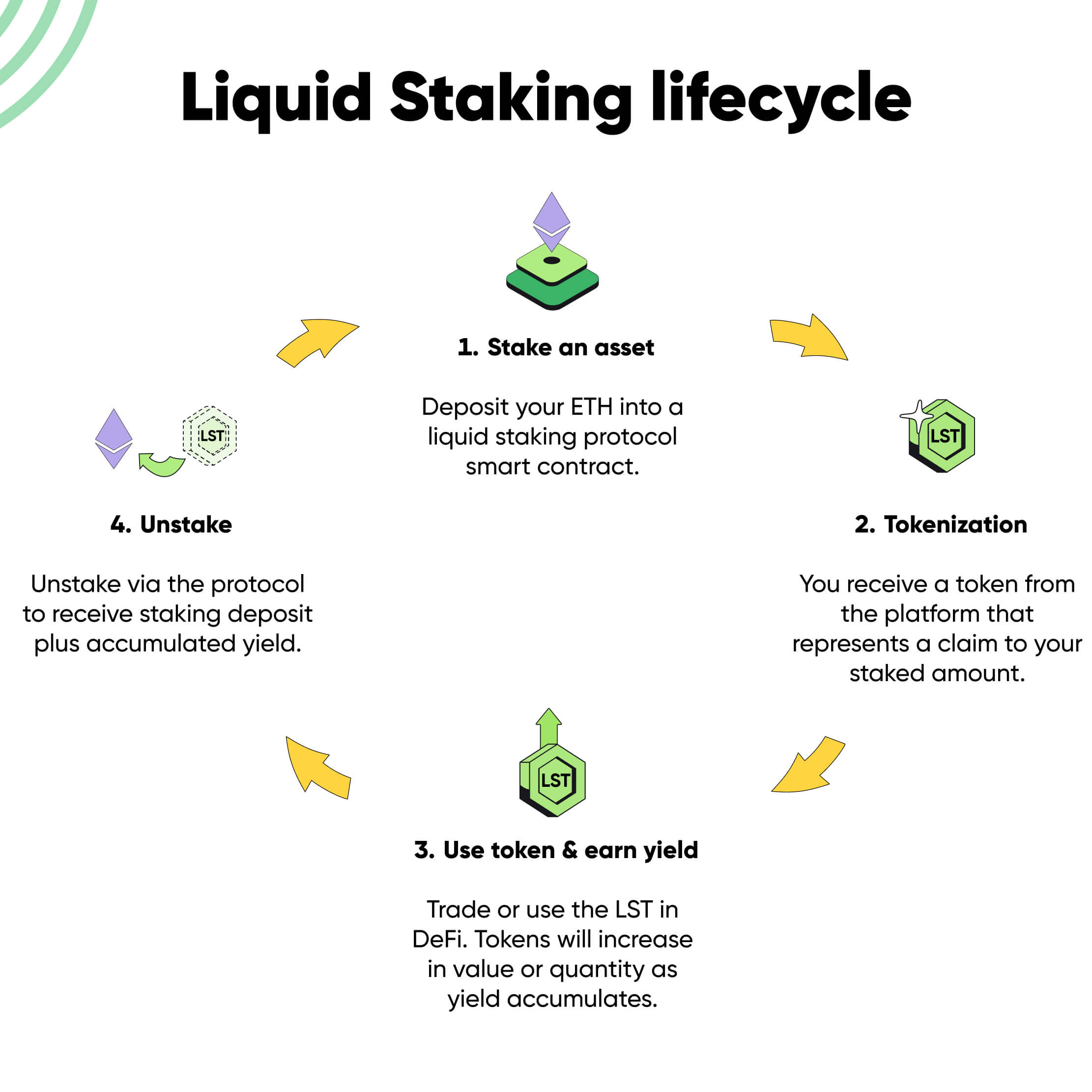
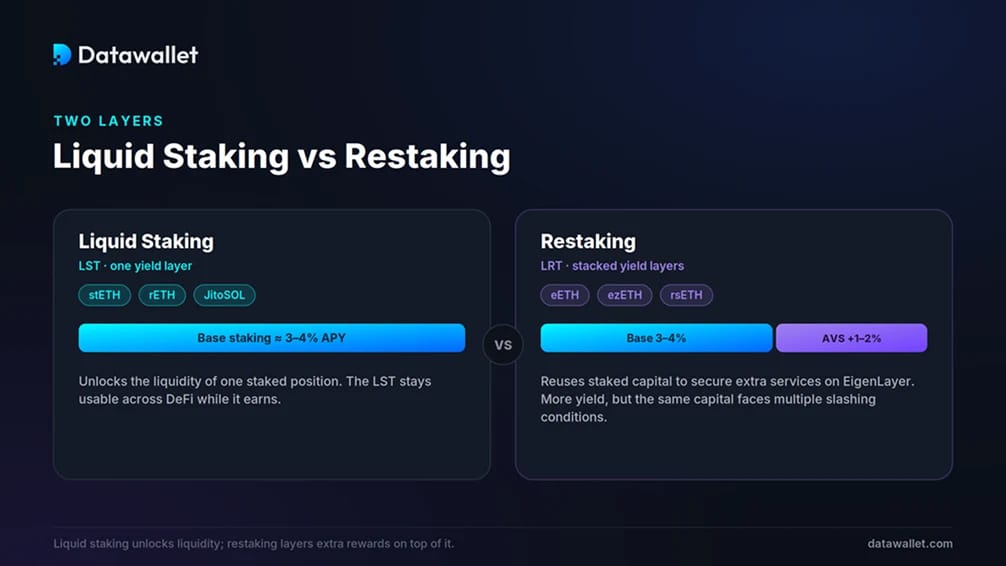
Confusing LSTs with LRTs. Liquid Staking Tokens (LSTs) represent staked ETH. Liquid Restaking Tokens (LRTs) represent staked LSTs. They are not the same. Using an LRT without understanding the additional layer of risk can lead to unexpected volatility and yield fluctuations.
Liquid restaking tokens: what to check next
Liquid restaking is powerful, but it introduces layers of complexity that can trap unwary capital. Before you deposit, you need to understand the mechanics and the specific risks involved. Here are the most common questions readers ask.
What is an LST crypto?
An LST (Liquid Staking Token) is a tokenized receipt you get when you stake ETH. It represents your underlying staked asset and any accumulated rewards. Unlike traditional staking, where your funds are locked, LSTs can be traded or used in other protocols while still earning staking yield.
What are the risks of liquid staking?
The primary risk is smart contract vulnerability. If the protocol holding your staked ETH has a bug, funds can be lost. There is also slashing risk: if the validator node operator misbehaves, your stake can be penalized. Additionally, liquidity risk exists if you need to sell quickly during a market crash and the LST trades at a significant discount to ETH.
How do I get liquidity for my token?
You get liquidity by swapping your LST on a decentralized exchange (DEX) like Uniswap or Curve. Because LSTs are ERC-20 tokens, they can be traded instantly. Some protocols also offer native liquidity pools where you can provide liquidity to earn trading fees on top of your staking rewards.
Is liquid staking good?
Liquid staking is good if you want to maximize capital efficiency. It allows you to earn staking rewards while still participating in DeFi. However, it is not "good" for everyone. If you prioritize absolute simplicity and minimal counterparty risk, traditional staking or holding ETH may be safer. Liquid staking adds yield but also adds technical and protocol risk.
No comments yet. Be the first to share your thoughts!