
Market size and TVL trends
Use this section to make the Liquid Restaking Tokens decision easier to compare in real life, not just on paper. Start with the reader's actual constraint, then separate must-have requirements from details that are merely nice to have. A practical choice should survive normal use, maintenance, timing, and budget. If a recommendation only works in an ideal situation, call that out plainly and give the reader a fallback path.
The simplest way to use this section is to write down the must-have criteria first, then compare each option against those criteria before weighing nice-to-have features.
Top LRT protocols compared
Use this section to make the Liquid Restaking Tokens decision easier to compare in real life, not just on paper. Start with the reader's actual constraint, then separate must-have requirements from details that are merely nice to have. A practical choice should survive normal use, maintenance, timing, and budget. If a recommendation only works in an ideal situation, call that out plainly and give the reader a fallback path.
| Factor | What to check | Why it matters |
|---|---|---|
| Fit | Match the option to the primary use case. | A good deal still fails if it does not fit the job. |
| Condition | Verify age, wear, and service history. | Hidden condition issues erase upfront savings. |
| Cost | Compare purchase price with likely upkeep. | The cheapest option is not always the lowest-cost option. |
ETH price action and market sentiment
Liquid restaking yields do not exist in a vacuum. They are tethered directly to Ethereum’s price stability and broader market sentiment. When ETH trends upward, capital flows into restaking protocols like EtherFi and Renzo, pushing total value locked toward $8 billion. When ETH stalls or drops, the risk-reward calculation for LRTs shifts sharply, exposing yield hunters to principal erosion.
The chart below tracks ETH/USD price action, providing the baseline context for all yield strategies. Restaking rewards are essentially a derivative of this underlying asset’s performance.
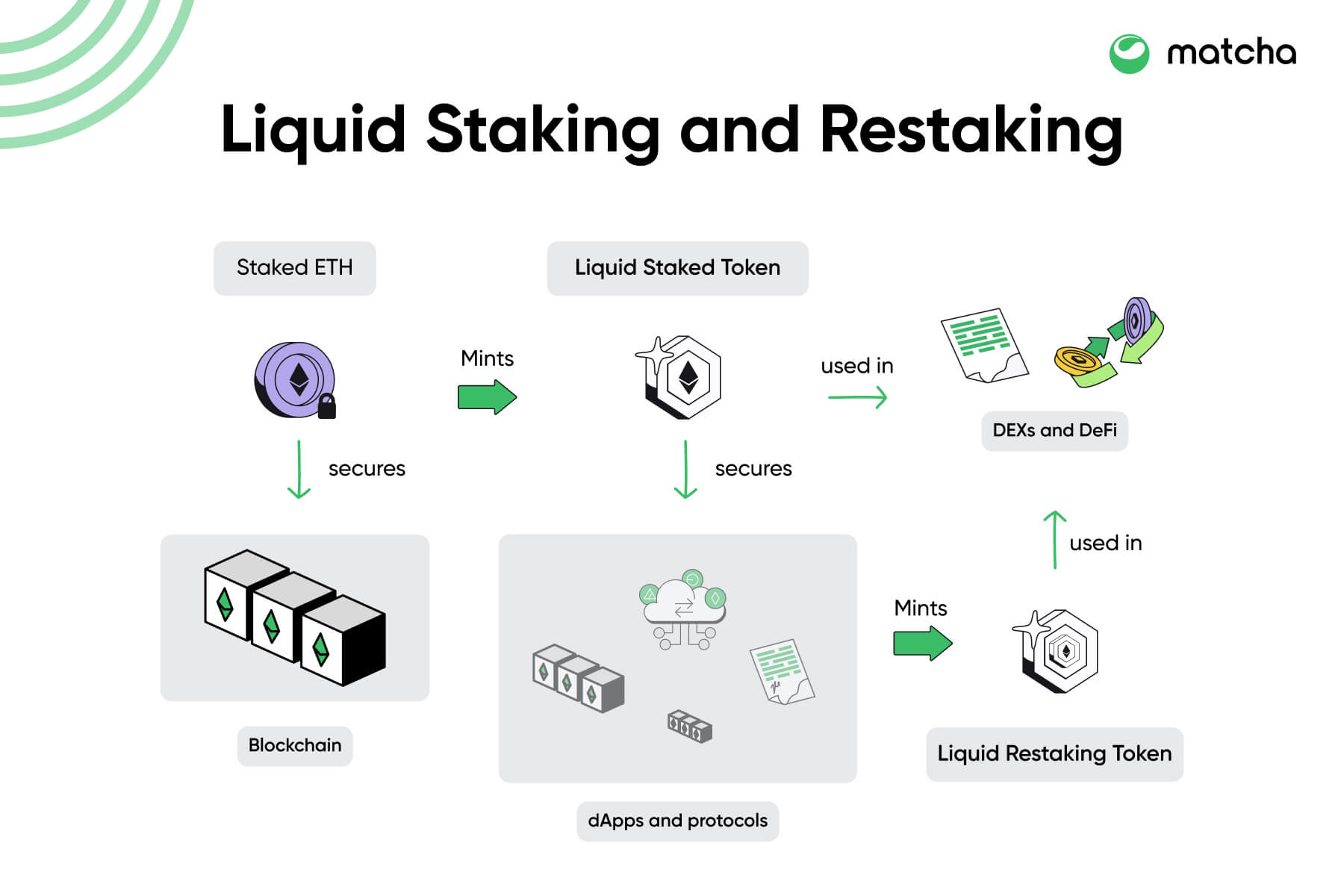
The diagram below illustrates how liquid staking tokens (LSTs) and liquid restaking tokens (LRTs) layer on top of this base ETH asset. Understanding this hierarchy helps clarify why LRT volatility often amplifies ETH’s own price swings.
Smart contract vulnerabilities and slashing risks
Liquid restaking tokens amplify yield by layering staking rewards, but they also compound the attack surface. When you restake an already staked asset like an LST, you are effectively securing multiple protocols with the same underlying collateral. This creates a dependency chain where a failure in one layer can cascade through the entire system. If the smart contracts governing the restaking protocol or the underlying liquid staking token contain bugs, exploiters can drain funds or manipulate the system's oracle data.
Beyond code exploits, validators face the risk of slashing. Slashing occurs when a validator misbehaves, such as by being offline or signing conflicting blocks. In a restaking context, a single slashing event can penalize the validator across all the networks they are securing. This means a minor error in node management can result in significant financial penalties that far exceed standard staking penalties. The interconnected nature of restaking means that the risk of slashing is not isolated; it is distributed across the restaked assets.
The yield generated from restaking is not risk-free. It is a direct compensation for taking on these additional layers of smart contract and slashing risk. Before allocating capital to liquid restaking tokens, investors must evaluate the audit history of the protocols, the decentralization of the validator set, and the potential for cascading failures. Understanding these mechanics is essential for managing exposure in a high-stakes environment.
Optimizing yields with LRTs
Liquid restaking tokens (LRTs) are most powerful when treated as yield-bearing collateral rather than passive holdings. By deploying LRTs across multiple DeFi protocols, you can layer additional yield on top of the base restaking rewards. This strategy, often called "yield stacking," allows you to capture liquidity mining incentives, lending rates, and options premiums simultaneously.
A common approach involves supplying LRTs to lending markets like Aave or Compound. While this generates interest income, it introduces smart contract risk and impermanent loss if the LRT depegs from ETH. To manage this, diversify across different LRT providers and lending platforms. Avoid concentrating your entire portfolio in a single protocol or token type.
For advanced users, decentralized options protocols offer another layer of yield. Selling covered calls against your LRT holdings can generate consistent income in sideways or bull markets. However, this caps your upside if the price of ETH or the LRT surges. Always calculate the opportunity cost before locking in options strategies. The goal is to enhance returns without taking on disproportionate downside risk.
No comments yet. Be the first to share your thoughts!