
Choose your staking path
Selecting the right staking model depends on your tolerance for technical complexity and your need for liquidity. Solo staking, liquid staking, and restaking serve different purposes. They are not interchangeable. Understanding the trade-offs in security, liquidity, and yield potential helps you align your capital with your goals.
| Feature | Solo Staking | Liquid Staking | Restaking |
|---|---|---|---|
| Security | Maximum (no third-party risk) | Moderate (smart contract risk) | Lower (shared risk layer) |
| Liquidity | None (locked until exit) | High (tradable token) | Medium (variable) |
| Yield Potential | Base protocol yield | Base yield + LST premium | Base + LST + EigenLayer points |
| Technical Barrier | High (node management) | Low (one-click swap) | Medium (multiple steps) |
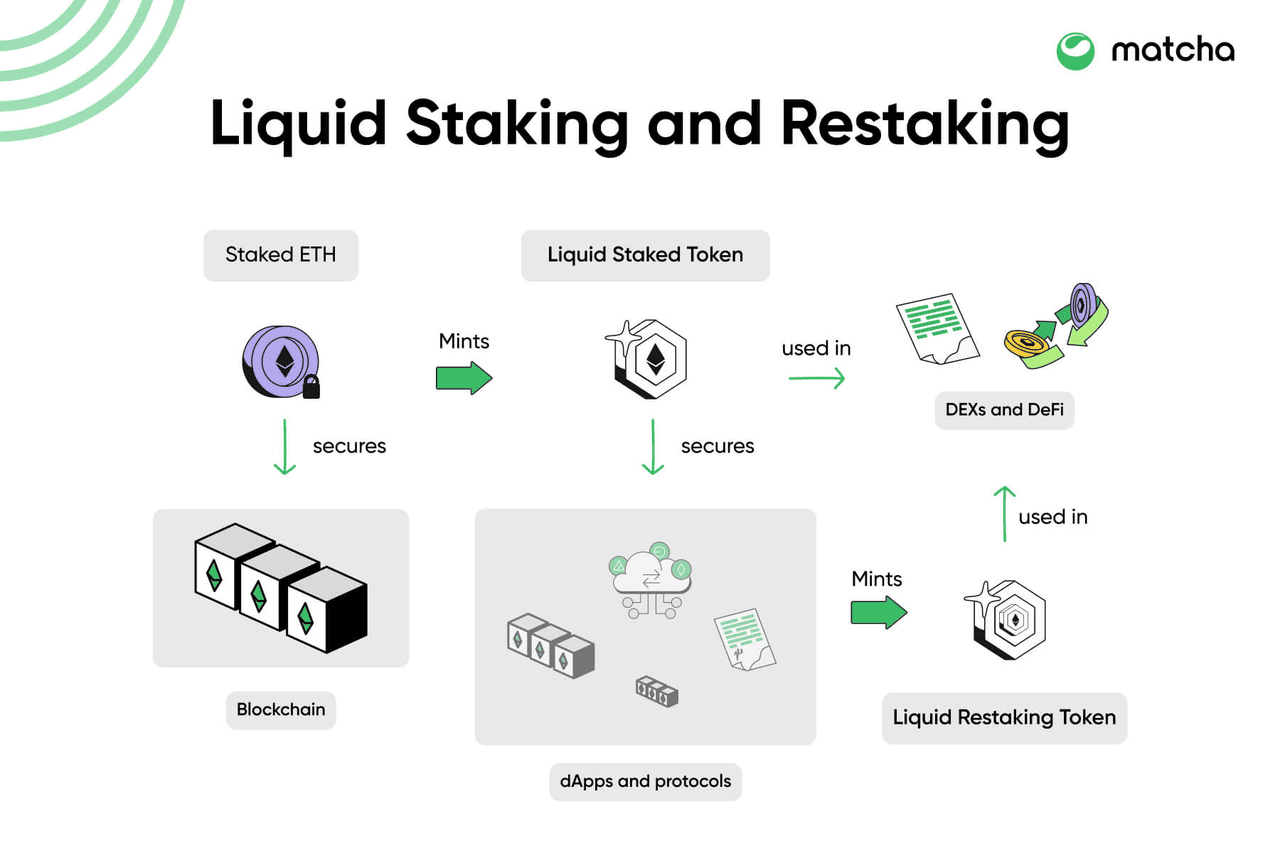
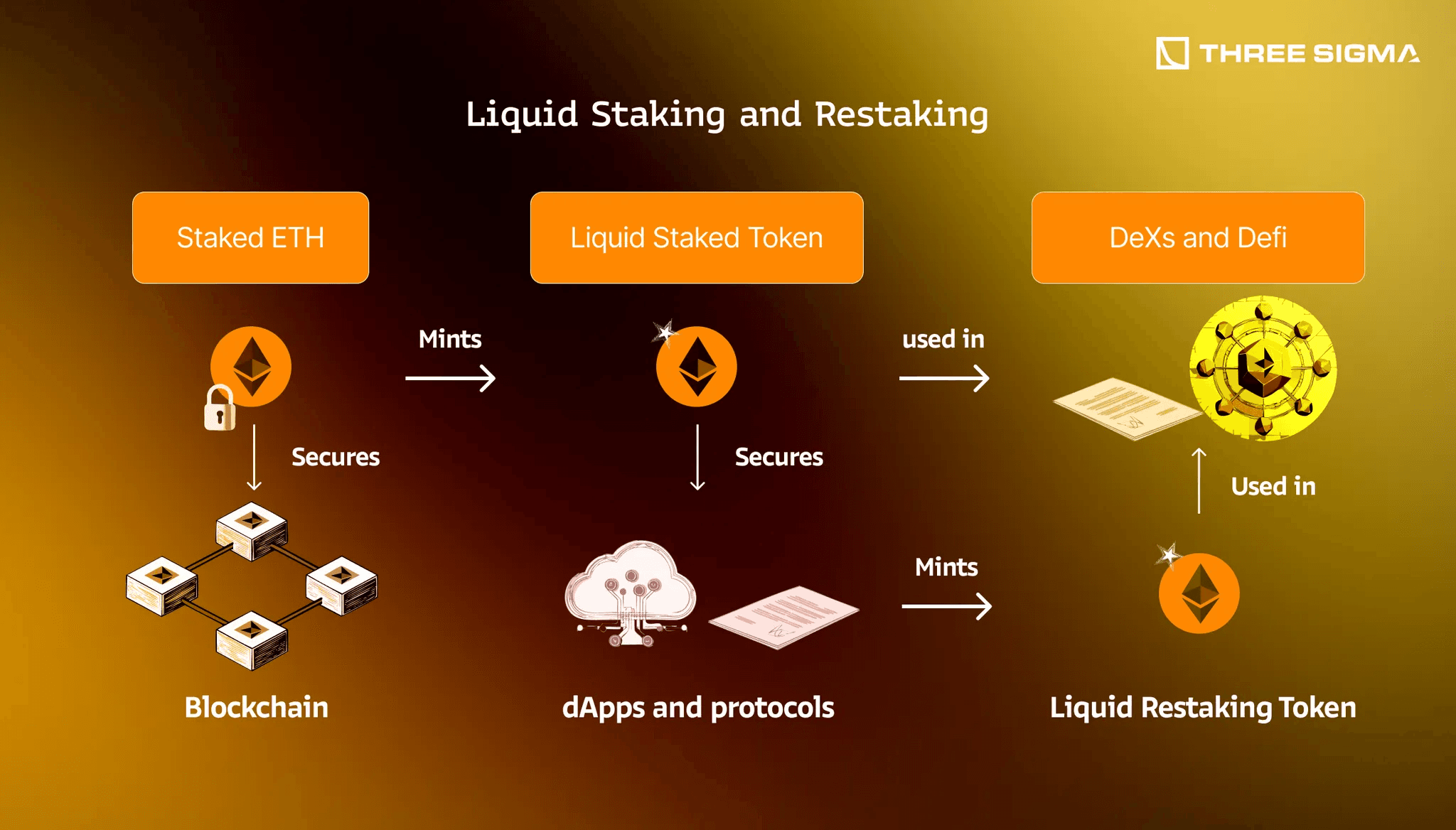
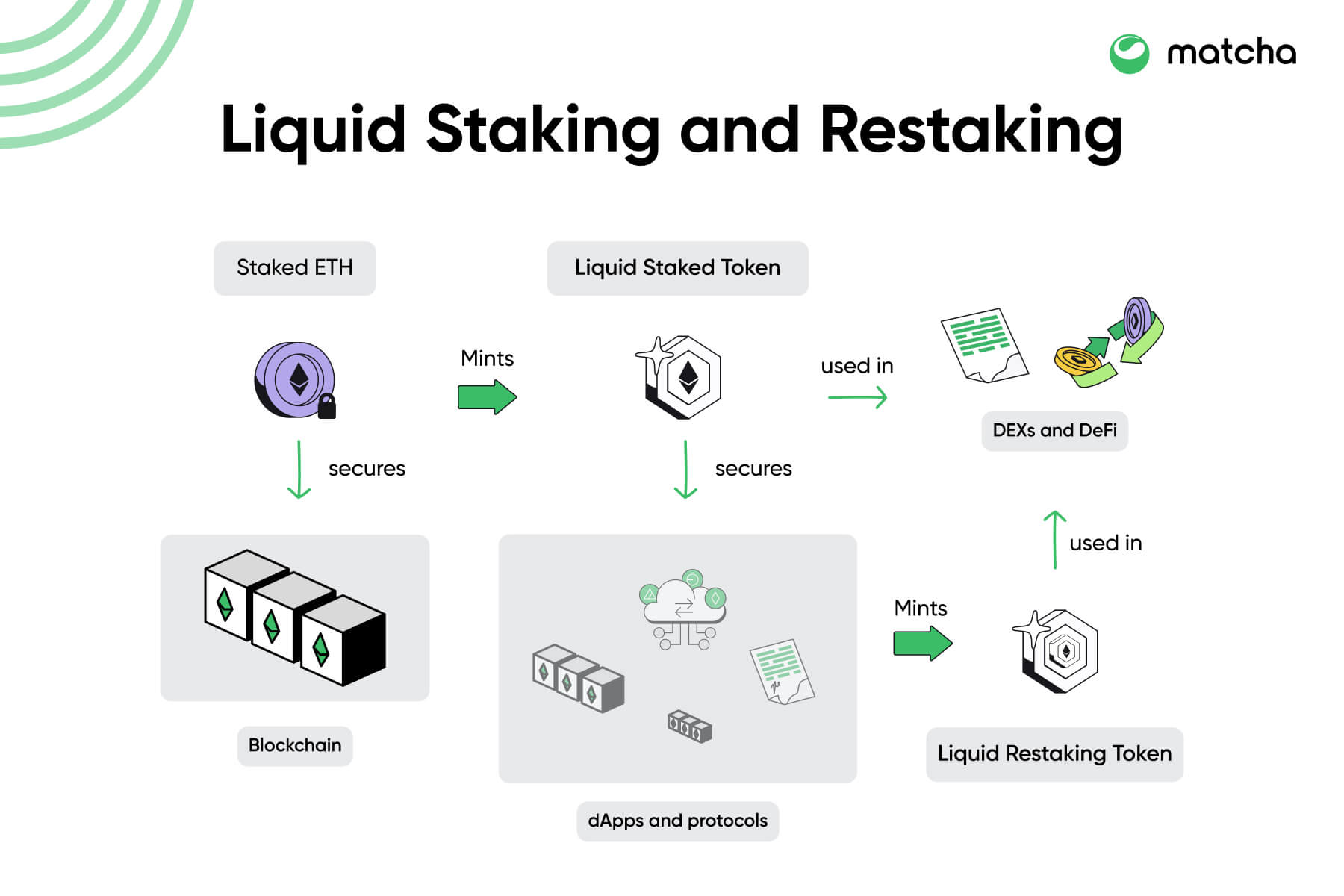
Solo staking offers the highest security but requires maintaining a node. You hold the keys and receive direct rewards, but your capital is locked until the network allows an exit. Liquid staking solves the liquidity problem by issuing a derivative token (like stETH) that you can trade or use in DeFi. Restaking builds on this by allowing you to stake that derivative again to secure additional networks, boosting yield but introducing smart contract complexity.
-
Confirm your risk tolerance for smart contract exposure
-
Verify the liquidity depth of the derivative token
-
Calculate the net yield after protocol fees
-
Ensure you understand the unstaking timeline
Start with liquid staking if you want exposure to staking yields without managing infrastructure. If you are comfortable with higher risk and want to maximize capital efficiency, restaking offers additional yield layers. Always review the specific smart contract risks before committing capital.
Set up your restaking workflow
To deploy restaking derivatives, you must move from standard staked ETH to a liquid restaking token (LRT) that is actively secured on a restaking protocol. This process requires selecting a provider, wrapping your stake, and approving the necessary smart contract permissions. Follow these steps to complete the setup.
1. Choose a Liquid Restaking Token (LRT) provider
Not all restaking platforms operate identically. Some focus on Ethereum security (EigenLayer), while others integrate with specific actives (like Ether.fi or Renzo). Evaluate the protocol’s track record, the specific actives it secures, and the fee structure. This choice determines which derivative you will receive and how your yield is distributed.
Visit the official website of your chosen LRT protocol. Review the supported networks and the specific actives (e.g., EigenLayer, Celestia) that the protocol integrates with. Ensure the protocol is compatible with your existing staked ETH position.
2. Deposit staked ETH into the LRT vault
Once you have selected a provider, navigate to their deposit interface. You will deposit your underlying staked ETH (such as stETH, rETH, or cbETH) into the LRT’s smart contract vault. In exchange, the protocol mints and sends you the corresponding LRT (e.g., ezETH, pufETH, or reth). This step converts your single-layer staked asset into a restaked derivative.
Connect your wallet to the LRT protocol’s dashboard. Select the amount of staked ETH you wish to restake. Confirm the transaction in your wallet. The protocol will automatically swap your LST for the LRT and send it to your wallet address.
3. Approve spending limits for downstream protocols
If you plan to use your new LRT in DeFi (e.g., for lending, borrowing, or providing liquidity), you must approve the specific smart contracts to spend your LRT. This is a critical security step. Always set the approval to the minimum necessary amount or use a dedicated approval tool to limit exposure.
Connect to the DeFi protocol where you intend to use your LRT. Navigate to the approval section. Enter the contract address of the DeFi protocol and the amount of LRT to approve. Sign the transaction to authorize the spending limit.
4. Monitor your restaked position
After deployment, your LRT will accrue rewards from both the underlying Ethereum staking yield and the restaking rewards from the secured actives. Monitor your position through the LRT provider’s dashboard or a portfolio tracker. Be aware that the value of your LRT may fluctuate relative to ETH due to market sentiment and protocol performance.
Use the LRT provider’s dashboard to view your accrued rewards. Check the breakdown of yields from Ethereum staking and restaking actives. Adjust your position if the risk-reward profile no longer aligns with your goals.
Manage slashing and smart contract risk
Restaking amplifies rewards by leveraging your staked assets across multiple protocols, but it also layers risk. You are no longer just trusting one validator; you are trusting the underlying staking contract, the restaking protocol, and every application using your shared security. A single point of failure in any link in this chain can result in total loss.
Understand the slashing mechanism
Slashing occurs when a validator behaves maliciously or fails to perform its duties, such as going offline or signing conflicting blocks. In standard staking, only the staked assets are penalized. In restaking, because your assets are shared across multiple networks, a slashing event on one protocol can trigger penalties across all protocols using that validator set. This means a single mistake can drain your entire restaked position, not just a portion of it.
Slashing in restaking is non-trivial. Unlike standard staking where penalties are isolated, restaking creates a contagion risk where one protocol’s failure can trigger penalties across your entire diversified portfolio.
Diversify across independent validators
To mitigate slashing risk, avoid concentrating your stake with a single validator. Spread your restaked assets across multiple, independent validators that do not share infrastructure or operational teams. This ensures that a failure in one validator does not cascade into a systemic loss for your entire position. Look for validators with strong uptime records and transparent operational practices.
Audit smart contract dependencies
Smart contract bugs are an inherent risk in DeFi. When you restake, you are interacting with multiple layers of code: the liquid staking token (LST) contract, the restaking protocol, and the application-specific contracts. Each layer introduces potential vulnerabilities. Before committing capital, review the audit reports for each protocol involved. Prioritize protocols that have undergone rigorous, independent audits by reputable firms and have a history of responsible disclosure.
Monitor protocol health actively
Restaking is not a set-and-forget strategy. You must actively monitor the health of the protocols you are using. Set up alerts for any unusual activity, such as sudden changes in slashing events, protocol upgrades, or governance proposals. Regularly review the on-chain data to ensure your assets are being secured as expected. If a protocol shows signs of instability or security breaches, consider reallocating your assets to safer alternatives.
Track yields and rebalance positions
Use Restaking Derivatives works best as a clear sequence: define the constraint, compare the realistic options, test the tradeoff, and choose the path with the fewest hidden costs. That order keeps the advice usable instead of decorative. After each step, pause long enough to check whether the recommendation still fits the reader's actual situation. If it depends on perfect timing, unusual access, or a best-case budget, include a simpler fallback.
The simplest way to use this section is to write down the real constraint first, compare each option against it, and choose the path that still works outside ideal conditions.
Common restaking: what to check next
Restaking derivatives introduce specific mechanics that differ from standard staking. Understanding these timelines and risk vectors helps you manage capital efficiency without unexpected lockups.
Work through Restaking Derivatives
No comments yet. Be the first to share your thoughts!