
Restaking derivatives 2026 market snapshot
The restaking sector has matured from experimental infrastructure into a substantial pillar of the Ethereum economy. By late February 2026, the broader market held approximately $13.45 billion in total value locked, generating over $527,000 in daily yield for participants. This scale marks a structural shift from simple staking to shared security, where capital is no longer passive but actively underwrites multiple protocols simultaneously.
At the core of this ecosystem is Ethereum, which remains the primary settlement layer for restaking derivatives. Solo staking on Ethereum currently offers a base yield of 2.8–3.2%, but restaking protocols layer a specialized "security premium" on top. This premium is not guaranteed; it fluctuates based on demand for decentralized security services and the perceived risk of slashing events within the specific derivative network.
To contextualize the underlying asset's performance during this boom, the chart below tracks Ethereum's price action. The correlation between ETH's base value and the yield generated by restaking derivatives highlights the dual-risk nature of these instruments: exposure to the asset's volatility combined with the operational risks of the restaking layer itself.
How shared security changes yield math
Restaking transforms Ethereum’s staking model from a passive savings account into a leveraged security layer. The mechanism works by depositing liquid staking tokens (LSTs) into a restaking protocol, which then delegates that capital to run services like oracles, validators, or sequencers. This creates a dual-income stream for the validator operator: the base yield from securing Ethereum and an additional "security premium" for securing these secondary services.
The yield composition shifts significantly when moving from native solo staking to restaked derivatives. According to March 2026 data, Ethereum solo staking offers a base yield of approximately 2.8–3.2%. When you layer on restaking, the total yield is the sum of this base rate plus the premium paid by the service requesting security. This premium varies based on the risk profile and demand of the specific service, effectively allowing validators to monetize their security capital multiple times.
This structural shift introduces a new variable into yield calculations: slashing risk. Because the same staked ETH is backing multiple protocols, a malicious act or technical failure can trigger slashing events across the entire stack. The "security premium" is, in essence, compensation for this amplified risk. Investors must therefore evaluate not just the APY, but the correlation of risks across the underlying protocols.
Comparing top LRT protocols
Liquid restaking tokens (LRTs) have evolved from early experimental vaults into distinct financial instruments with different risk-return profiles. While they all leverage Ethereum’s proof-of-stake consensus, the underlying mechanisms for yield generation and security bonding vary significantly across the leading platforms. Understanding these structural differences is essential for allocating capital in a high-stakes environment.
The three dominant protocols—Ether.fi, Renzo, and Kelp—represent the current market hierarchy. Ether.fi leads in total value locked and brand recognition, functioning as the de facto standard for institutional exposure. Renzo focuses on capital efficiency through its LRT derivatives, offering higher potential yields but with more complex smart contract layers. Kelp, via its rETH product and DAO structure, emphasizes decentralized governance and direct staking rewards with a more conservative approach to additional yield layers.
| Protocol | TVL Rank | Primary Yield Source | Risk Profile |
|---|---|---|---|
| Ether.fi | 1 | ETH Staking + Node Operator Fees | Moderate |
| Renzo | 2 | ETH Staking + LRT Yield Farming | High |
| Kelp | 3 | ETH Staking + DAO Staking | Low-Moderate |
The choice between these protocols often hinges on the investor’s tolerance for smart contract risk versus yield maximization. Ether.fi offers a simpler entry point with lower technical risk, making it suitable for conservative capital. Renzo appeals to yield hunters willing to accept higher complexity for potentially superior returns. Kelp sits in the middle, balancing governance participation with steady staking rewards. As the restaking narrative matures, these distinctions will likely become more pronounced, requiring continuous monitoring of protocol upgrades and security audits.
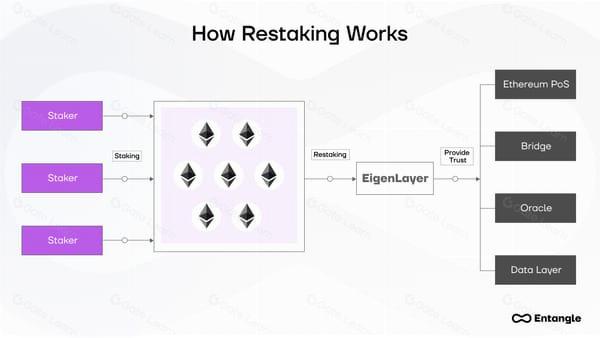
Slashing risk and systemic exposure
The decision to allocate capital to restaking derivatives requires evaluating the real-world implications of shared security. Unlike traditional staking, where risk is isolated to a single validator set, restaking amplifies exposure. A failure in one dependent service (e.g., an oracle or sequencer) can trigger slashing across the entire stack, impacting the underlying ETH collateral.
When comparing options, prioritize protocols with transparent slashing insurance mechanisms and conservative validator selection criteria. Ether.fi’s moderate risk profile stems from its established node operator network, while Renzo’s higher yield comes with increased smart contract complexity. Kelp offers a middle ground with its DAO-driven governance, allowing token holders to influence risk parameters directly. Investors should assess their tolerance for correlated risk before committing assets.
Choosing an LRT strategy for 2026
Selecting a liquid restaking strategy requires balancing yield potential against the specific risks of your chosen protocol. The landscape in 2026 is defined by a clear tradeoff: higher yields often correlate with increased exposure to slashing events and smart contract complexity. Investors must decide whether they prioritize maximum return or capital preservation.
Yield-First Strategies
Strategies focused on yield optimization typically involve allocating assets to protocols with aggressive incentive programs or complex multi-layered restaking structures. These approaches can generate significant APYs but expose the underlying staked ETH to multiple points of failure. If a validator node is slashed, the losses are propagated through the yield-generating layers. This approach suits investors who view the underlying ETH as a long-term hold and are willing to absorb volatility for higher returns.
Security-First Approaches
Conversely, security-focused strategies prioritize the integrity of the staked asset over yield maximization. These protocols often employ more conservative validator selection criteria, lower leverage, and robust insurance funds. While the yields may be lower, the risk of total loss due to slashing or protocol exploitation is significantly reduced. This path is preferable for investors who view restaking as a supplement to core staking rather than a speculative yield engine.
The Decision Framework
Your choice should align with your overall portfolio risk tolerance. If you are comfortable with the technical nuances of smart contract risk and validator performance, a yield-first strategy may be appropriate. However, if capital preservation is paramount, a security-first approach offers a more stable foundation. Always review the specific slashing conditions and insurance mechanisms of any protocol before committing assets.
| Strategy | Yield Profile | Primary Risk |
|---|---|---|
| Yield-First | High | Slashing & Smart Contract |
| Security-First | Moderate | Low Slashing Exposure |
Restaking derivatives 2026 FAQ
How does TVL growth impact restaking yields?
Total value locked serves as a key indicator of capital confidence in the restaking sector. With TVL reaching $13.45 billion by late February 2026, increased competition for security services among protocols can drive up the "security premium" paid to validators. However, excessive TVL concentration in a single protocol may also amplify systemic risk if that protocol experiences a technical failure or slashing event.
What is the primary risk of liquid restaking tokens?
The primary risk is slashing, which occurs when a validator node misbehaves or goes offline. In restaking, this risk is amplified because the same staked ETH is used to secure multiple services. If a dependent service (like an oracle) fails due to validator negligence, the underlying ETH can be slashed, reducing the value of the LRT. Investors must evaluate the security audits and insurance mechanisms of each protocol to mitigate this risk.
Are LRTs suitable for long-term holding?
LRTs are suitable for long-term holding if the investor understands the tradeoff between yield and complexity. Protocols like Ether.fi offer a more conservative approach with established node operators, while others like Renzo offer higher yields through more complex derivative structures. Long-term holders should monitor protocol upgrades and slashing events, as these factors directly impact the net yield and principal safety of the LRT.
No comments yet. Be the first to share your thoughts!