
What restaking derivatives actually do
Restaking derivatives are financial instruments that allow staked assets to provide security to multiple protocols simultaneously. Unlike traditional staking, where capital is locked to a single network, these derivatives split the utility of your stake. You earn a base yield from the underlying consensus layer and an additional "security premium" from the secondary applications secured by that same capital.
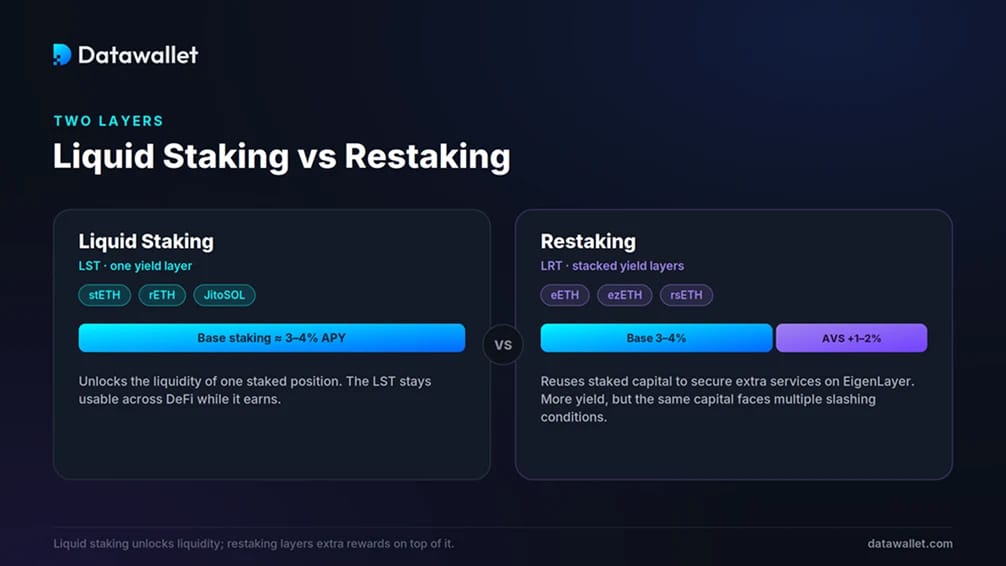
The mechanism relies on Liquid Restaking Tokens (LRTs). When you deposit Ethereum into an LRT protocol, you receive a token representing your stake. This token is then automatically routed to secure various layers of the decentralized infrastructure, such as oracle networks or bridge validators. This process creates a shared security model where one unit of capital supports multiple critical services.
This dual-yield structure has driven significant capital inflows. By late February 2026, the broader restaking sector held approximately $13.45 billion in total value locked (TVL) [[src-serp-5]]. This figure signals that the market views restaking not as a speculative fad, but as a structural shift in how decentralized security is financed. The base yield for Ethereum solo staking remains around 2.8–3.2%, while restaking adds specialized premiums on top [[src-serp-3]].
However, this efficiency comes with concentrated risk. If a protocol secured by your restaked capital fails or is slashed, your underlying stake is penalized across all layers. Restaking derivatives are not passive income tools; they are active bets on the reliability of the entire ecosystem they support.
Compare top liquid restaking tokens
Liquid restaking tokens (LRTs) trade higher yield for added smart contract complexity. Ether.fi, Renzo, and Kelp dominate the market, but their yield structures and risk profiles differ significantly. Evaluate these protocols based on where the yield comes from and how much liquidity you can access when exiting.
Yield Composition and Risk
Yield in LRTs is rarely pure staking rewards. Most protocols layer additional revenue from restaking services, such as securing oracles or MEV (Maximal Extractable Value). Ether.fi offers a dual-token model (eETH and ezETH), which separates base staking yield from restaking rewards. Renzo and Kelp provide single-token structures that simplify holding but may bundle higher-risk yield sources. Always verify if the yield includes volatile restaking rewards or just stable ETH staking returns.
Liquidity and Lock-up
Liquidity varies by protocol. Ether.fi’s ezETH has deep liquidity on major DEXs, allowing faster exits. Renzo’s ezETH and Kelp’s rsETH also trade actively, but slippage can increase during market stress. Some protocols impose temporary withdrawal limits during high network congestion. Check the current liquidity depth on Uniswap or Curve before committing capital.
Smart Contract Risk
Restaking introduces multiple attack vectors. Each protocol integrates with different restaking networks (e.g., EigenLayer). A vulnerability in a restaking service can impact the LRT. Ether.fi has undergone extensive audits, but risk remains. Renzo and Kelp also have audit histories, but the complexity of restaking means risk is distributed across multiple contracts. Diversify exposure rather than concentrating on one protocol.
| Protocol | Token | Yield Source | Risk Level |
|---|---|---|---|
| Ether.fi | ezETH | Staking + Restaking | Medium |
| Renzo | ezETH | Staking + Restaking | Medium |
| Kelp | rsETH | Staking + Restaking | Medium |
Key Takeaways
- Yield often includes restaking rewards, not just ETH staking.
- Liquidity depth affects exit costs during volatility.
- Smart contract risk is higher due to restaking complexity.
- Diversify across protocols to mitigate single-point failures.
Deploying Restaking Derivatives Step by Step
Restaking derivatives allow you to redeploy staked assets to earn additional yield, but the process requires precise execution to avoid smart contract or slashing risks. The following workflow outlines the standard sequence for moving from initial staking to active restaking positions. This guide prioritizes security and protocol compliance over speed.
Step 1: Stake ETH on a Liquid Staking Protocol
Begin by staking native Ethereum (ETH) through a reputable Liquid Staking Token (LST) provider. Common options include Lido (stETH) or Rocket Pool (rETH). This step converts your liquid ETH into a staked derivative that accrues base Ethereum staking rewards. Ensure you select a protocol with a long operational history and audited smart contracts to minimize upfront risk.
Research established LST protocols like Lido or Rocket Pool. Verify that the protocol has undergone multiple security audits and has a significant total value locked (TVL) to ensure liquidity stability. Avoid newer, unaudited protocols for initial capital deployment.
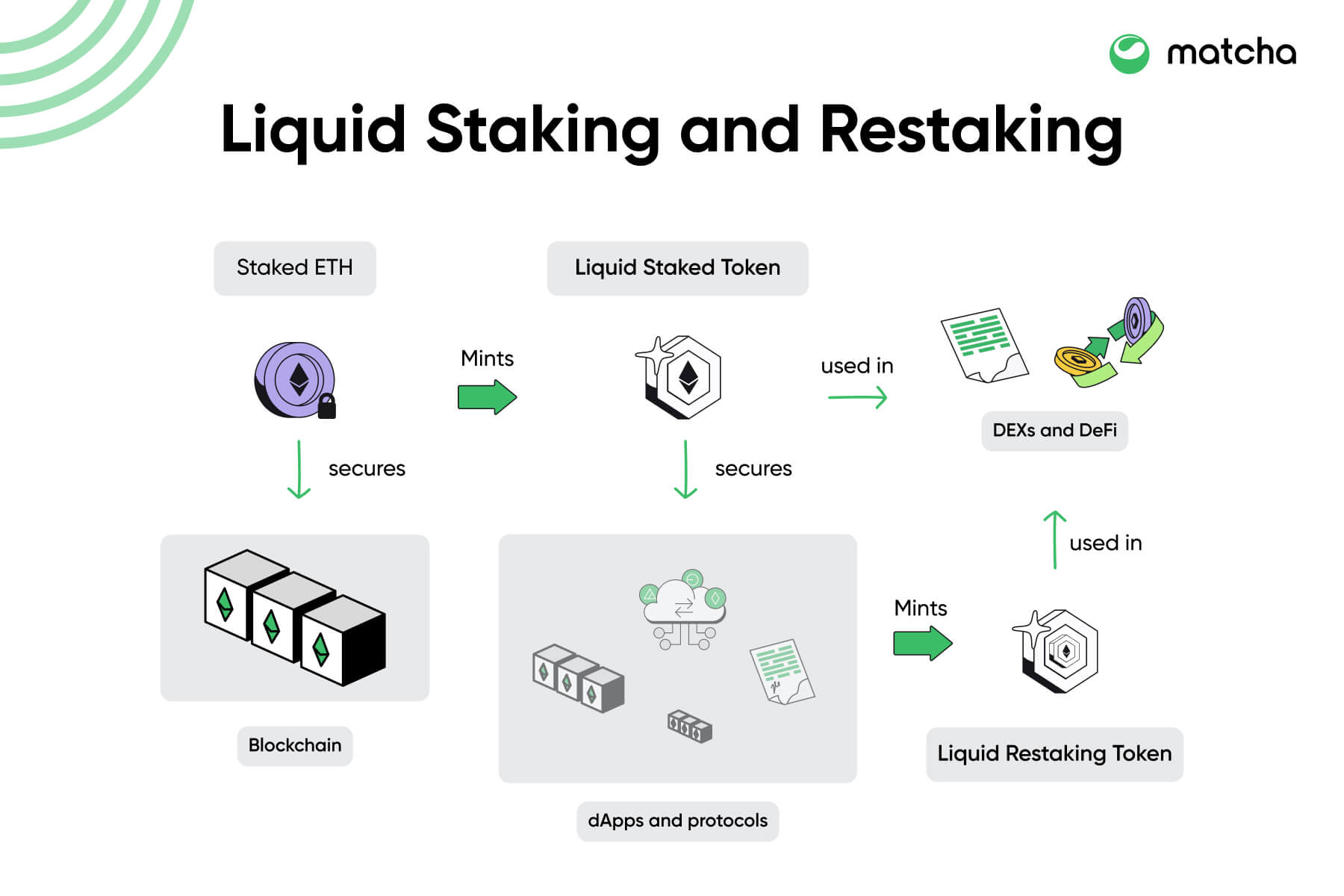
Connect your wallet to the chosen protocol and deposit your ETH. In exchange, you will receive Liquid Staking Tokens (LSTs) such as stETH or rETH. These tokens represent your staked position and can be traded or used as collateral while the underlying ETH remains staked. Keep your wallet secure, as losing access to these tokens means losing access to your staked capital.
Once you hold LSTs, connect to a restaking protocol like EigenLayer or Kelp DAO. These platforms act as the intermediary layer that allows you to "restake" your LSTs to secure additional networks or services. Review the platform's interface carefully to ensure you are interacting with the official contract addresses to avoid phishing scams.
Deposit your LSTs into the restaking contract. You will then need to select specific "Actively Validated Services" (AVSs) to delegate your stake to. This step is critical; you are now exposing your staked ETH to the slashing conditions of these additional services. Start with well-established AVSs that have a proven track record and lower risk profiles.
Restaking positions are not passive. You must regularly monitor the health of the AVSs you are supporting and the stability of the LST provider. If an AVS fails to perform its duties, your staked ETH could be slashed (penalized). Set up alerts for protocol governance changes or slashing events to react quickly if market conditions shift.
Step 2: Verify Contract Interactions
Before confirming any transaction, always verify the smart contract address on a block explorer like Etherscan. Restaking protocols frequently update their interfaces, and phishing sites often mimic legitimate platforms. Cross-reference the contract address with the official documentation of the LST and restaking protocol. Never click links from social media or unverified emails.
Step 3: Understand Slashing and Custody Risks
Restaking increases yield but also amplifies risk. If the underlying validator set for an AVS behaves maliciously or fails, your staked ETH is at risk of being slashed. Additionally, ensure you understand who controls the private keys. In non-custodial restaking, you retain control, but you are also responsible for managing your exposure to multiple smart contracts. Read the protocol's risk disclosures thoroughly.
Step 4: Diversify Across Multiple AVSs
To mitigate slashing risk, consider distributing your LSTs across multiple Actively Validated Services rather than concentrating your stake in one. Diversification ensures that a failure in one AVS does not wipe out your entire position. However, keep track of your total exposure to ensure you remain within your risk tolerance. Consult official protocol documentation for recommended allocation strategies.
Step 5: Track Yield and Rebalance
Yield from restaking is not fixed and can fluctuate based on network demand and AVS performance. Regularly review your earnings and the health of the protocols you are using. If a protocol's risk profile changes or yields drop significantly, consider rebalancing your position. Use official dashboard tools provided by the LST and restaking protocols to track your real-time performance.
By following this structured approach, you can deploy restaking derivatives with a clearer understanding of the risks and rewards involved. Always prioritize security and due diligence over chasing the highest possible yields. The DeFi landscape evolves rapidly, so staying informed through official sources is your best defense against loss.
Avoid slashing and smart contract risk
Restaking amplifies yield by pooling security across multiple networks, but it also concentrates risk. Your staked ETH now secures more than one protocol. If any single protocol suffers a breach or a validator misbehaves, the consequences cascade.
The threat of correlated slashing
Slashing occurs when a validator violates consensus rules, such as signing conflicting blocks. In solo staking, this penalty is isolated to that specific validator. In restaking, your assets are delegated to multiple "restaked" services. If one of these services is compromised or its underlying validator acts maliciously, your entire restaked position may be slashed.
This creates a correlated failure model. You are not just betting on Ethereum’s security; you are betting on the integrity of every protocol you restake into. A failure in one layer can drain capital from positions across the entire restaking stack.
Smart contract vulnerabilities
Beyond validator behavior, the smart contracts managing your restaked assets introduce technical risk. These contracts hold the keys to your capital. Bugs, exploits, or governance attacks on these protocols can lead to total loss of funds, independent of slashing events.
Mitigation requires due diligence. Before restaking, audit the track record of the restaking protocol. Prefer established platforms with long security histories and transparent governance. Never allocate more capital to a single restaking service than you can afford to lose. Diversification across multiple protocols can reduce, but not eliminate, this correlated risk.
Practical steps to manage risk
- Review protocol audits: Ensure the restaking platform has undergone multiple independent security audits.
- Monitor validator performance: Use dashboards to track the health of the validators you are delegating to.
- Limit exposure: Cap the percentage of your total staked ETH allocated to any single restaking service.
- Stay informed: Follow official announcements from the protocols you use for any security incidents or updates.
Verify positions before rebalancing
Before adjusting your restaking derivatives, confirm that your positions are secure and tracking expected yields. Treat this as a final audit of your exposure.
Check your Total Value Locked (TVL) against the protocol’s official dashboard. Verify that your liquid restaking token (LRT) is minted correctly and that liquidity locks are intact. Review slashing history to ensure no penalties have eroded your principal.
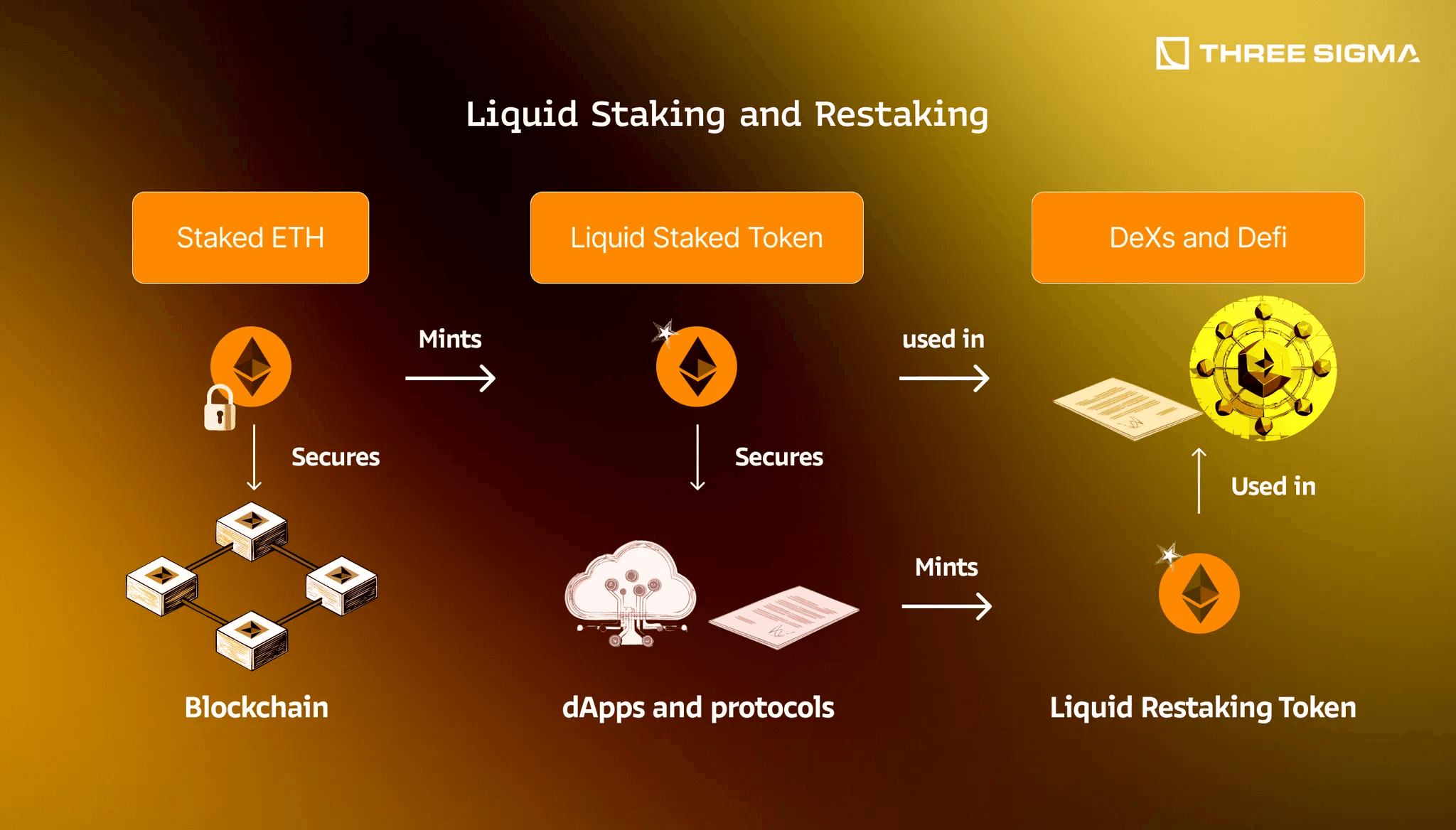
Confirm your exit strategy is clear. Ensure you can unstake or sell your LRT without significant slippage or lock-up periods that conflict with your timeline. If you are using top liquid restaking tokens like Ether.fi, Renzo, or Kelp, compare their current TVLs and yield rates as noted in 2026 comparisons to ensure you are not overexposed to a single protocol.
-
Verify TVL matches expected position size
-
Check slashing history for penalties
-
Confirm liquidity lock status
-
Review exit strategy and slippage risks
Common questions about restaking
Restaking derivatives introduce complex yield layers that carry specific mechanical risks. Understanding the underlying mechanics is essential before allocating capital.
These questions address the core mechanics of capital deployment in this sector. Always verify protocol documentation before proceeding.
No comments yet. Be the first to share your thoughts!