
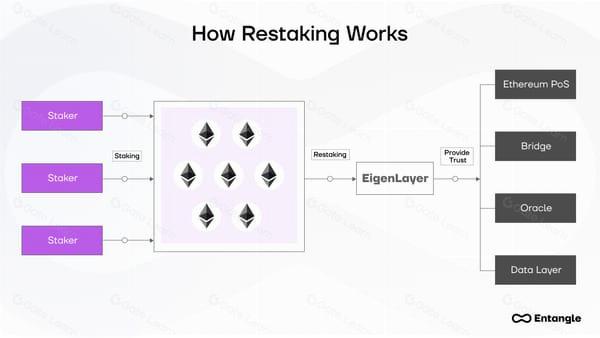
Restaking derivatives 2026 limits to account for
To choose between Liquid Restaking Tokens (LRTs) and restaked ETH (rETH) in 2026, start by defining your primary constraint: liquidity or simplicity. LRTs like Ether.fi or Renzo offer tradable tokens for DeFi composability but introduce higher smart contract complexity. rETH provides a simpler, more conservative path with lower fees but less immediate liquidity. A practical choice must survive maintenance costs, fee structures, and potential slashing events, not just ideal market conditions.
Restaking derivatives 2026 choices that change the plan
The market has shifted from speculative wrappers to infrastructure-focused protocols. In 2026, the distinction between LRTs and rETH is defined by yield composition and risk exposure. LRTs layer security premiums from multiple networks, offering higher gross yields but requiring active management of validator operators and protocol audits. rETH tracks Ethereum consensus rewards with a smaller, more stable restaking premium. Your decision should hinge on whether you prioritize maximum yield optimization or capital preservation with minimal complexity.
Choosing the right restaking path
Liquid restaking tokens (LRTs) and restaked ETH (rETH) are reshaping yields by adding a "security premium" on top of base staking rewards. As of March 2026, Ethereum solo staking offers approximately 2.8–3.2% base yield, while restaking protocols layer additional returns for providing security to other networks. The choice between LRTs and rETH depends on your tolerance for complexity and your need for liquidity.
Use the steps below to match your risk profile and liquidity needs to the right instrument.
If you need immediate access to your funds or want to use them as collateral in DeFi, LRTs like Ether.fi or Renzo are the better fit. They provide a tradable token that represents your restaked position, allowing you to maintain liquidity while earning yield. rETH, by contrast, is a receipt token that tracks value but often lacks the same level of immediate composability in secondary markets.
LRTs typically offer higher yields because they restake ETH into multiple networks, capturing security premiums from several protocols. rETH generally offers a more conservative yield derived primarily from Ethereum consensus rewards and a smaller restaking premium. If your goal is maximum yield and you understand the added smart contract risk, LRTs are the choice. If you prefer a simpler, more direct exposure to Ethereum security, rETH is more appropriate.
The health of the underlying protocol matters. Ether.fi, Renzo, and Kelp are currently the top LRTs in 2026, each with different risk models and partner networks. Research their audit history and TVL (Total Value Locked). A larger TVL often indicates more trust but can also mean lower marginal yields. Ensure the protocol has a clear roadmap for 2026 and active development.
Finally, compare the fees charged by each platform. Some LRTs charge a performance fee on the extra yield, while others take a cut of the base staking reward. rETH usually has lower fees due to its simpler structure. Calculate the net APY after fees to make an apples-to-apples comparison. Remember that higher gross yield does not always mean higher net return if fees are significant.
The decision ultimately comes down to risk versus reward. LRTs offer more yield but come with greater complexity and smart contract exposure. rETH offers a simpler, more stable path to slightly lower returns. Choose based on your comfort with these tradeoffs.
Watch out for these weak options
Liquid restaking tokens (LRTs) promise higher yields by layering security services on top of Ethereum staking, but not all protocols deliver on that promise. The market is crowded with new entrants, and distinguishing between robust infrastructure and speculative wrappers requires looking past the headline APY. Many tokens appear attractive because they inflate yields through unsustainable token emissions rather than genuine economic activity.
When comparing options like Ether.fi, Renzo, and Kelp, focus on the composition of the yield. A base yield of 2.8–3.2% from Ethereum solo staking is standard, but the "security premium" added by restaking varies wildly. Some protocols offer low returns because they are conservative and secure, while others promise double-digit percentages by taking on disproportionate smart contract risk or relying on volatile native token inflation.
Avoid platforms that do not clearly disclose their validator operators or the specific restaking strategies they employ. Weak options often hide behind complex whitepapers that obscure the fact that you are essentially betting on a single protocol's success rather than diversified security. If the yield looks too good to be true, it likely is driven by token sell-pressure rather than real network usage.
Restaking derivatives 2026: what to check next
Restaking derivatives like LRTs and rETH are reshaping yields by layering security premiums on top of base staking returns. While solo staking offers 2.8–3.2% base yield, restaking protocols add specialized rewards for securing additional networks. This structural shift has driven TVL to over $13 billion, creating new yield opportunities alongside complex risk vectors.
Below are direct answers to common questions about restaking in 2026.
The choice between traditional staking and restaking depends on your risk tolerance. Restaking is not for capital preservation; it is for yield optimization in a high-risk environment. Always audit the smart contracts and understand the slashing conditions before committing assets.
Which crypto will boom in 2026?
While Bitcoin and Ethereum remain the dominant stores of value, restaking infrastructure (LRTs) is the specific sector seeing the most structural growth in 2026 due to the demand for modular security.
Will Ethereum ever hit $4000 again?
Yes, Ethereum has already surpassed $4000 multiple times. The current focus for 2026 is on yield generation through restaking rather than just price appreciation.
Can you still mine Ethereum in 2026?
No. Ethereum transitioned to Proof-of-Stake in 2022. Mining is no longer possible; you must stake ETH or use restaking protocols to earn rewards.
Will bitcoin hit $150,000 in 2026?
Price predictions are speculative. However, Bitcoin's correlation with macroeconomic liquidity trends suggests it could reach new highs, though this is unrelated to Ethereum restaking yields.
No comments yet. Be the first to share your thoughts!