
Restaking derivatives in 2026
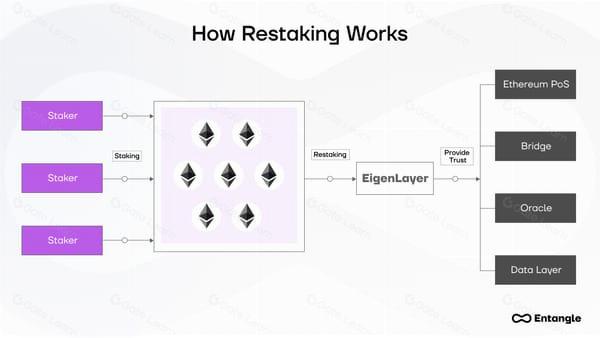
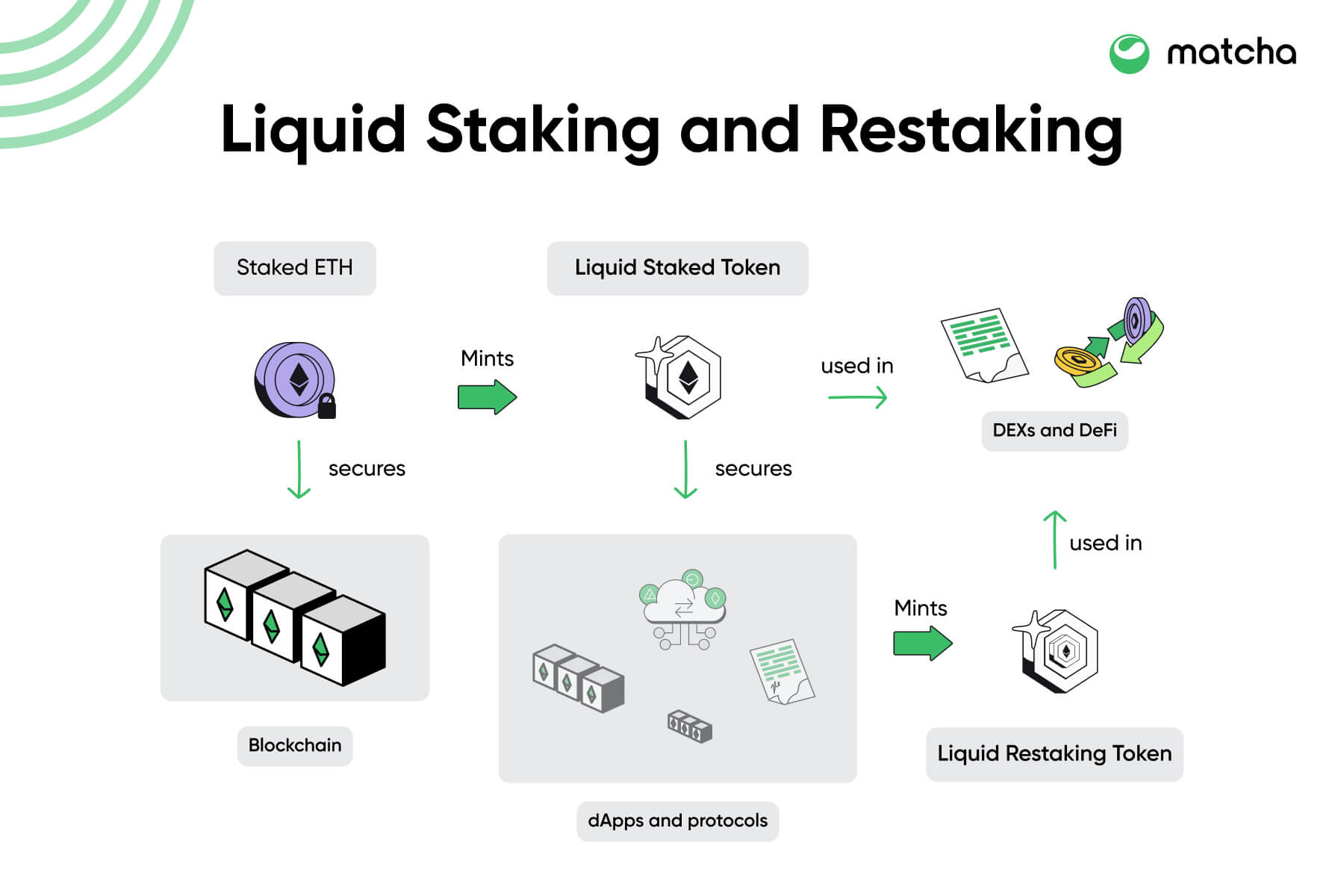
Liquid restaking tokens (LRTs) have graduated from experimental DeFi concepts to institutional-grade yield instruments. By 2026, the market recognizes that LRTs solve a specific capital efficiency problem: allowing users to stake the same tokens on the main blockchain and other protocols simultaneously.
This evolution has shifted LRTs from niche experiments to a serious market category. Users seek yield, while protocols require security. The result is a complex but functional ecosystem where capital works harder without compromising the underlying security of the Ethereum network.
The growth is visible in the broader market data. As Ethereum continues to mature post-merge, the integration of restaking mechanisms has become a standard feature for sophisticated yield strategies.
Top liquid restaking tokens compared
The liquid restaking token (LRT) market has evolved from experimental DeFi protocols into a structured sector with distinct risk and yield profiles. In 2026, choosing an LRT requires evaluating not just the base yield, but the security assumptions of the underlying restaking layer and the specific risks of the derivative token itself.
Ether.fi (eETH) and Renzo (ezETH)
Ether.fi remains the largest LRT by total value locked (TVL), offering eETH as its primary derivative. It leverages EigenLayer to restake ETH, distributing rewards across multiple Actively Validated Services (AVSs). Renzo follows a similar architecture with ezETH, focusing on ease of integration for other DeFi protocols. Both tokens provide exposure to Ethereum staking yields plus restaking premiums, but they carry smart contract risk associated with their respective vaults and the broader EigenLayer ecosystem.
YieldNest (ynETH) and Other Contenders
YieldNest launched ynETH with a focus on simplified yield distribution and lower gas costs, aiming to make restaking accessible to non-technical users. Other protocols like KelpDAO (rsETH) and Puffer Finance (pufETH) offer variations on the LRT model, each with different approaches to slashing protection and yield optimization. The diversity of options allows users to tailor their exposure, but it also fragments liquidity and complicates risk assessment.
Key Comparison Factors
When comparing LRTs, look beyond the advertised APY. Consider the protocol's security audit history, the decentralization of its validator set, and its exposure to specific AVSs. A higher yield often signals higher risk, whether from concentrated validator positions or less proven smart contract code. Always verify the underlying asset's liquidity and the token's ability to be used across multiple DeFi platforms.
| Protocol | Token | APY Range | Risk Level | Primary Feature |
|---|---|---|---|---|
| Ether.fi | eETH | 4-8% | Medium | Largest TVL, multi-AVS exposure |
| Renzo | ezETH | 4-7% | Medium | DeFi integrations, automated rebalancing |
| YieldNest | ynETH | 3-6% | Low-Medium | Simplified yield, lower gas costs |
| KelpDAO | rsETH | 4-7% | Medium | Slashing protection, institutional focus |
| Puffer Finance | pufETH | 4-8% | Medium-High | Liquid restaking with insurance pool |
The choice between these tokens often comes down to your risk tolerance and desired level of engagement. For those seeking maximum exposure to Ethereum's security ecosystem, Ether.fi and Renzo offer robust platforms with established track records. For users prioritizing simplicity and lower costs, YieldNest presents a compelling alternative. Always conduct your own due diligence and consider the potential for slashing events, which can impact yields across the restaking landscape.
Yield optimization strategies
Restaking derivatives unlock multiple layers of yield by stacking rewards from different protocols. Instead of accepting a single staking rate, users can compound returns through points accumulation, fee sharing, and cross-protocol strategies. This approach turns a static staking position into a dynamic yield engine.
Points accumulation and airdrop farming
Many restaking protocols distribute points or tokens based on usage intensity rather than just capital deployed. These points often serve as eligibility metrics for future airdrops or governance rights. Users can boost their position by interacting with the protocol’s native applications, such as bridging assets or using specific restaking modules.
Fee sharing and protocol revenue
Some Liquid Restaking Tokens (LRTs) distribute a portion of the protocol’s fees directly to token holders. This creates a passive income stream that compounds with the base staking rewards. The fee structure varies by protocol, with some taking a cut from validator commissions and others from network congestion fees.
| Feature | Points Strategy | Fee Sharing |
|---|---|---|
| Primary Goal | Future token airdrop eligibility | Immediate passive income stream |
| Risk Profile | High (token value uncertain) | Moderate (depends on protocol revenue) |
| Time Horizon | Long-term (months to years) | Short to medium-term (ongoing) |
Cross-protocol yield farming
Advanced users can combine restaking with liquidity provision on decentralized exchanges. By providing liquidity for restaked tokens, users earn trading fees in addition to their staking rewards. This strategy requires active management to prevent impermanent loss, but it can significantly boost overall annual percentage yield (APY).
Risk management in yield optimization
While these strategies offer higher returns, they also introduce complex risk vectors. Smart contract vulnerabilities, slashing events, and market volatility can erode gains. It is essential to diversify across multiple restaking protocols and understand the specific risk parameters of each strategy. Always start with small positions to test the mechanics before committing significant capital.
Regulatory scrutiny and safety
Liquid restaking tokens (LRTs) operate in a regulatory gray area that regulators are actively trying to define. Because LRTs allow users to stake ether to validate transactions across multiple protocols simultaneously, they create complex ownership chains that blur the line between a security and a utility. Legal scholars and firms like Katten Muchin Rosenman have highlighted that this structural complexity invites heightened scrutiny from bodies like the SEC, which may view the yield-bearing nature of these tokens as an investment contract.
The technical risks are equally significant. Restaking amplifies exposure to smart contract vulnerabilities. If a single validator node is compromised, the attacker can potentially slash the staked assets across every protocol relying on that node. This "shared security" model means a failure in one layer can cascade through the entire restaking ecosystem, draining liquidity from multiple LRTs at once. Users must carefully assess the technical maturity of the underlying infrastructure before committing capital.
Warning: Regulatory frameworks for restaking are evolving rapidly. The classification of LRTs as securities could restrict their availability on major exchanges or alter their tax treatment. Always consult current legal guidance and official regulatory announcements before engaging with these assets.
To understand the current market valuation and volatility of these high-risk assets, you can monitor real-time price data and technical indicators for major LRTs. Tracking these metrics helps distinguish between genuine yield generation and speculative price action driven by regulatory news.
No comments yet. Be the first to share your thoughts!