
The State of Restaking Derivatives in 2026
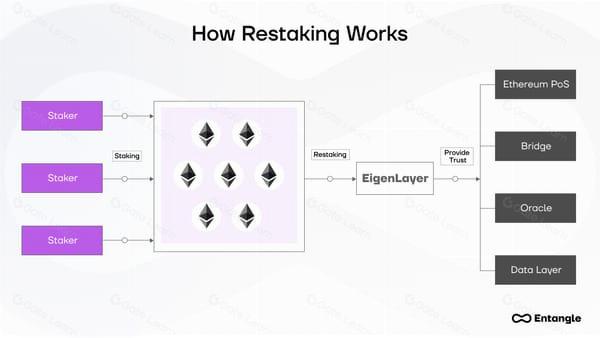
By 2026, restaking derivatives—specifically Liquid Restaking Tokens (LRTs)—have evolved from experimental DeFi primitives into a foundational layer of Ethereum’s economic security. While early restaking focused on simply reusing staked ETH to secure additional networks, the current landscape is defined by complex, multi-protocol incentive structures that layer yield on top of yield. This shift has moved the primary value proposition beyond simple staking rewards toward sophisticated risk-adjusted returns.
The distinction between solo staking, liquid staking, and restaking is no longer just technical; it is economic. Solo staking provides direct control but requires significant capital and operational overhead. Liquid staking tokens (LSTs) offer liquidity but often cap yield at the base protocol rate. Restaking derivatives bridge this gap by allowing validators to delegate their security to multiple concurrent networks, effectively multiplying the utility of a single unit of staked ETH. This layering creates a more efficient capital market but introduces new vectors for smart contract and slashing risk.
Yield in this sector is no longer static. It is driven by a combination of base Ethereum staking rewards, restaking incentives from protocols like EigenLayer, and additional points or token emissions from LRT providers. This multi-layered incentive model means that a single LRT position can earn from three or more distinct sources simultaneously. However, this complexity requires investors to understand how these rewards are distributed and how they correlate with broader market volatility.
To contextualize the performance of these strategies, it is essential to look at the underlying asset. The value of any restaking derivative is inextricably linked to the price action and staking economics of Ethereum itself. The chart below illustrates the price movement of ETH/USD, which serves as the baseline for all restaking yield calculations.
Comparing Top LRT Protocols
Liquid Restaking Tokens (LRTs) have evolved into distinct financial instruments, each offering different risk and yield profiles. While Ether.fi, Renzo, and KelpDAO all operate on EigenLayer, their structural approaches to yield generation and custody differ significantly. Understanding these mechanics is essential for aligning LRT holdings with specific portfolio goals in 2026.
Ether.fi: The Market Leader
Ether.fi remains the dominant protocol by Total Value Locked (TVL), leveraging its first-mover advantage and deep liquidity. Its primary yield driver is the dual-token model (eETH and ezETH), which separates the base staking yield from restaking rewards. This structure allows users to capture EigenLayer AVS (Actively Validated Service) rewards while maintaining a liquid position. Ether.fi’s risk profile is heavily tied to the performance of its native validators and the broader EigenLayer ecosystem.
Renzo: Optimized Yield Distribution
Renzo focuses on maximizing yield efficiency through its ezETH token. Unlike Ether.fi’s dual-token approach, Renzo simplifies the user experience by bundling staking and restaking rewards into a single liquid token. The protocol employs a sophisticated validator network to ensure high uptime and minimize slashing risks. Renzo’s yield strategy often outperforms competitors in pure APY terms, making it attractive for yield-focused investors willing to accept slightly higher smart contract complexity.
KelpDAO: Institutional-Grade Custody
KelpDAO, through its DAO4883 protocol, emphasizes institutional-grade security and compliance. Its rETH token is backed by a diverse set of professional validators, reducing reliance on any single entity. Kelp’s approach prioritizes capital preservation and regulatory alignment, making it a preferred choice for institutional players. While its yield may be slightly lower than Renzo’s, the risk-adjusted returns are often considered more stable due to its robust custody infrastructure.
Side-by-Side Comparison
The following table highlights the key differences between the top three LRT protocols. These metrics reflect current market conditions and should be verified with live data before making investment decisions.
| Protocol | TVL Rank | Yield Model | Custody Model |
|---|---|---|---|
| Ether.fi | 1 | Dual-Token (eETH + ezETH) | Validator Network |
| Renzo | 2 | Single-Token (ezETH) | Validator Network |
| KelpDAO | 3 | Single-Token (rETH) | Professional Validators |
Live Market Data
Below are the current market prices for ETH and the major LRT tokens. These widgets provide real-time valuation data, reflecting the dynamic nature of the restaking market.
Managing LRT volatility risks
Liquid staking derivatives (LRTs) offer a way to earn yield on staked assets while preserving liquidity, but they introduce a complex web of risks that can erode returns or lead to total loss. Unlike simple staking, restaking protocols amplify exposure by reusing the same collateral across multiple validator sets and protocols. This efficiency comes with a proportional increase in fragility.
Smart contract and slashing exposure
The primary danger in restaking is the compounding of smart contract risk. When you deposit ETH into an LRT protocol, you are interacting with the protocol’s smart contracts, which manage the underlying staking logic. If a contract has a vulnerability or is exploited, funds can be stolen. More critically, restaking often involves "restaked" ETH that is secured by validators acting on behalf of multiple networks. If those validators misbehave or go offline, the network can impose slashing penalties.
Slashing is not just a reduction in rewards; it can result in the permanent loss of a portion of the staked principal. In a restaking environment, a single slashing event can impact multiple protocols simultaneously, creating a domino effect that drains liquidity from several sources at once. This interconnectedness means that the failure of one component can cascade through the entire ecosystem, making risk management essential.
Price decoupling from ETH
Another significant volatility vector is the potential for LRT prices to decouple from the underlying ETH value. While LRTs are designed to track ETH 1:1, market dynamics, liquidity constraints, and protocol-specific risks can cause the derivative price to diverge. This decoupling can happen during periods of high stress or when there is a lack of confidence in the protocol’s ability to manage its validators.
When an LRT trades at a discount to ETH, it signals market concerns about the safety of the underlying assets. Conversely, a premium might indicate high demand but also suggests that the yield is being priced in aggressively, leaving little room for error. Traders and investors must monitor these price movements closely, as sudden shifts can signal impending protocol issues or broader market instability.
Monitoring market conditions
To navigate these risks, it is crucial to stay informed about the current state of the market. Using live provider-backed widgets can help you track real-time price movements and technical indicators for ETH and major LRTs. This data allows you to spot early signs of decoupling or unusual volatility that might indicate underlying problems.
By keeping a close eye on these metrics and understanding the mechanics of restaking, you can better position yourself to manage volatility and protect your capital in the evolving landscape of liquid staking derivatives.
Regulatory scrutiny and compliance
Liquid restaking derivatives (LRTs) have moved from experimental DeFi experiments to significant capital allocators, drawing the attention of global regulators. By 2026, the legal classification of LRTs remains a primary point of contention, with authorities increasingly viewing them through the lens of existing securities and banking frameworks rather than as novel crypto instruments.
Legal analyses suggest that the core issue is the dual nature of LRTs. They provide staking yield while offering liquidity, a combination that regulators in the US and EU are scrutinizing under securities laws and MiCA regulations. The question is no longer whether LRTs are regulated, but which specific regulatory regime applies. Protocols are now expected to implement robust KYC/AML checks and transparent yield reporting to avoid being classified as unregistered securities offerings.
For users, this shift means compliance is no longer optional. Regulatory bodies are demanding that LRT providers disclose risk factors related to smart contract vulnerabilities and slashing events. The emergence of clear compliance requirements for protocols is reshaping the market, forcing builders to prioritize legal transparency alongside technical innovation.
LRT yield strategies for 2026
The 2026 landscape rewards diversification over chasing the highest single-protocol APY. Relying on one LRT exposes you to protocol-specific smart contract risks and slashing events. Spreading capital across Ether.fi, Renzo, and Kelp creates a buffer against isolated failures, ensuring that a single point of failure does not wipe out your entire position. This approach turns individual volatility into a manageable portfolio metric.
Selecting protocols based on your risk tolerance is more important than comparing raw yield numbers. High APY often signals higher uncorrelated risk or lower liquidity depth. Focus on the underlying security models and the diversity of the restaked assets rather than just the headline percentage. A lower yield from a more established protocol often provides better risk-adjusted returns over a full market cycle.
Hedging against volatility remains essential for long-term holding. While LRTs generate yield, their token prices can fluctuate wildly with broader market sentiment. Consider pairing your LRT holdings with stablecoin strategies or using options to protect against downside risk. This protects your principal while you earn yield, allowing you to stay invested without the stress of daily price swings.
| Protocol | Focus | Risk Level |
|---|---|---|
| Ether.fi | Native ETH restaking | Medium |
| Renzo | Cross-chain LRTs | Medium-High |
| Kelp | Institutional-grade | Low-Medium |
Common questions about LRTs
Can you still mine Ethereum in 2026?
No. Ethereum mining ended permanently in September 2022 during The Merge. The network transitioned from proof-of-work (PoW) to proof-of-stake (PoS), making hardware mining obsolete. Today, securing the network relies on staking ETH, which offers a more energy-efficient alternative for earning rewards without specialized mining rigs.
What are LRTs in restaking?
Liquid Restaking Tokens (LRTs) are derivatives that allow you to stake ETH while maintaining liquidity. Unlike traditional staking, LRTs enable you to earn yield from multiple layers simultaneously—both the base Ethereum network and additional "restaking" protocols that secure other services. This structure improves capital efficiency, letting your assets work harder across different parts of the ecosystem.
When did ETH move to proof-of-stake?
Ethereum switched from proof-of-work to proof-of-stake in September 2022. This transition, known as The Merge, drastically reduced the network's energy consumption and changed how validators earn rewards. Understanding this shift is essential for grasping modern yield strategies, as all current staking and restaking derivatives rely on this PoS foundation.
No comments yet. Be the first to share your thoughts!