
Restaking derivatives 2026
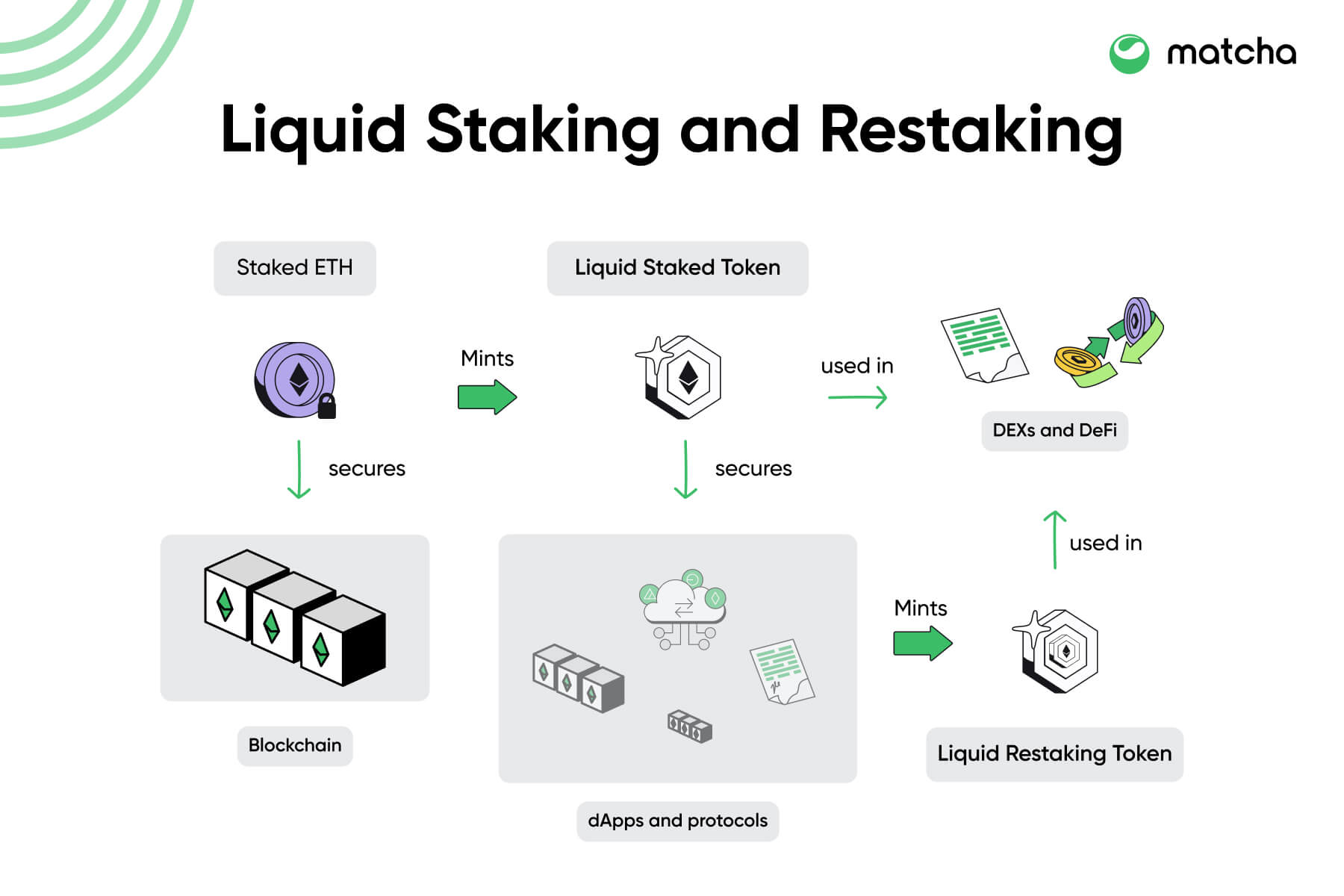
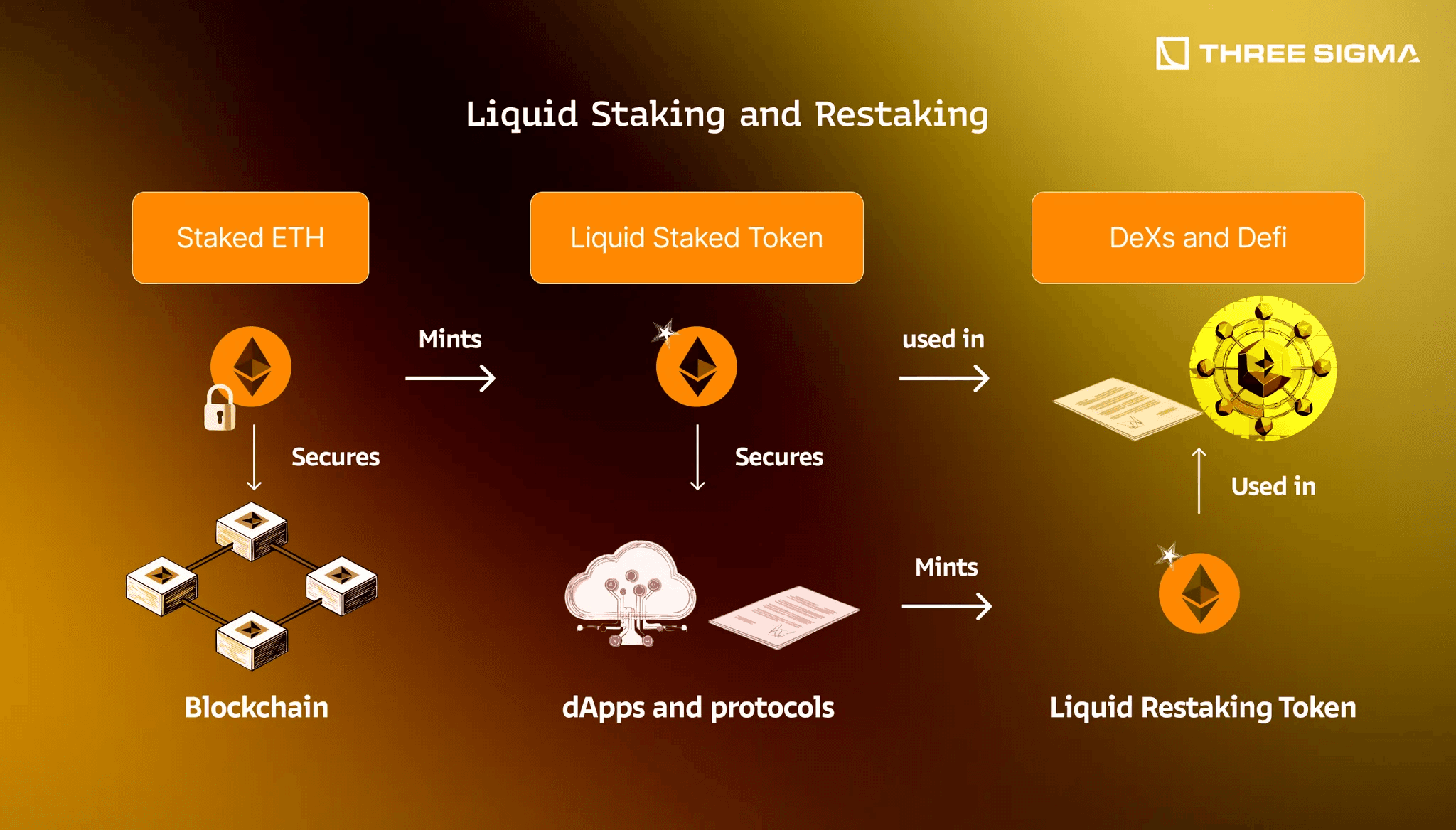
Restaking lets you use already-staked ETH to secure other decentralized services, known as Actively Validated Services (AVSs). Instead of locking your capital once, you delegate it to multiple protocols simultaneously. This creates a layered yield strategy where you earn rewards from Ethereum staking plus additional payouts from the AVSs you support. Liquid Restaking Tokens (LRTs) facilitate this by issuing a liquid token that represents your restaked position, allowing you to keep your capital flexible while earning composite yields.
The 2026 market for restaking derivatives has matured beyond experimental protocols into a structured comparison of risk and reward. Major LRTs like Ether.fi, Renzo, and Kelp Protocol now dominate the landscape, each offering different tradeoffs in terms of yield composition, smart contract complexity, and decentralization. While the underlying mechanism remains the same—leveraging staked ETH—the execution varies significantly across platforms.
| Protocol | Primary Focus | Risk Profile | Yield Sources |
|---|---|---|---|
| Ether.fi | Broad ecosystem integration | Moderate | ETH staking, AVS rewards, points |
| Renzo | Liquidity and DeFi composability | Moderate-High | ETH staking, AVS rewards, trading volume |
| Kelp Protocol | Institutional-grade security | Lower | ETH staking, AVS rewards, DAO incentives |
Choosing the right derivative depends on your tolerance for smart contract risk and your desire for liquidity. Some protocols prioritize yield maximization through aggressive AVS participation, while others focus on security audits and decentralization. Understanding these nuances is critical before allocating capital, as the complexity of restaking introduces new vectors for potential losses compared to simple staking.
Restaking derivatives 2026 choices that change the plan
Choosing a liquid restaking token (LRT) in 2026 requires balancing yield potential against protocol complexity and smart contract risk. While solo staking offers a baseline of 2.8–3.2% base yield on Ethereum, restaking protocols layer additional "security premiums" by securing Actively Validated Services (AVSs). This creates a multi-layer yield engine, but it also introduces new vectors for slashing and impermanent loss.
Readers must evaluate three primary factors: the diversity of AVSs secured by the protocol, the historical reliability of its oracle and slashing mitigation mechanisms, and the liquidity depth of the derivative token itself. A protocol with high yields but weak AVS diversity exposes stakers to concentrated risk if that single service fails.
The table below compares three dominant LRTs in 2026: Ether.fi, Renzo, and Kelp. These protocols represent different approaches to managing the tradeoff between yield generation and risk distribution.
| Protocol | Primary Yield Source | Key Risk Factor | Liquidity Depth |
|---|---|---|---|
| Ether.fi | AVS Security Premium + EigenLayer Rewards | Complexity of Multi-Layer Staking Logic | High |
| Renzo | EigenLayer Points + AVS Incentives | Point Distribution Dependency | Medium |
| Kelp | RSETH Staking + Restaking Rewards | Single-Chain Concentration | Medium-High |
For conservative stakers, Ether.fi offers the most established infrastructure with high liquidity, making it easier to exit positions during market volatility. Renzo appeals to those seeking to maximize point incentives and early-stage AVS rewards, though this comes with higher uncertainty regarding long-term tokenomics. Kelp provides a straightforward entry point into restaking with a focus on stability, though its single-chain concentration limits diversification benefits.
The decision ultimately depends on your tolerance for smart contract risk versus yield optimization. If you prioritize capital preservation, the base yield of solo staking remains the safest option. If you seek to unlock trapped capital, diversifying across these LRTs can mitigate individual protocol failures while capturing the broader restaking premium.
How to choose the right liquid restaking token
Liquid restaking tokens (LRTs) multiply yield by reusing staked ETH to secure additional networks, but they also layer on smart contract and slashing risks. The decision comes down to matching your risk tolerance with the protocol’s security model and fee structure.

| Protocol | Primary AVS | Protocol Fee | Slashing Protection |
|---|---|---|---|
| Ether.fi | EigenLayer | 2% | Insurance Fund |
| Renzo | EigenLayer | 2.5% | Protocol Owned Insurance |
| Kelp DAO | EigenLayer | 2% | Community Fund |
Spotting weak liquid restaking options
Liquid restaking tokens (LRTs) promise extra yield, but the market is crowded with projects that overpromise on returns while hiding risk. In 2026, the gap between strong protocols and weak ones has widened. Identifying misleading claims is essential for protecting your capital.
Hiding Slashing Risk
Some protocols advertise "risk-free" yields or downplay the dangers of slashing. Slashing occurs when a validator behaves maliciously or goes offline, resulting in the loss of staked ETH. Weak options often lack robust insurance funds or clear slashing protection mechanisms. Always check if the protocol explicitly covers slashing losses and how much of your principal is at risk.
Inflated APY Claims
Many LRTs display annual percentage yields (APY) that seem too good to be true. These high numbers often rely on unsustainable token emissions rather than genuine network fees or restaking rewards. Once the initial incentive period ends, yields can drop sharply. Look for protocols that derive yield from multiple sources, such as AVS (Actively Validated Services) fees, rather than relying solely on native token inflation.
Opaque Governance and Centralization
A common mistake is choosing protocols with centralized governance. If a small group of validators controls the majority of the staked assets, you are exposed to single-point-of-failure risks. Strong LRTs distribute control across a wide network of independent operators. Check the governance model to ensure that decisions about risk parameters and fee structures are transparent and community-driven.
Restaking derivatives 2026: what to check next
Restaking lets you use already-staked ETH to secure other decentralized services, known as Actively Validated Services (AVSs). In return, you earn additional rewards on top of your base staking yield. This mechanism turns "trapped" capital into a multi-layer yield engine, though it introduces new smart contract and slashing risks that did not exist with simple staking.
What is restaking?
Restaking is when stakers use their already-staked ETH to secure other decentralized services. In return, restakers can get additional rewards from those other services on top of their regular ETH staking rewards. The decentralized services secured by restaking are known as "Actively Validated Services" (AVSs).
Is Ethereum proof-of-stake now?
Ethereum originally used proof-of-work but switched to proof-of-stake in September 2022. PoS offers several advantages over PoW, such as better energy efficiency. This shift is the foundation that makes restaking possible, as the staked ETH is now the primary security asset for the network.
Will Ethereum rebound in 2026?
Market conditions in 2026 show the broader restaking sector holding $13.45 billion in total value locked. While price action is volatile, the utility of LRTs like Ether.fi and Renzo suggests sustained demand for yield generation, providing a floor for staked ETH value even during market dips.
Will Bitcoin hit $150,000 in 2026?
Bitcoin's price trajectory is independent of restaking mechanics. While some investors use restaking yields to accumulate more BTC, the two assets operate in different markets. Restaking focuses on Ethereum's security layer, not Bitcoin's price discovery.
No comments yet. Be the first to share your thoughts!